AT&T Hackathon @ Reactor: Wearable Technology : Rex St John
The space of wearable computing has clearly come a long way and still has a long way to go.
Originally published on the rexstjohn.com blog

- hackathons
Originally published at rexstjohn.com on October 27, 2013. Recovered from the Internet Archive.
There has been a strong showing of “internet of things” technology at the Reactor Accelerator this weekend for AT&T’s pre-Seattle Interactive Conference hackathon.
The space of wearable computing has clearly come a long way and still has a long way to go. The number one demand from participants I am seeing is a desire for tiny, self powered devices which can communicate with other devices via cellular networks, Wifi or Bluetooth. Such devices are clearly possible with current generation Arduino parts and components…
The smallest options I have seen are Arduinos like the Femtoduino, which in theory could be combined with an Arduino Cellular Shield or low powered Bluetooth shield to provide the desired connectivity and small size.
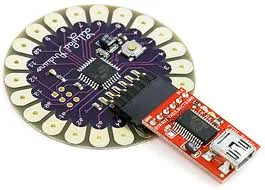 Another fun option I have seen people experimenting is the Arduino Lilypad. A nice sized device by itself which can be sewn into clothing and then updated with software to communicate with other components via a conductive thread.
There are several types of Lilypad, but they all share a common round form factor with various outlets where conducting thread can be looped and then subsequently tied to related hardware such as tri-color LED boards or other sensors. Earlier Lilypads require a FTDI component plug in order to upload software onto the board which can then provide the board with logic while the newer ones may be plugged directly into a computer via a Micro USB cable.
Aside from that I have seen brain-controlled electronic bunny-ears which twitch as the user’s brain patterns change, wearable headsets by Plantronics which contain an accelerometer and can be used to track user’s head movements and relay this information to a bound mobile phone.