Meet The Hackers: Karan Goel
I thought it would be worthwhile to take some time on this blog to interview some of the emerging community organizers coming out of the collegiate “hackathon scene.” The purpose?
Originally published on the Intel blog
- intel
- iot
Originally published at the Intel Software Evangelists blog on December 31, 2014. Recovered from the Internet Archive.
Karan Goel, DubHacks organizer
I thought it would be worthwhile to take some time on this blog to interview some of the emerging community organizers coming out of the collegiate “hackathon scene.” The purpose? To share insight into key trends and best practices for companies hoping to reach new developers at these events!
For my first blog on this topic, I have invited Karan Goel, an organizer of DubHacks (University of Washington’s first major hackathon which took place on Oct 17th-18th last year and drew 500+ developers as well as 25+ sponsors) to share his experience attending and organizing major collegiate hackathons.
DubHacks at The HUB
Q: What have you learned about leadership from organizing a major collegiate hackathon? What are the challenges? What are the rewards?
There’s just so much that organizing DubHacks taught me. It was the first time I’ve led an event this big with a moderately large team (10 people). The most important thing I learned was being a team member and making every one feel “like one.” The whole process of organizing a hackathon has a lot of rough patches, but it’s important that everyone makes it past together. And this happens when everyone works together, everyone feels like they are being heard and that their voice is deemed valuable.
Challenges…Oh boy. Where do I start. We faced the “standard” set of challenges that any big collegiate hackathon faces, finding sponsors, convincing them to give us their money, getting the hype out, having internal processes for every thing. It was hard because none of the executive board members have organized a hackathon this big, but being in a city with a vibrant tech scene helped us.
As for the rewards, the biggest one we got was starting a revolution here in the PNW and giving a taste of what hackathons like PennApps and MHacks feel like (sans the long flights). Everyone loved what we put together; the participants later described DubHacks as the “best hackathon [they've] been to”. The feeling of being at the forefront of something so monumental just fills my heart with joy.
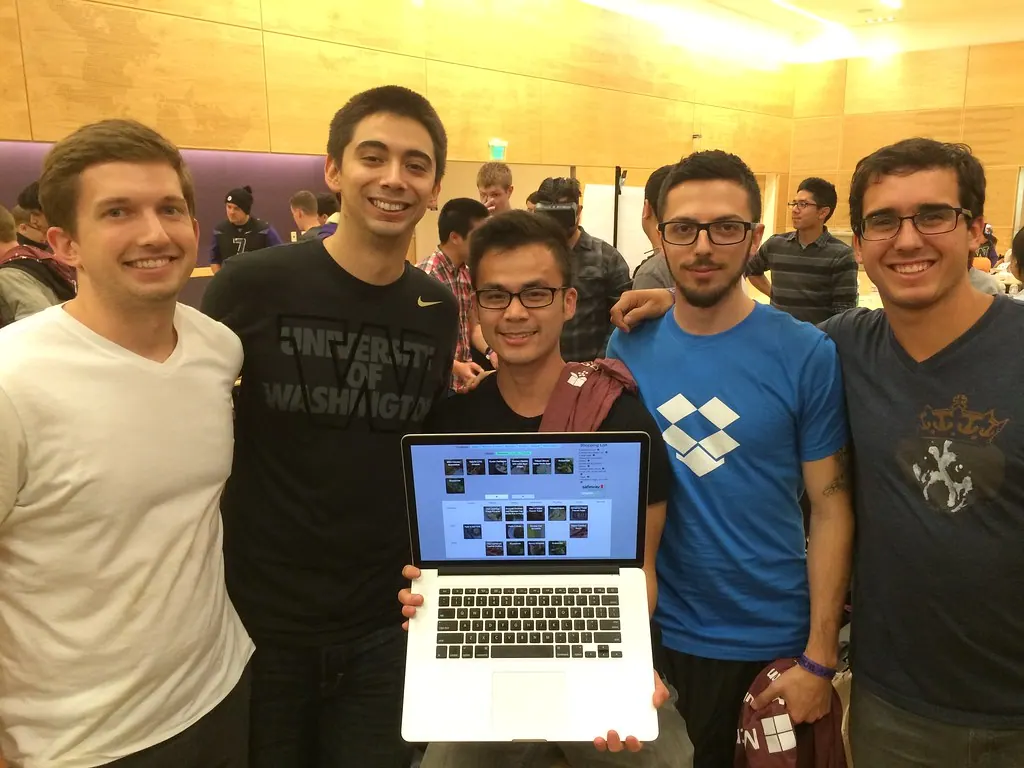
An example project from DubHacks
Q: You have been to a number of hackathons in the last few years, in your experience, what makes a hackathon “stand out?” Any specific examples of trends and practices you see as being noteworthy?
I started going to hackathon in summer ’13, so it’s not really been that long for me. But in that time, I’ve attended 16 or so hackathons, from the biggest collegiate hackathons to smaller corporate hackathons. The ones that seemed to stand out were the ones with a diverse group of participants (gender, race, geography and skills), unique (or local) food, and fun side events during the hackathon.
What most hackathons are starting to do is having well set-up hardware labs which, I think, empowers students to explore their creativity with tangible hacks and diversifies the student pool. I am yet to see a 1,000-person hackathon with high quality food though.
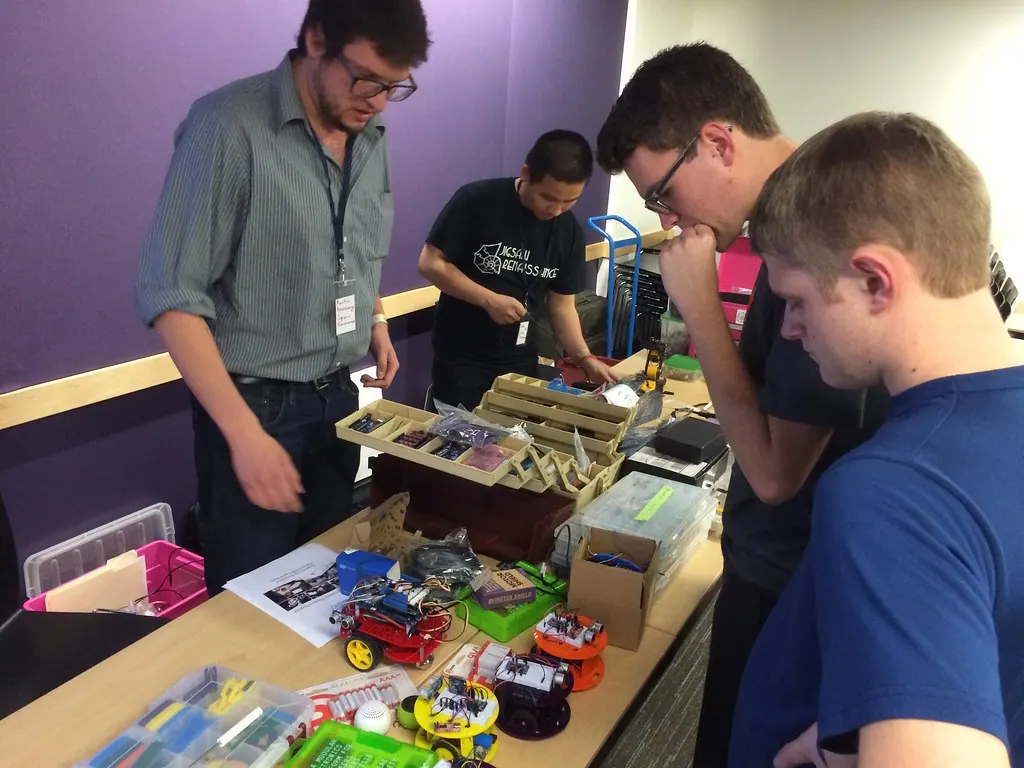
The Intel sponsored hardware supply table at DubHacks
Q: It seems in the last few years that hundreds of companies have converged on hackathons as a means to recruit and market technical products. What is your advice for these companies as to how to best reach students with their products and recruiting offers?
I’ll split this into 2 parts: companies looking to recruit and companies looking to market products.
Recruiting:
- Talk to as many students as possible. I really like it when a recruiter I talked to sends me a personalized email (as opposed to a mass email blast).
- Get hands on student resumes a couple days before the hackathon and send an email to your favorite students. You can only talk to so many participants, so pre-filtering is needed.
Marketing products:
- Give me free credits. A lot of companies do this, but some don’t. The best way to get me to check out a new service is to remove all obstructions including (and especially) payments.
- If you do give free credits/trials, mention it multiple times to the participants. A lot of sponsors don’t, and are surprised when no one uses their product.
- Send a few engineers or evangelists who can help hackers work their way around the product. Having no available support is a pain and a huge turn off.
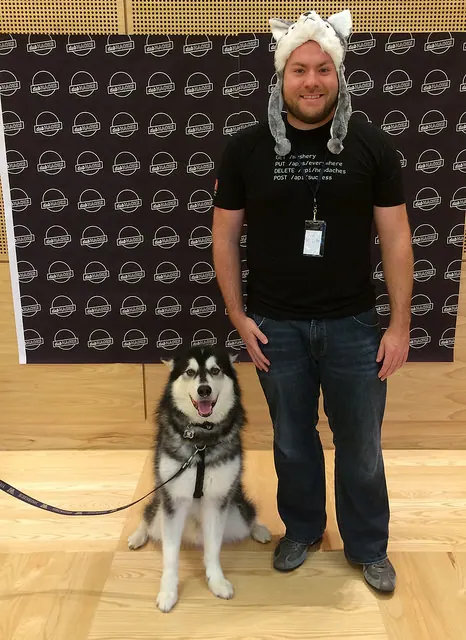
Dubs, the UW mascot made an appearance
Q: What are the best new products targeted at developers you have seen at hackathons?
Intel Edison. I was surprised when I heard Intel was giving these beasts away at hackathons (sadly I never got one) even before official launch. That was cool.
Namecheap gives free domains, which is extremely nice and relevant at a hackathon.
Not a product, but swag: Google brought these Android puzzlebots to DubHacks. They are lego pieces that build up to an Android. It’s the cutest engineer’s toy I’ve seen. I have 4 of them.
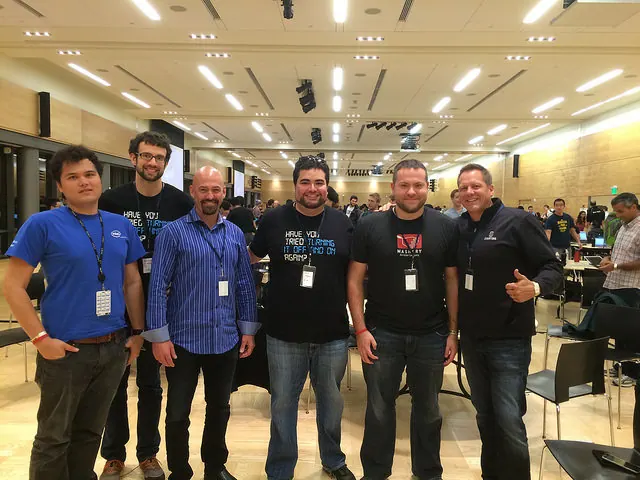
Intel Seattle at DubHacks with SSG lead Doug Fisher
Q: Is there a “hackathon bubble?” Or do you think there is still much room for growth?
There isn’t a bubble… yet. There definitely is scope to grow beyond the 70-something hackathons that students put together in 2014. Hackathons are a great way for new coders to work under the mentorship of industry professionals, with virtually all the resources they need, to build something they want to. There’s a lot of schools where the hackathon culture is lacking, especially on the west coast.
Q: Are there any questions I should have asked but didn’t? Anything you believe should be mentioned?
Q. What’s the best hack I’ve ever seen at a hackathon?
A. A web-based iOS development environment complete with compilation and emulator. Winner of PennApps Fall 2014.
Q. What is the one hack that I’m dying to see built at a hackathon?
A. There’s a lot that smart student hackers can do to change healthcare. So maybe something within that category.
Q. How to reach me?
A. Best way is Twitter: @karangoel. Second best is email: karan@goel.io. I read and reply to everything that’s not spam.
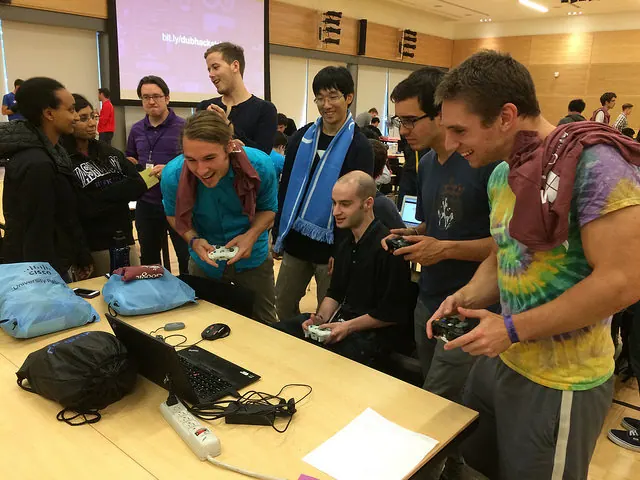
Having fun with a gaming hack
Any final advice to other students, like yourself, planning on throwing a major event?
Do it. Talk to a lot of other organizers and get a general idea of what goes into organizing a hackathon and what to expect. Then just dive in. It’s a very long process that will consume you, but it’s worth everything.
Karan Goel is an undergraduate at the University of Washington in the Computer Science program and he loves making new things, mostly for the web. He designs, builds, and ships things that make the world a better place. He also tweets at @KaranGoel.
- Personal site: <http://www.goel.io>
- Github: <https://github.com/karan>