Miracles Are Mandatory : Rex St John
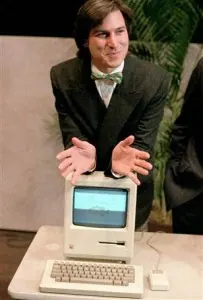
The year is 1984, the scene is the unveiling of the first Macintosh computer to a packed Silicon Valley auditorium.
Originally published on the rexstjohn.com blog
- devrel
Originally published at rexstjohn.com on April 9, 2014. Recovered from the Internet Archive.
The year is 1984, the scene is the unveiling of the first Macintosh computer to a packed Silicon Valley auditorium. A young Steve Jobs has just spent the last 4 minutes demonstrating the future of personal computing in a tour-de-force presentation covering the world’s first (commercially available) consumer PC capable of rich graphics, visual mouse-driven UI, rich media playback and font-faces.
Seeming to realize that he is about to cause a riot (and barely able to contain his glee), a smirking Jobs steps back from the spotlight with a showman’s flourish and yields the stage his creation: “…today, for the first time ever, I would like let Macintosh speak for itself!” A bag is removed, a screen flickers on and the unmistakeable disembodied mechanical voice of a computer begins to talk: “Hello, I am Macintosh, it sure is great to get out of that bag...”
The audience of presumably grown, “sane” adults loses it (seriously, just watch it). Judging from the scream of joy, the applause likely lasted another two hours (the video cuts out early)…and why wouldn’t they applaud, they had just witnessed a miracle.
A ‘Miracle’
Manufacturing Miracles
The title “Technology Evangelist” (a more mass market version of it’s cousin, developer evangelist) was first introduce by Apple computer in the early 1980′s. After watching the Macintosh unveiling linked above, it is easy to understand why Apple selected such a religiously-charged term: Technology has always been about unveiling miracles; it is the job of evangelist to demonstrate these miracles…which is exactly what Steve did.
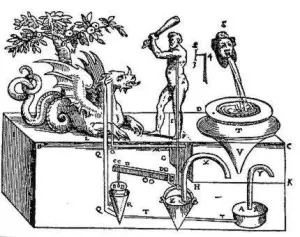
2,000 years ago there lived a man named Hero of Alexandria. We now recognize Hero as an early inventor and scientist, but at the time he was nothing short of a miracle worker. I do not mean that figuratively: Hero’s job was to literally create miracles.
During Hero’s life Alexandria was a thriving melting pot of competing religions. The polytheistic attitudes of the time allowed many temples to many gods to compete ruthlessly like modern corporations for followers and monetary contributions. Just like modern corporations, these temples required differentiators to convince potential inductees to attend their particular religious services over another…and thats where Hero came in.
As soon as one temple introduced a miracle (perhaps in the form of a moveable automata which begged for coins), competing temples would rush to hire Hero in order to build an even more impressive automata or other feat of engineering.
One of Hero’s most famous inventions was apair of gigantic doors which would swing open automatically via a series of mechanical contraptions driven by heat from an altar fire. He also invented a vending machine that gave the appearance of a deity which dispensed holy water upon someone inserting a coin (it earned that particular temple a mint in donations).
It was Hero’s job to use technological miracles to inspire people to join religious movements.For this reason, Hero of Alexandria was the world’s first “technology evangelist.” Fast forward 2,000 years and replace “Competing Temples” with “Competing Tech Companies” and you will find modern evangelists performing modern miracles just like Hero did all those years ago.
Modern Miracles
Thinking back on the last year, our industry has given birth to multiple miracle-class products. Whenever you see people leaping out of their chairs in excitement or standing in lines around the block in the bitter cold, you know that is where the future is being created and those products…the miraculous ones…will become the new standard by which all other technology is measured.
The first miracle product that comes to mind is the Oculus Rift, the VR headset. Watch videos on YouTube of people riding the Oculus Roller coaster and falling out of their chairs in terror. The reaction people have is unmistakeable: The Oculus is a Miracle.
Another example of a miracle is neocomimi brain-controlled robotic cat ears. You put them on your head and your thoughts make them move. Your brain controlling a set of servos? Miracle.
I used to walk down a mile-long hill to go to work every day. Over time, I noticed that more and more Tesla cars drove past me. Then several of my co-workers bought Teslas. Pretty soon it seemed like I couldn’t turn a corner without seeing a bright, shiny new Tesla. Judging by the insane Consumer Reports ratings, it is safe to say: The Tesla Is A Miracle Product.
So keep your eyes open, the next miracle may be just around the corner.