The Chaos and The Craftsmanship of Shenzhen, Part II
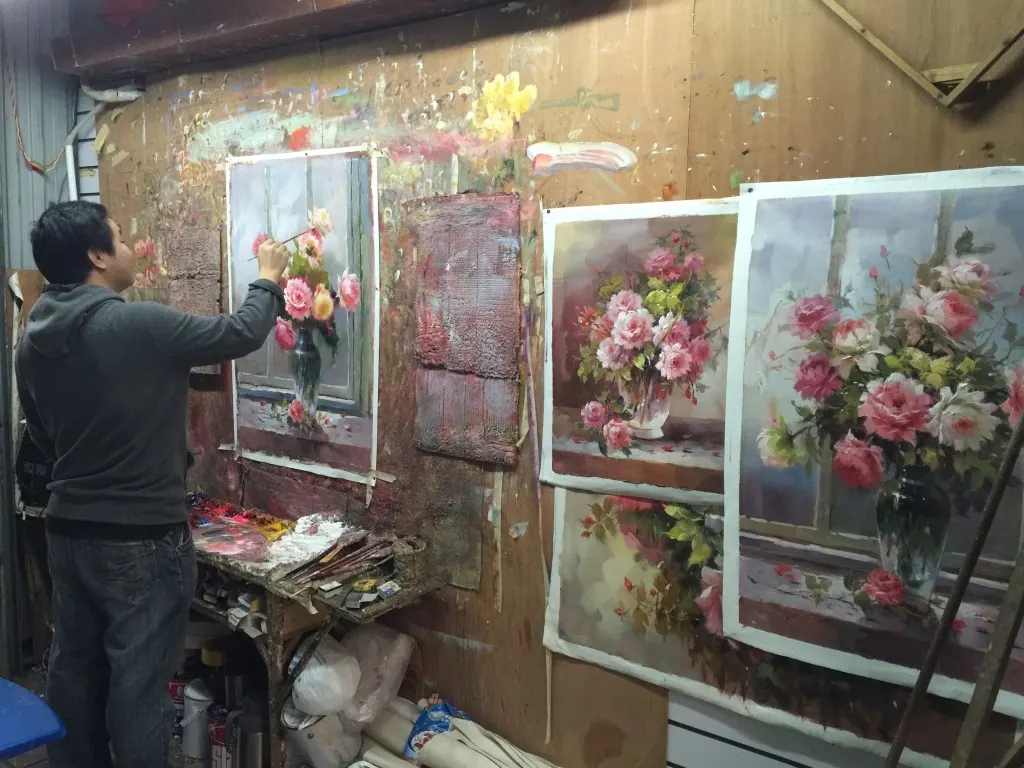
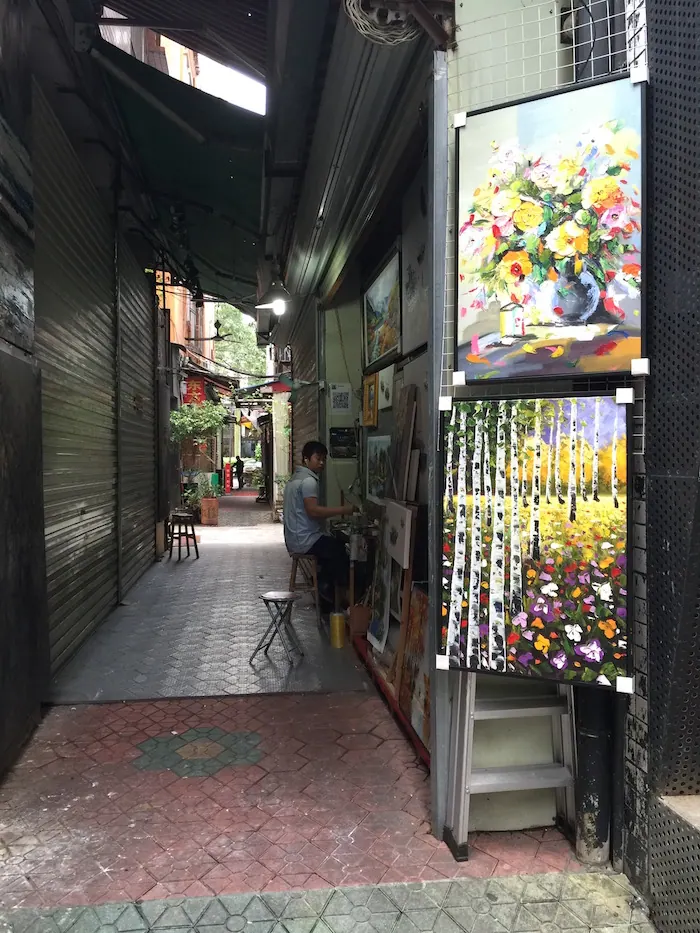
An oil painter practicing his craft in Dafen Village. A Pilgrimage To The Maker Mecca When I arrived in Shenzhen this week to participate in Intel IDF 16...
Originally published on the rexstjohn.com blog
Originally published at rexstjohn.com on April 16, 2016. Recovered from the Internet Archive.
An oil painter practicing his craft in Dafen Village.
A Pilgrimage To The Maker Mecca
When I arrived in Shenzhen this week to participate in Intel IDF 16, I hoped to learn more about the roaring technological innovation happening in this unique city. This is a brief multi-part overview of my experience and how it shifted my perspective on the technology relationship between America and China.
The Dafen Oil Painting Village, A Metaphor For Shenzhen’s Tech Economy
The defining “Shenzhen” moment for me was not the crowds, the maker and electronics markets nor the sprawling industrial zones, factory tours, it was the Dafen Oil Painting village, where hundreds of skilled artisans convene daily to create realistic copies of artwork for export.

One of the many wandering street dogs in Dafen.
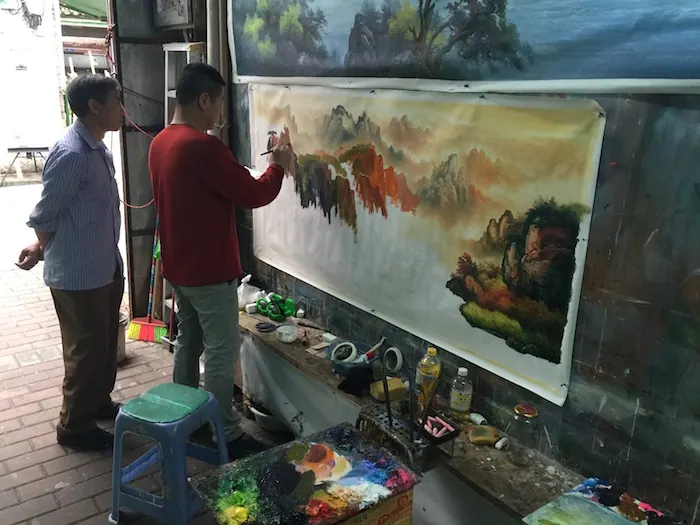
After a 30 minute cab ride from my hotel, I spent around 3 hours wandering the tightly connected alleys and corridors of Dafen, looking over the shoulders of the artists as they went about their daily work of copying.
Many used iPads or photographs as reference, others seemed to know their target work so well as to not require a reference. More than a few of the painters seemed to have elderly masters looking on, perhaps to give advice on technique along the way.
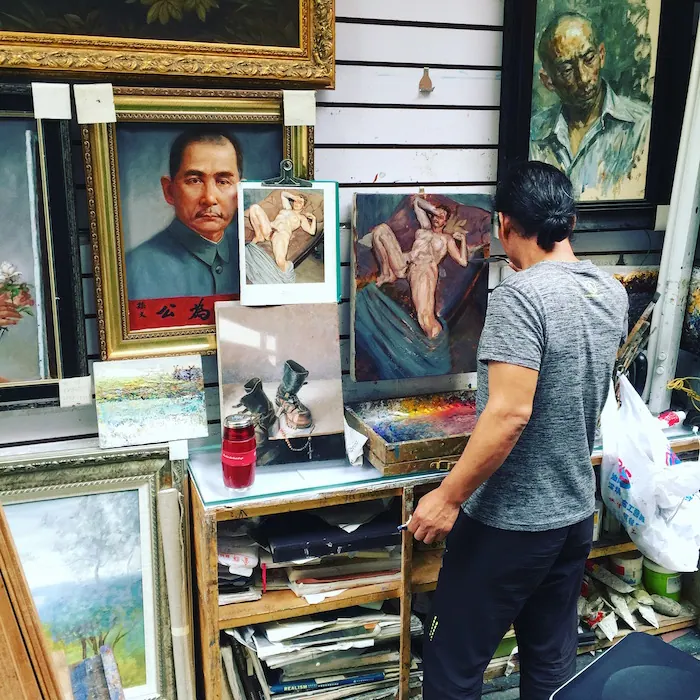
Here and there, beginners practiced their skills on shading simple cubes and primitives, working their way up to mastery of the basics and, ultimately, onwards to becoming the next batch of oil painters.
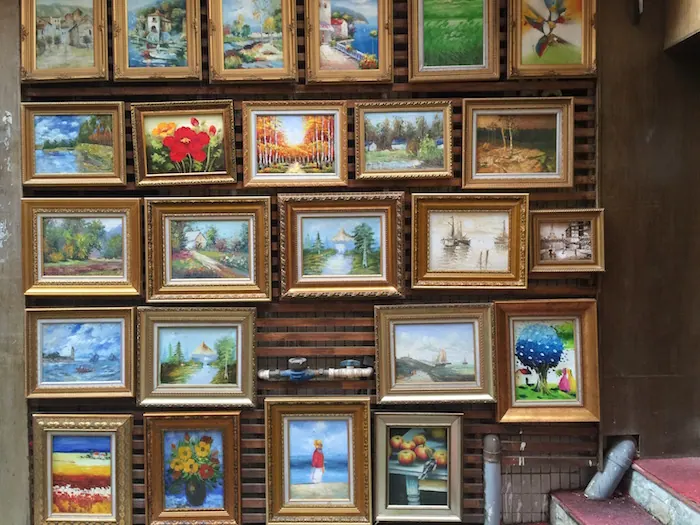
With thousands of canvases leaning idle and hanging on numerous walls, I suspect, there might have been an original painting or two though I am not knowledgeable enough in art to know for sure.
With so many creative artists in one place, how can one or two of them not have applied their learning to a new canvas? It is difficult to believe that somewhere in the thicket of canvases an artist hadn’t decided to improvise a bit on the themes of an old master…
A student who copies Van Gogh relentlessly may not initially understand how Van Gogh undertook original works of art. After a time perhaps that same student begins to understand the way Van Gogh saw the world…a truly great student may extend that thinking into new areas and combine it with other ways of seeing the world to arrive at something completely new.
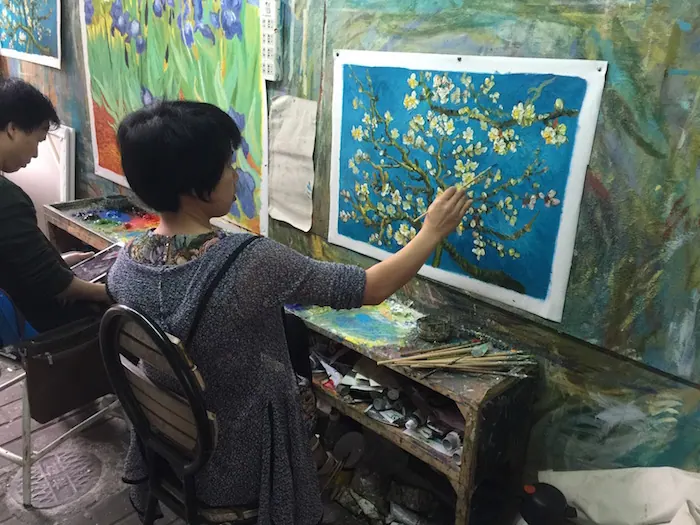
Though Shenzhen has been called the city of the copycats, something new has emerged.
Facebook Messenger, Square, PayPal? That functionality is already present in every Chinese person’s mobile phone in the form of WeChat. “Sometimes I forget my wallet for days,” quipped one Shenzhen resident. “We just pay with WeChat. Or if we are out of money we can ask a friend and they just send it to us. One time I forgot my wallet at a restaurant so I paid the waitress using WeChat and she paid for my bill in cash. We are more ahead than the US in that way I think.”
WeChat is ubiquitous, after only a few days in Shenzhen my list of WeChat friends grew to more than a dozen new friends. Sitting in a newly opened coffee shop, two of the workers asked to take my picture. Within a couple seconds they had scanned my unique WeChat QR code and we were able to exchange pictures. At the Shenzhen airport, I used my new WeChat account to authenticate into the local WiFi network.
Who really needs Facebook or PayPal? Not the Chinese it seems (not that they have easy access to it). In fact it may be the other way around, judging by Mark Zuckerbergs’ recent interest in learning Mandarin. And by how many of Facebook Messenger’s features seem to derive from Eastern counterparts.
Based on these trends, you sort of have to wonder: Who is doing the copying now? Increasingly the benefits of learning Chinese and observing how the Chinese innovate is becoming a source of inspiration for the United States. When it comes to hardware, we are increasingly not having a choice but to rely on the skills of the hardware experts of Shenzhen.
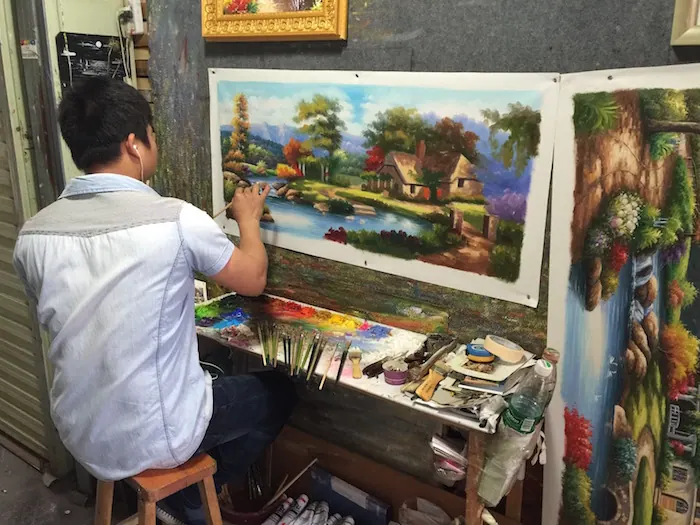
Whether it be oil paintings, hardware startups, maker kits or electronics components, the people of Shenzhen are doing hard work which requires a great variety of skills, many of which can no longer found in America.
I think something has been lost in allowing so many of these skills to leave America. Having hardware and software together in one place was a key source of innovation in Silicon Valley. Prior to his death, Andy Grove wrote an editorial that much of the “Efficiency” America has traded for lower cost manufacturing has come at the cost of our own middle-class, The ability to have all of these diverse skillets in a single place is undeniable.
And maybe that is what Shenzhen and Dafen represent, In few other places in the world are all of these skilled people so close together and able to exchange ideas.
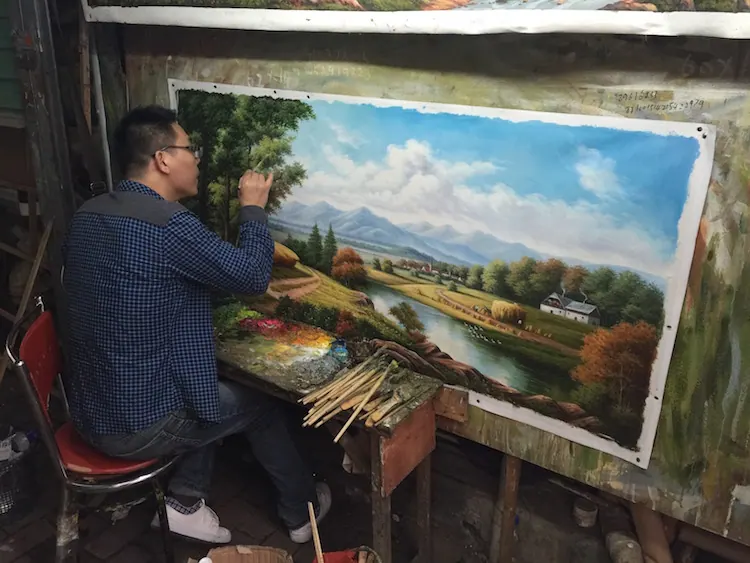
My time in the city was far too brief, impossibly short to see everything or even scratch the surface, especially without the help of a Chinese-speaking local who knows the maker scene. The future of technology is in the incredibly complex relationship between China and the United States, I hope to remain in the middle of it.