Will JavaScript Rule Robotics?
One of the interesting trends which is emerging in the world of hardware hacking and prototyping is the rise of JavaScript robotics.
Originally published on the Intel blog
- intel
- iot
Originally published at the Intel Software Evangelists blog on December 8, 2014. Recovered from the Internet Archive.
One of the interesting trends which is emerging in the world of hardware hacking and prototyping is the rise of JavaScript robotics. It has become increasingly common for robotics enthusiasts to turn to libraries like Rick Waldon’s Johnny-Five and Intel® MRAA to use Node.js to trigger sensors and actuators over traditional “lower-level” solutions such as C or C++.
I wanted to outline some observations about why this trend is happening now and why it is likely to accelerate.
Why Is This Happening Now?
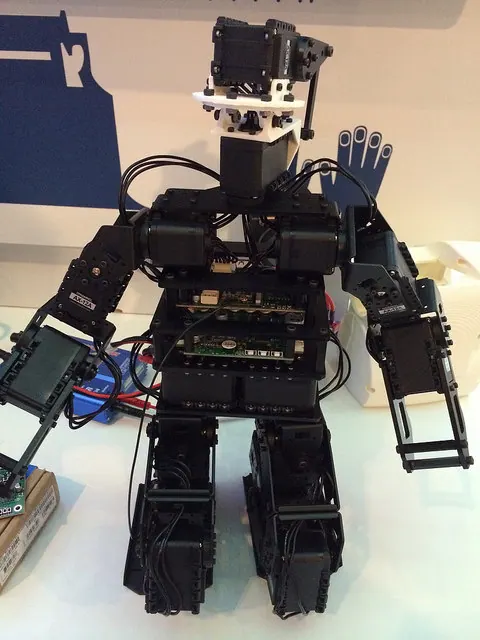
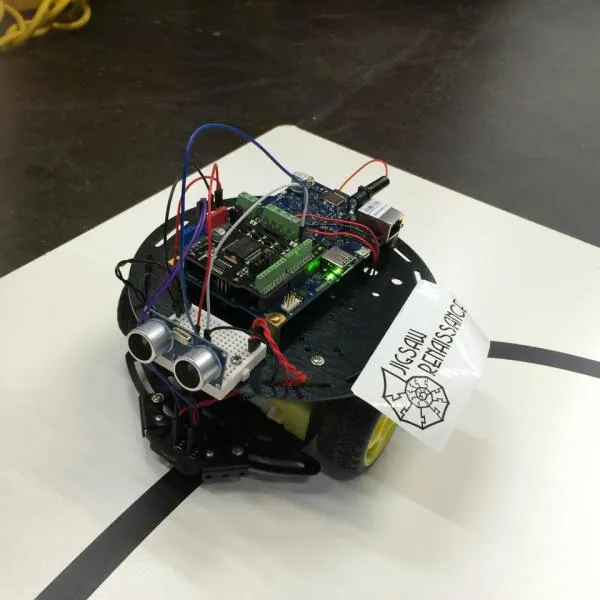
The basic underlying force at work is Moore’s Law: The size of hardware continues to shrink along with the cost while the horsepower and capabilities of this hardware continues to grow.
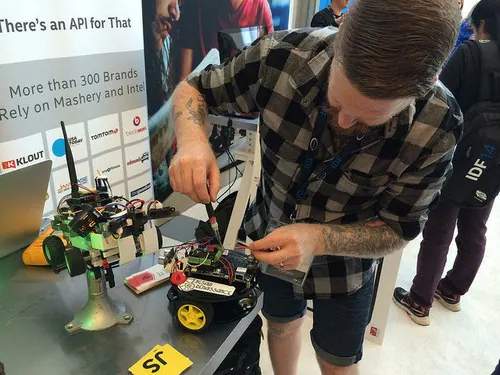
Over the last year, an explosion of more powerful, tinier, better integrated (wireless and cloud-based code deployment) and more communicative (with radios capable of speaking Bluetooth, Wi-Fi Direct, BLE, ZigBee etc) prototyping kits have become available. These kits are also cheaper than ever.
Some of these devices, like Intel® Edison (which is the size of a postage stamp and comes capable of Bluetooth and Wi-Fi as well as Node.js), run “stripped down” versions of Linux and offer developers the ability to use popular libraries like OpenCV in more compact form-factors than ever before. Side note: Edison itself is also Arduino-compatible and can be programmed using the Arduino IDE.
Are Web Developers The New Electrical Engineers?
Having just spent the last 3 months touring the country helping developers learn about Intel® Edison, I have seen first-hand that the hardware hacking Blue Ocean Strategy is to enable software and web developers to become hardware developers by letting them use their favorite tools on tiny devices.
While simple Arduino micro-controllers are fun to tinker on, being able to run “git pull” or “apt-get” on an actual device represents a very compelling value proposition, especially in the context of team projects with multiple contributing developers as occurs frequently at hackathons.
Lets Compare Blink Sketches
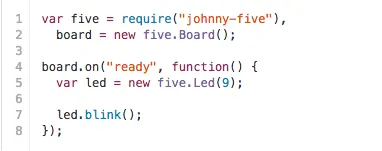
The above code snippet is all that is required in the Johnny-Five library to activate a blinking LED. Take a moment to compare this to the standard Arduino Blink sketch:
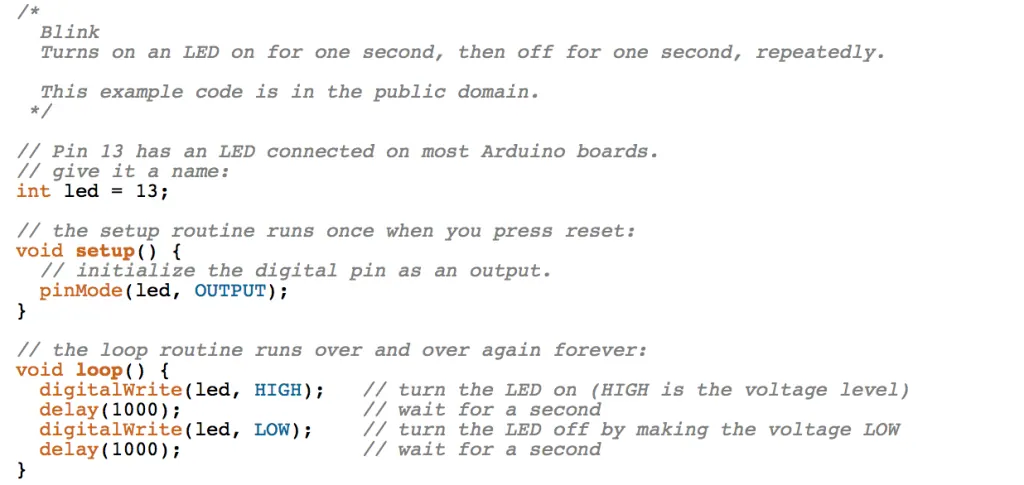
The desired quality of “ease of use” is present in both snippets. However, the syntax at play with Johnny-Five is much more accessible “out of the box.” Blinking an LED is as simple as typing “led.blink();”
Robots First, Makers Next?
It shouldn’t be a surprise that we are seeing this trend emerge first in the world of robots (and drones) because such applications historically have required significantly more processing power (and have much bigger batteries to power these processors).
It seems possible and perhaps inevitable, as costs and devices shrink, that the trend of programming hardware with higher-level languages like JavaScript will spread throughout the rest of the maker community and become the norm.
Rex St. John is an Intel® Evangelist, exploring opinions, insights, and ideas on the Internet of Things. Join the conversation at <evangelists.intel.com>.