Fold for Covid
Rosetta@home brought onto Arm, so anyone with an old laptop, a Raspberry Pi or a spare board could contribute protein-folding compute to COVID-19 research by flashing a single image.
Numbers
- 6,778
- Machines contributingas shown on the project site
- 14
- Rosetta@home team rankof all teams, at the time of the balena readout
- 718
- Contributors on the team
- 85,914,327
- Total credit
Rosetta@home ran on x86. An enormous amount of idle compute in the world does not — it is phones, single-board computers, old laptops, and the Arm hardware piling up in drawers. The work was getting the science onto that silicon, and then getting the setup down to something a non-developer would actually finish.
What shipped was an image you flash with balenaEtcher. No toolchain, no build, no terminal. Partners did the heavy lifting across the stack: the University of Washington's Rosetta team on the science, Arm, Packet, Neocortix, Linaro and 96Boards on the silicon and infrastructure, balena on the delivery.
The science came from the Baker Lab at the University of Washington, whose Rosetta@home team was searching for proteins that bind to the COVID-19 spike. Their application was x86 only. Porting it to Arm is what put a Raspberry Pi, a Jetson Nano or any similar single-board computer into that search, and the image is what meant a contributor did not have to compile anything to join it.
The map is the part worth looking at. Every pin is someone who gave a spare machine to protein folding because the barrier had dropped to flashing a card.
It worked well enough to show up in the standings. Fold for Covid finished 14th of all Rosetta@home teams on 718 contributors and 85.9 million credit — ahead of Team AnandTech, five places behind Hewlett-Packard Enterprise and twelve behind CERN, on hardware that was mostly sitting in drawers.
Photos
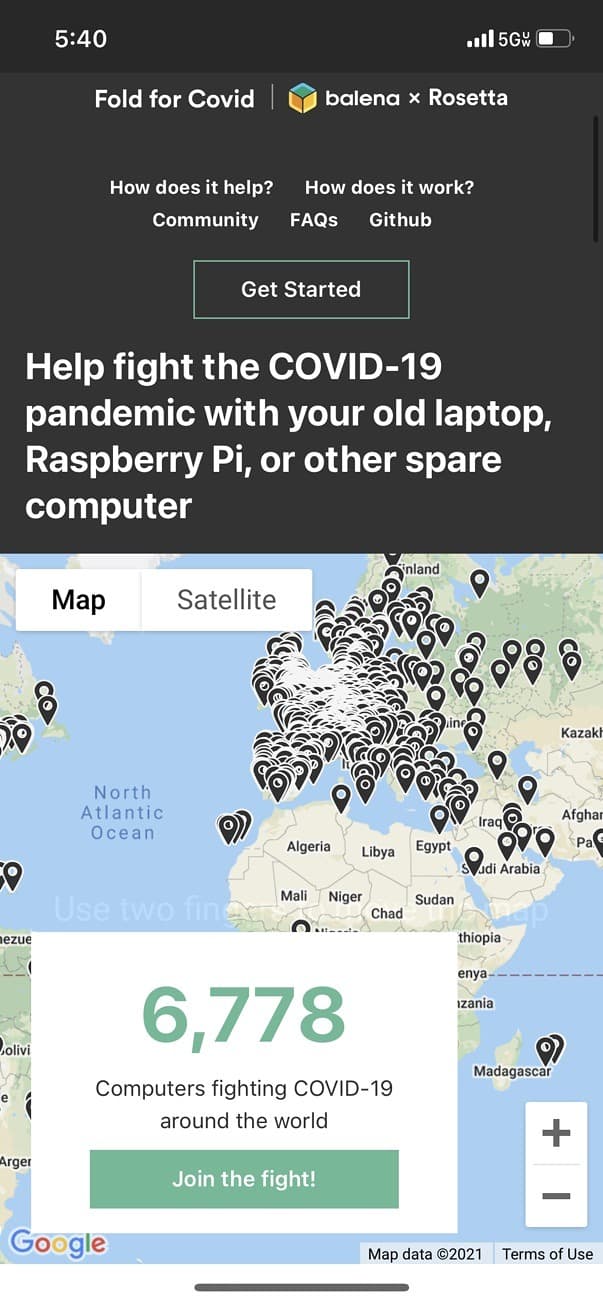
6,778 machines, most of them hardware that was otherwise sitting in a drawer. 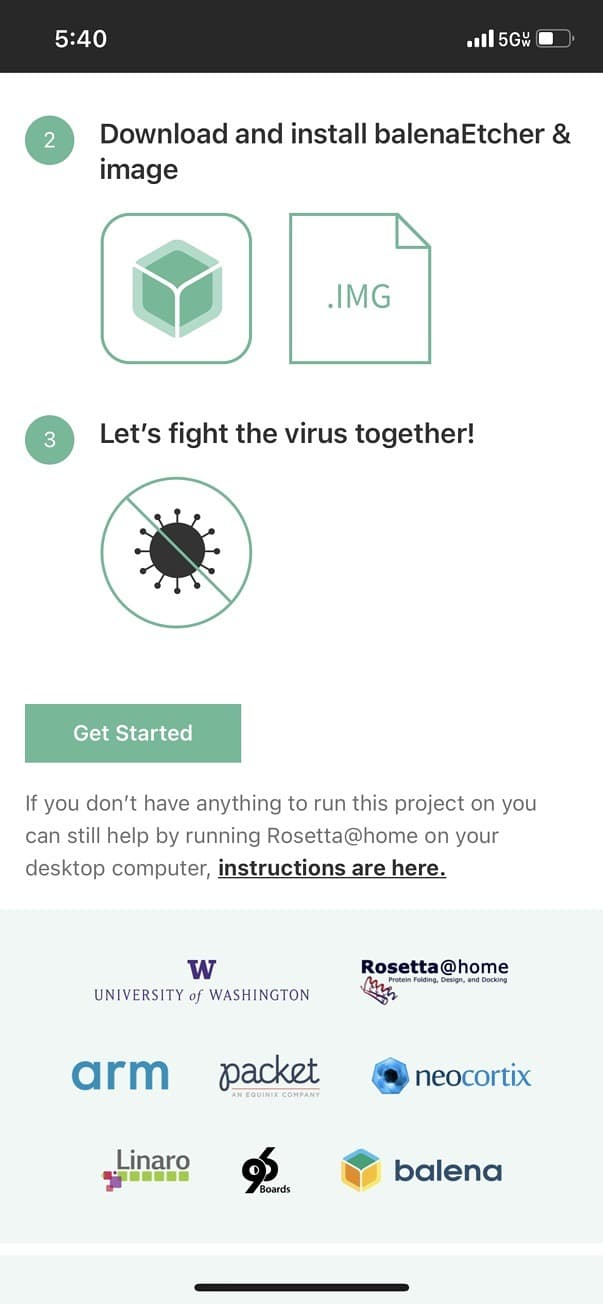
Two steps and a flashed image. Every step removed is contributors gained. 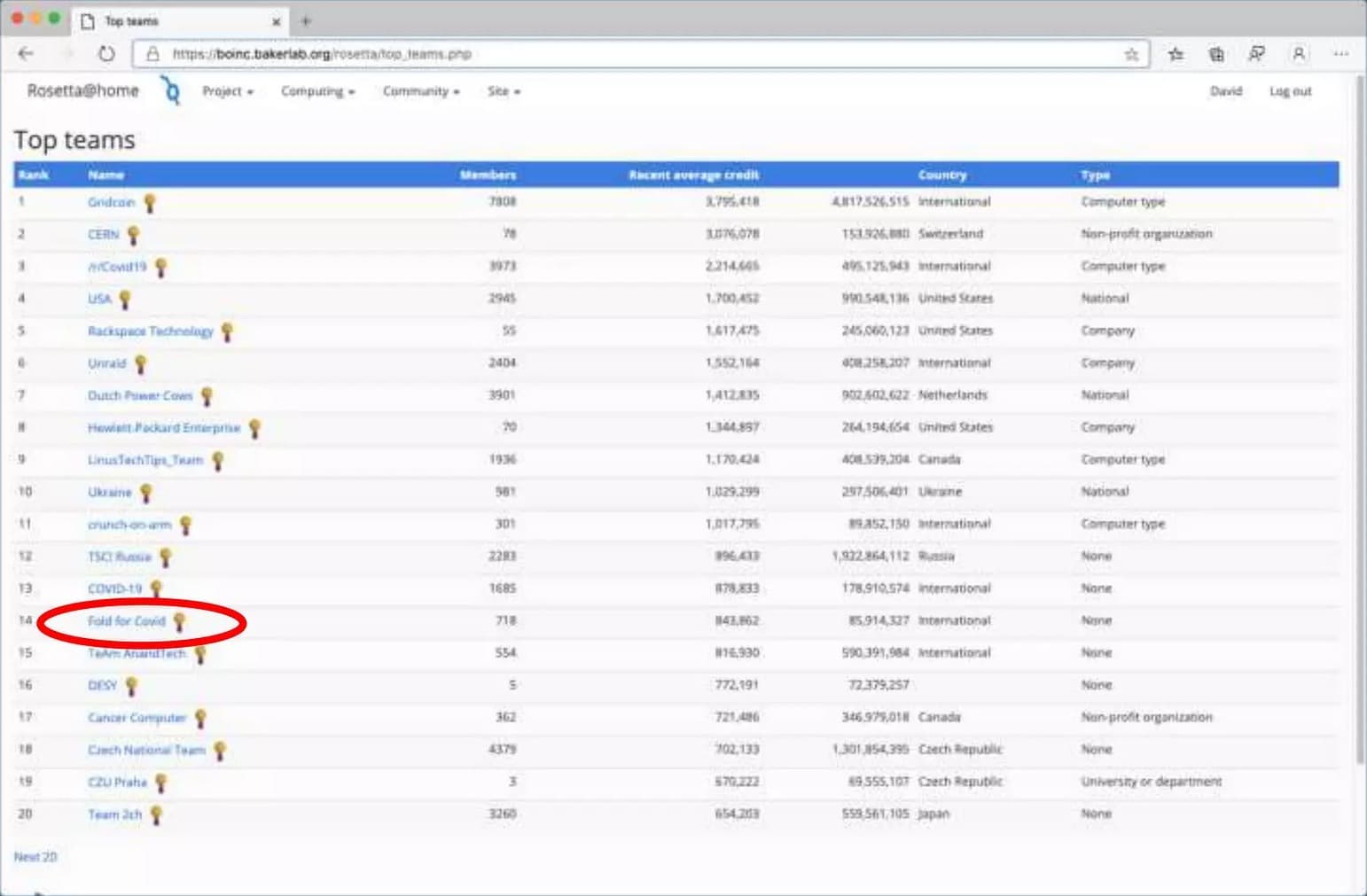
The result that counts. Fold for Covid finished 14th of all Rosetta@home teams — above Team AnandTech, five places below Hewlett-Packard Enterprise, twelve below CERN.