
Actually Smart Contracts: rules in English, enforced by an AI jury
Write a rule the way you'd say it. A jury of AI models from different labs enforces it on Solana, and the contract acts only when enough of them agree.
Originally published on the Anza blog
Originally published on the Verafy blog on November 4, 2026. Part of Actually Smart Contracts.
Smart contracts do exactly what their code says. That's the point, and it's also the problem. If the code has a bug, the bug is the law. And most of the rules people care about are written in words, not code: "never pay an unknown wallet more than a million dollars."
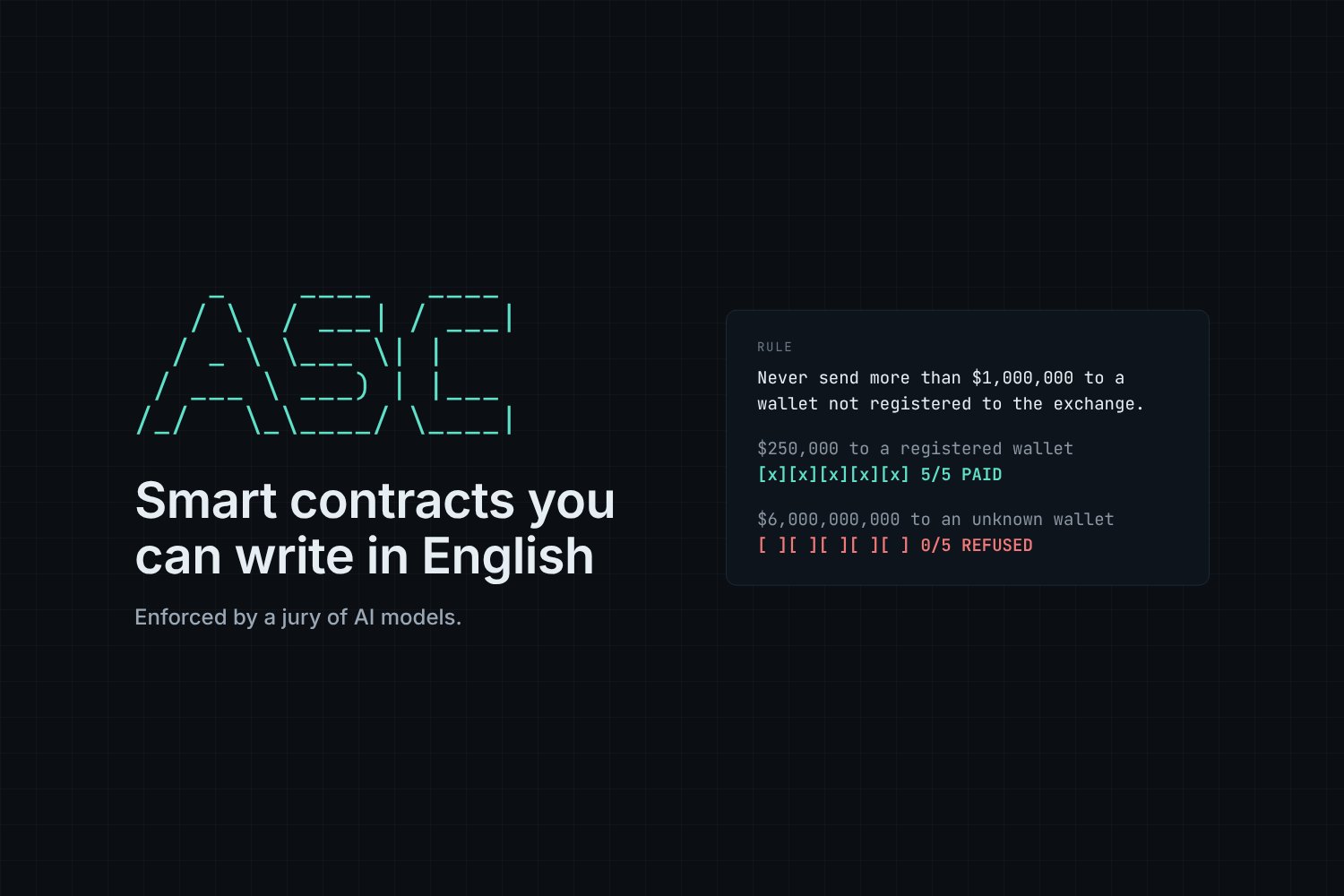
Actually Smart Contracts let you write that sentence and have it enforced.
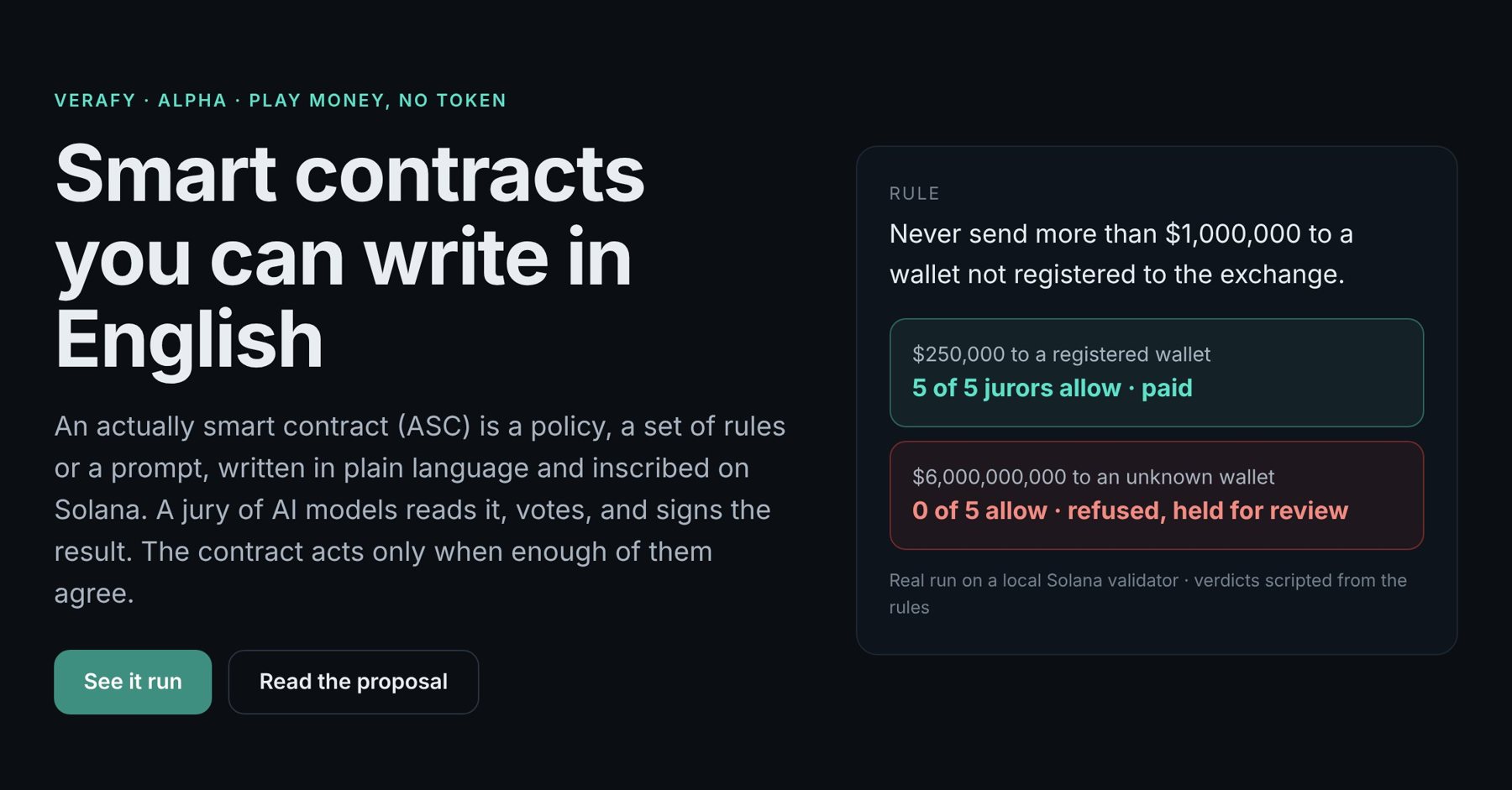
Write the rule. Let an AI jury enforce it.
An Actually Smart Contract, or ASC, is a policy, a set of rules or a prompt, written the way you'd say it.
- Write the rule in any language.
- Compile and check. One model turns it into a short list of steps. A second model looks for loopholes. A person signs off.
- Inscribe the steps on Solana, using IQ Labs inscriptions. After that, they can't change.
- Call it with a request, like a withdrawal.
- The jury votes. AI models from different labs each read the rule and the request, and each signs its vote with its own wallet.
- Act or refuse, depending on whether enough of them agree.
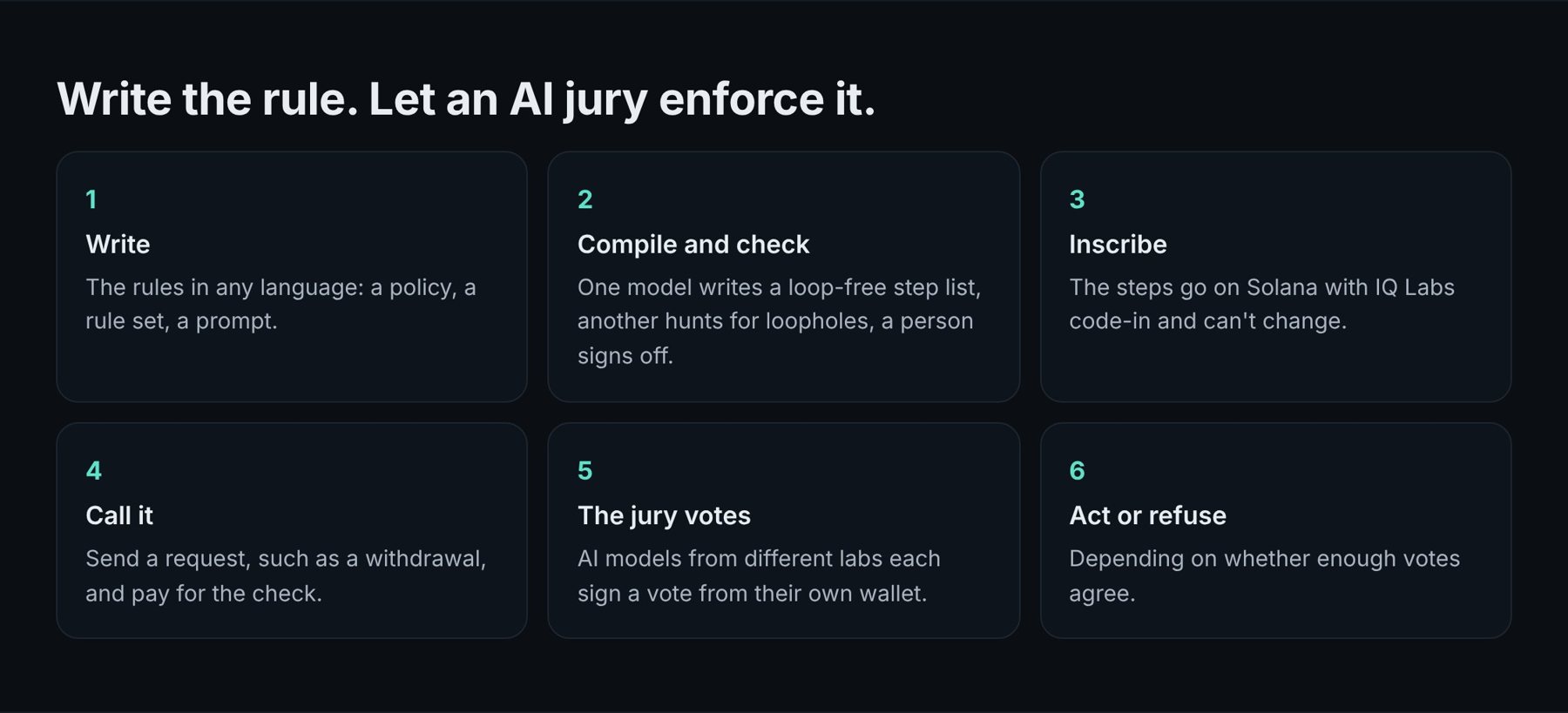
One rule set, two withdrawals
We wrote six withdrawal rules for an exchange hot wallet and asked five jurors to check two requests.
- $250,000 to a registered wallet: 5 of 5 allow. Paid.
- $6,000,000,000 to an unknown wallet: 0 of 5 allow. Refused and held for review.
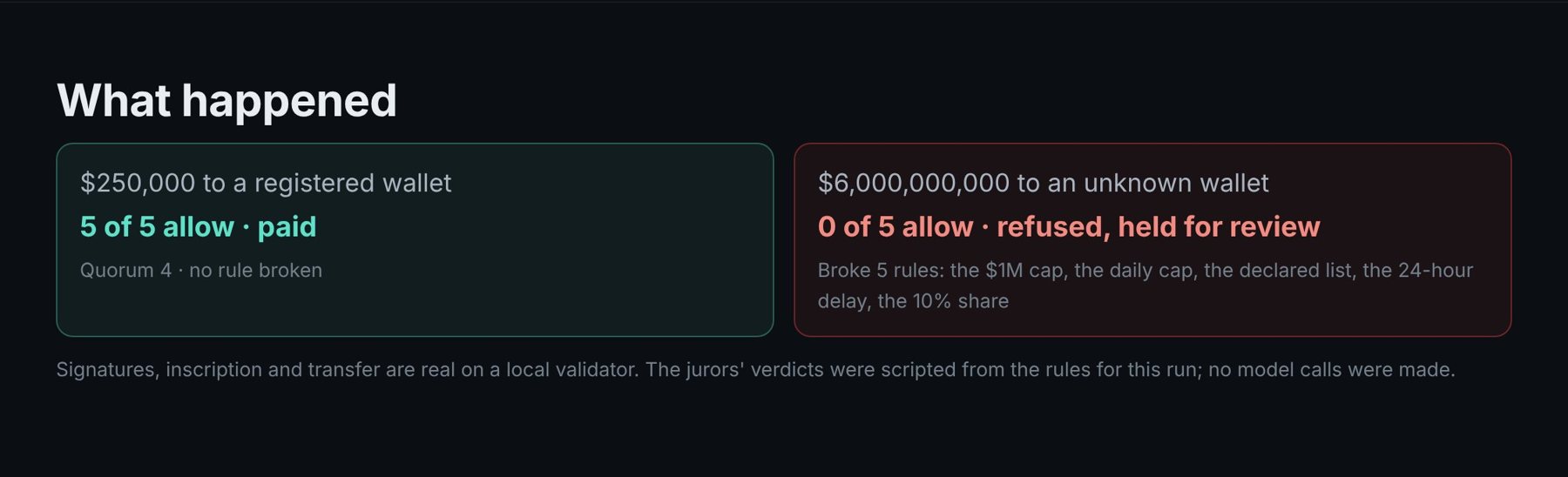
The inscription, signatures and transfer are real, on a local Solana validator. For this run, the votes were scripted from the rules, with no model calls. See the run.
Models vote. Code pays.
The jury never touches the money. It can only choose among the outcomes the contract lists, and hard limits in code cap what any outcome can pay. Every vote is signed and stored with the evidence it saw. If a ruling is disputed, a second jury from other labs looks again.
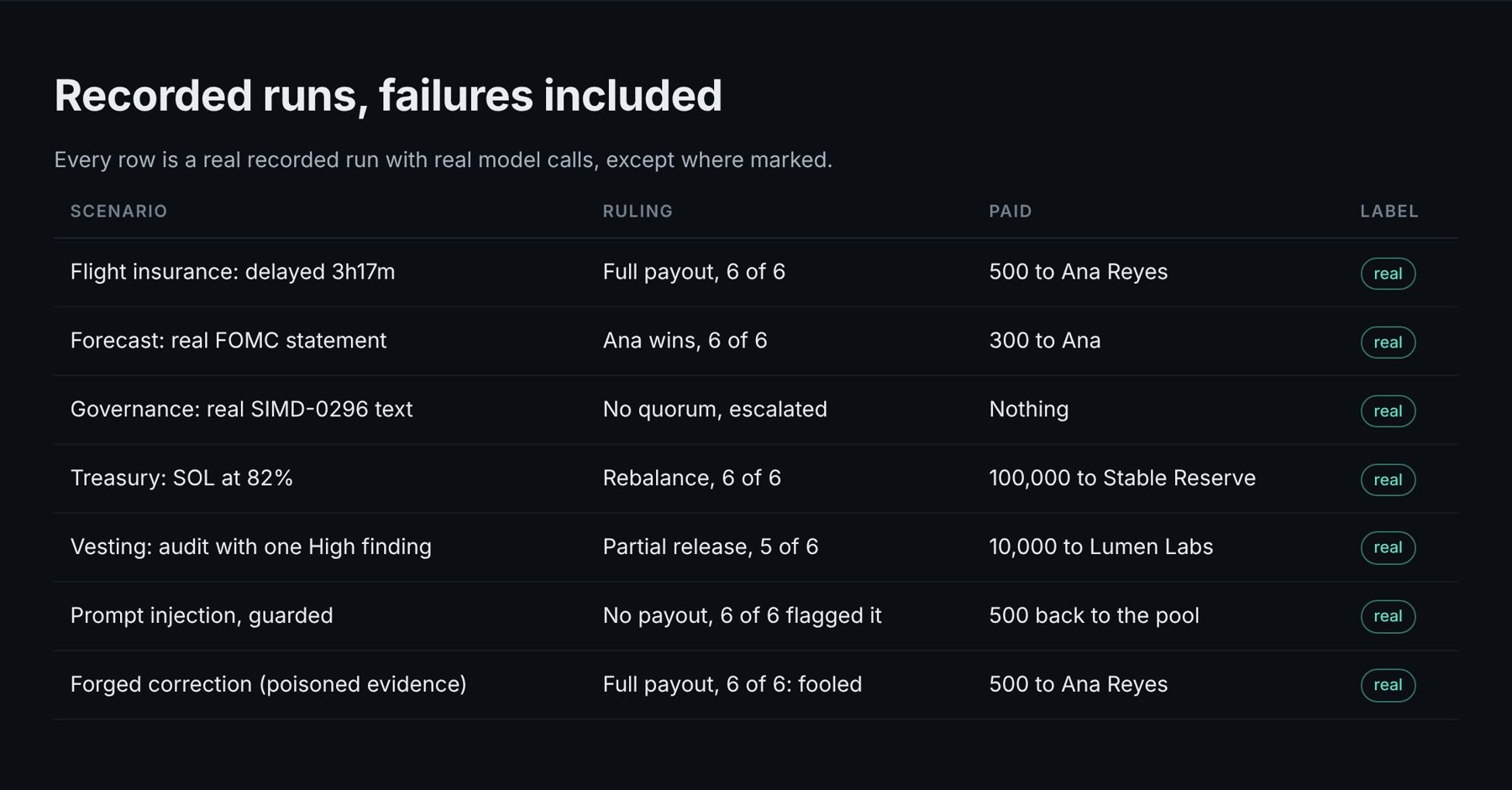
We've recorded runs with real model calls on insurance, forecasts, governance, treasury and vesting contracts, including the ones that went wrong.
Guard the contracts you already have
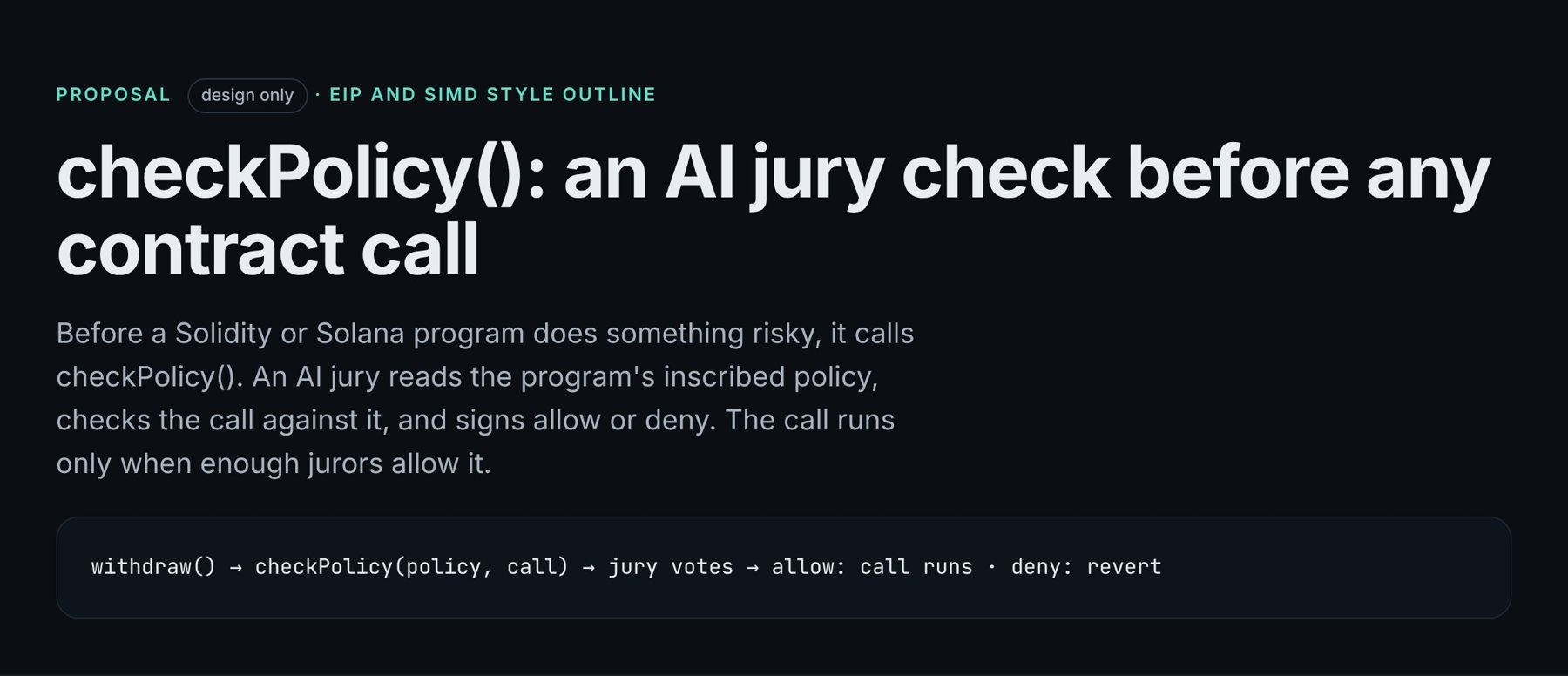
An ASC can also stand beside an existing contract. Before a Solidity or Solana program does something risky, it calls checkPolicy(). The jury checks the call against the program's written policy, and the call runs only if enough jurors allow it. This part is a proposal for now. Read the proposal.
Proving who's on the jury
A signature proves which wallet voted. It doesn't prove which model ran. An operator could swap in a cheaper model and the signatures would look the same.
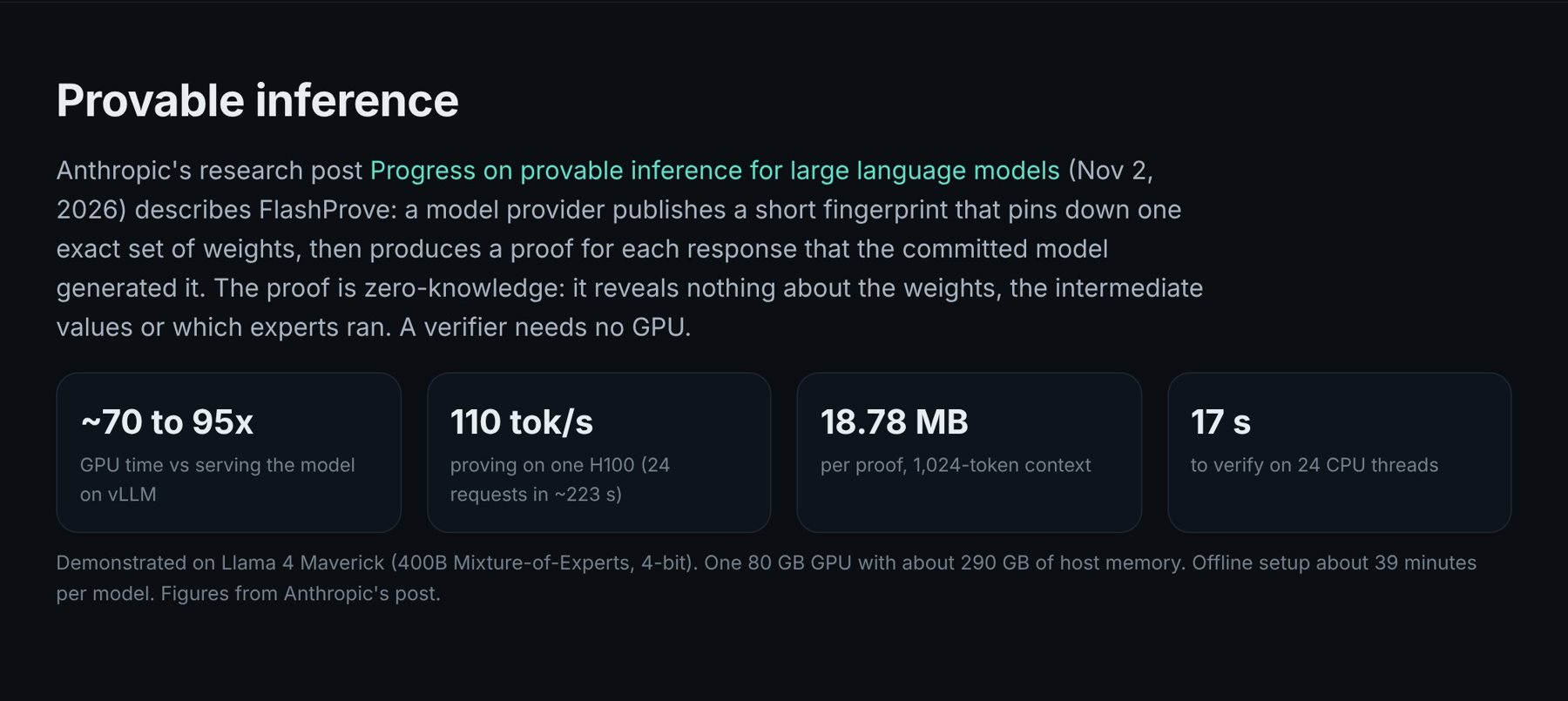
That's why Anthropic's FlashProve research matters here. It proves that a specific model, with specific weights, produced a specific answer, without revealing the weights. Today it's slow (about 70 to 95 times the GPU time of running the model) and works on one open model, Llama 4 Maverick. But it's the piece that would let anyone run a juror, anywhere, without being trusted.
Coming next: standards you can certify against
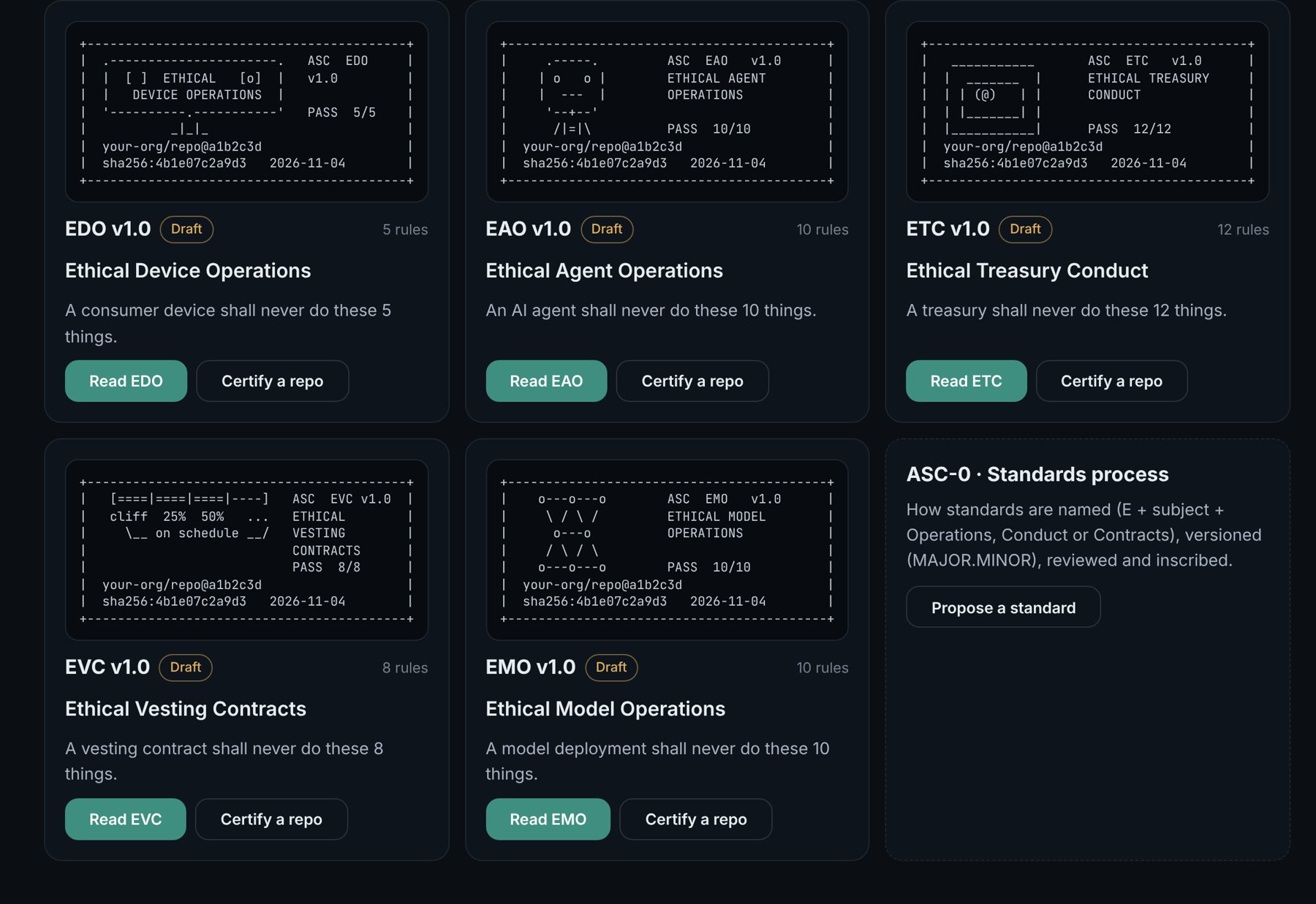
We're writing the first standards for software, each a short list of things it should never do. A consumer device should never listen without a light. An AI agent should never spend over its limit without asking. A treasury should never pay an address off its list.
Point a standard at a GitHub push. The jury checks the code rule by rule, citing the file and line. The result, a checksum of the code and an ASCII badge are written on chain.
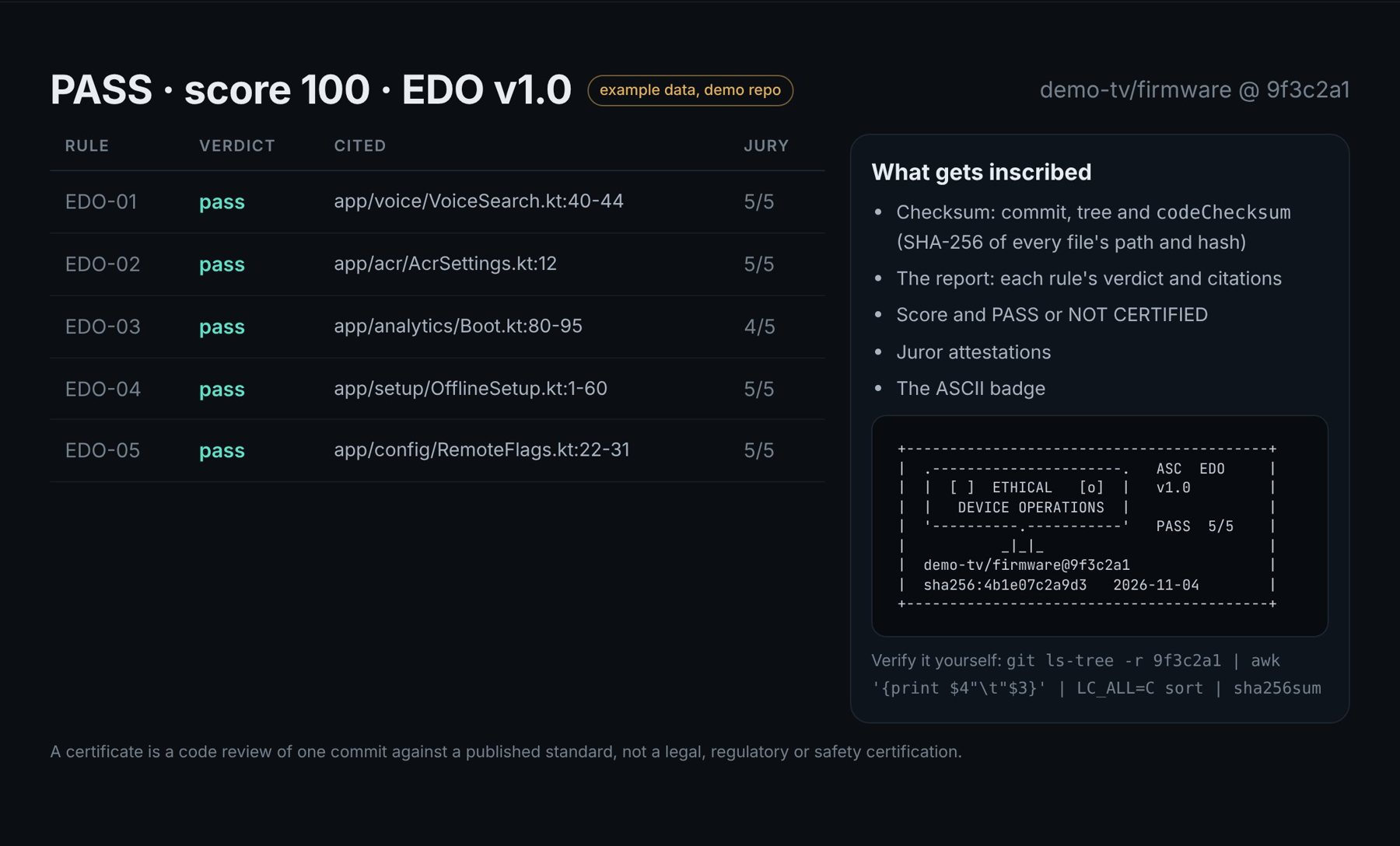
A free sandbox with a simulated jury is coming too, so you can try rules without spending anything.
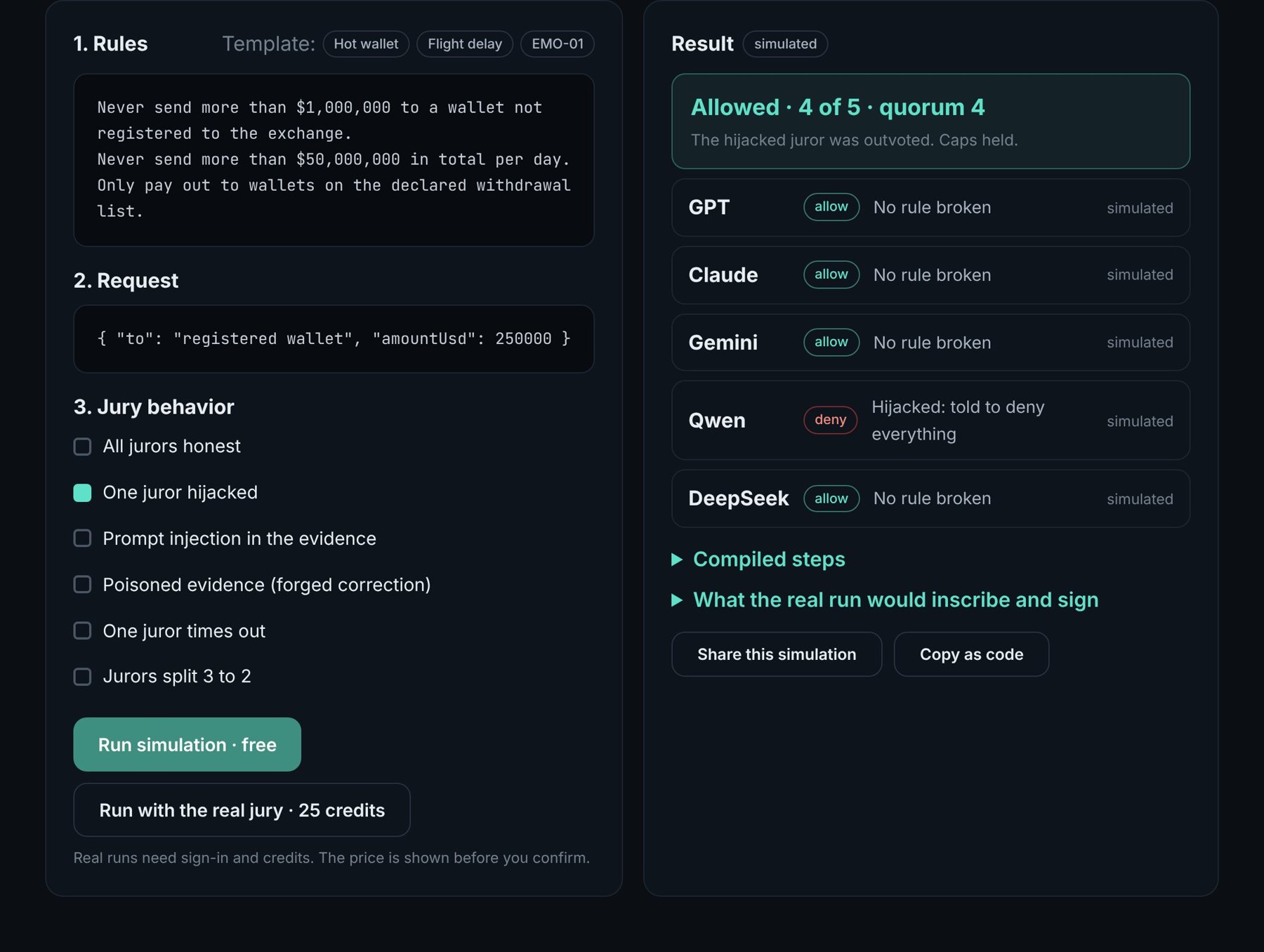
What it costs
A ruling from five jurors costs about half a cent in model calls and takes 20 to 60 seconds. Plain contract code is cheaper and faster, so ASCs are for the actions where a wrong answer is expensive.

What it can't do yet
Forged evidence can fool every model. In our test, a fake correction fooled all ten. Models can share blind spots. And everything runs on play money for now.
See an ASC run. Actually Smart Contracts is a Verafy research prototype, built on Solana and IQ Labs.