Intel Curie
Button-sized module with onboard motion sensing and pattern matching, aimed at wearables — and the one where the most interesting hardware around it came from designers rather than engineers.
Curie was small enough and low-power enough to put inside something worn, and that pulled in a crowd Intel was not used to serving. The best hardware built on it did not come from an embedded shop.
MODA was designed by Mary Huang with MakerCollider and manufactured by DFRobot. Look at what the design decisions optimise for: soft fabric-friendly cabling rather than ribbon, petal connectors radiating from a hub instead of a header block, every port labelled in the silkscreen. That is a kit built by someone who expects the assembler to be a designer making a garment, not an engineer with a pinout open on a second monitor.
The other path was Arduino 101, which put Curie into the hands of anyone who had ever used an Arduino — a far larger group than anyone shipping a wearable. Two entirely different theories of the same silicon, and the job was to keep both of them supplied and visible.
Photos
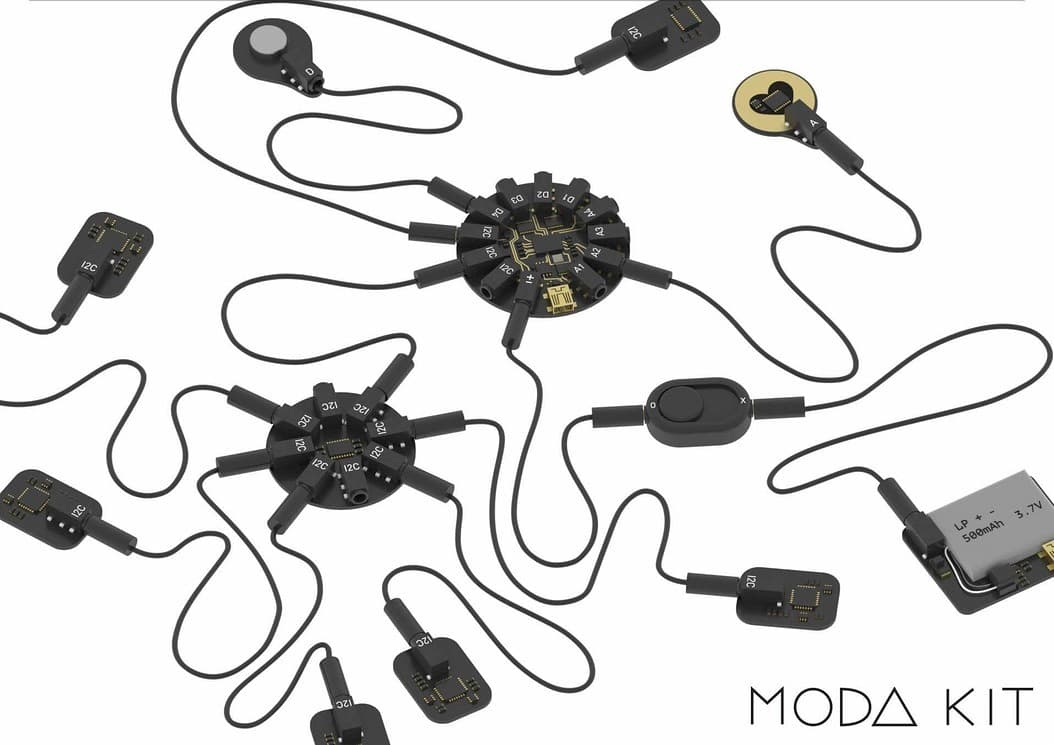
The MODA Kit. Soft cables and petal connectors instead of headers, because the thing being built is worn. 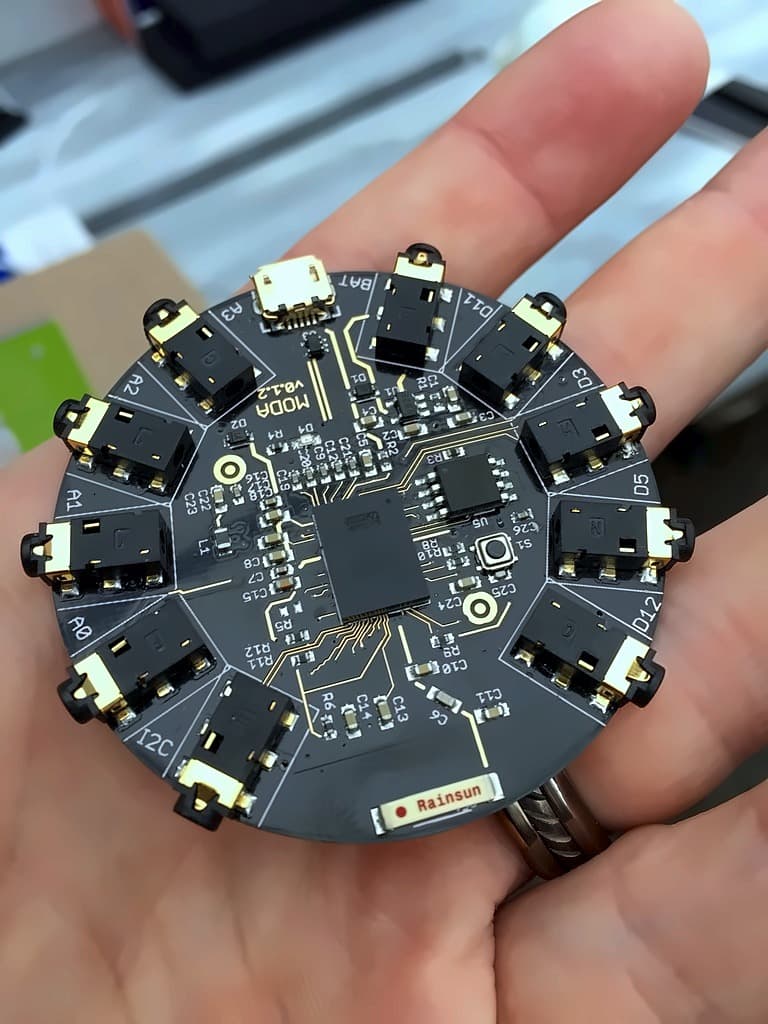
The hub, rev 0.1.2. Every port labelled on the silkscreen so a wearer, not a wirer, can assemble it. 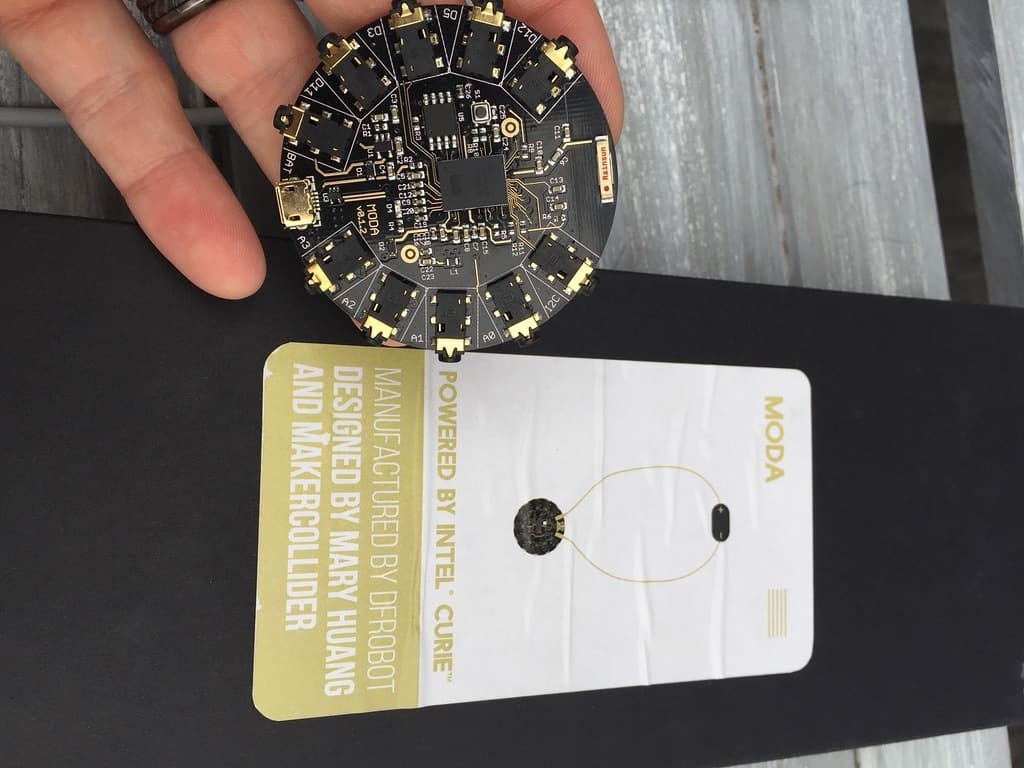
Designed by Mary Huang and MakerCollider, manufactured by DFRobot. Three parties, none of them Intel. 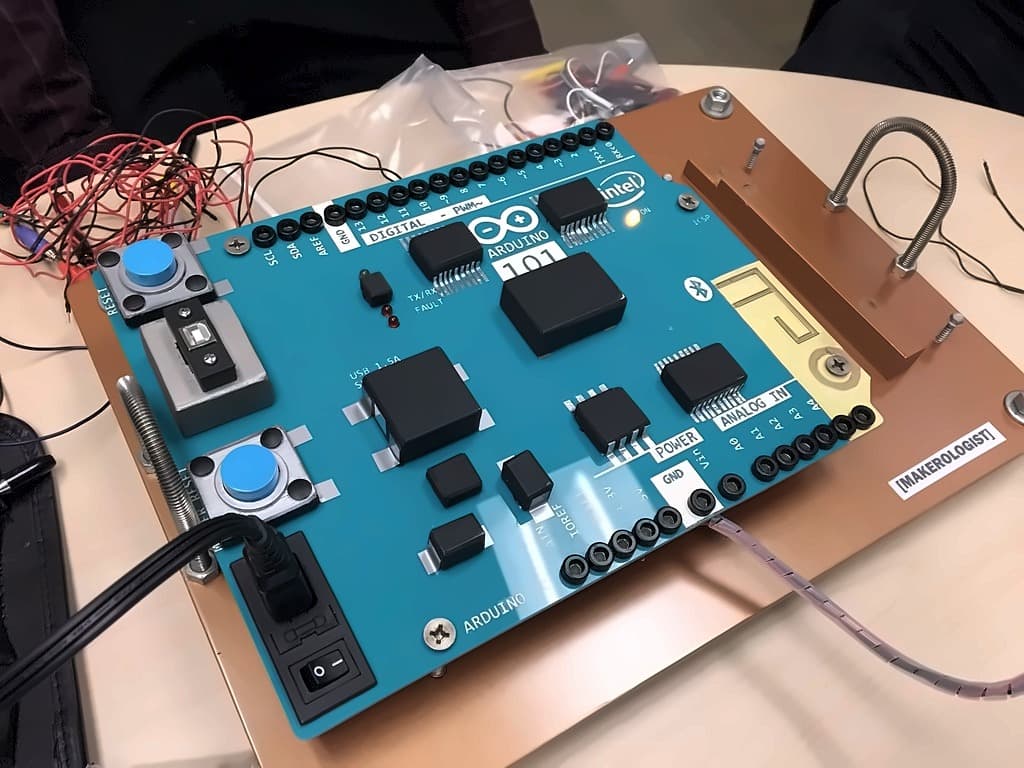
Arduino 101 — Curie's mass-market form — wired into a workshop rig.