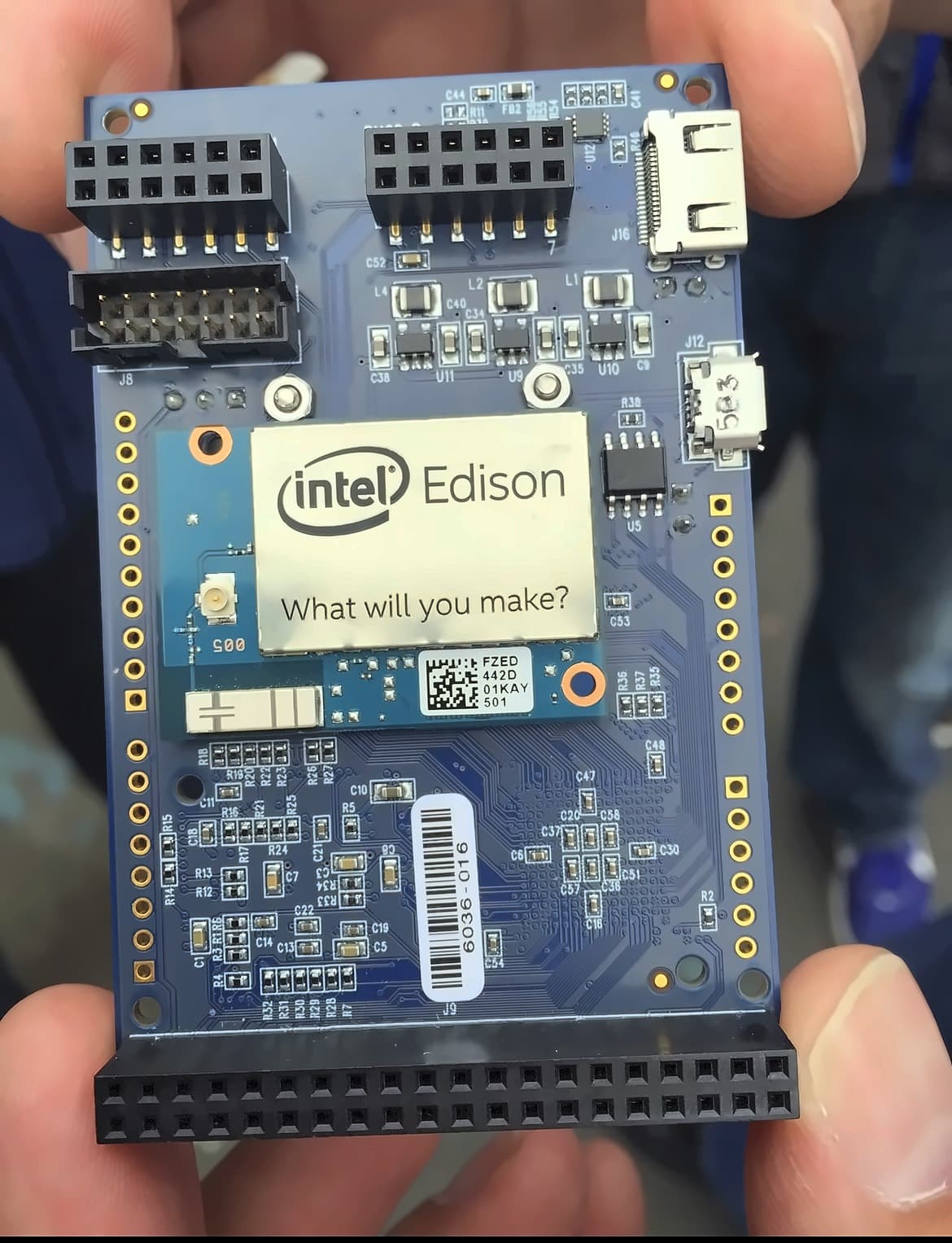
Intel Edison
Postage-stamp compute module for connected devices, and the one whose third-party carrier boards mattered more than anything Intel shipped around it.
The module in the middle of this board is the whole product Intel sold. The printed line on it — what will you make? — is a fair question and also the problem, because on its own the answer is nothing. It has no ports, no power jack, no network. It is a compute brick with a connector.
Everything that makes it buildable came from a partner, and each of them had a different theory of what the module was for. TEKTYTE's Edi-Expand turns it into a small computer — five USB ports, ethernet, storage, barrel jack. SparkFun made stackable blocks so you solder nothing and take only the battery, motor driver or sensors your build needs. Seeed's Xadow set aimed at wearables: a tiny OLED, a barometer, a vibration motor, an NFC tag, a lithium pack.
Three vendors, three incompatible answers, all correct.
That was most of the job. Find the hardware vendors willing to build the boards, support them well enough that the boards were good, and make sure a developer who bought an Edison could find one. The ecosystem around a module decides whether the module exists in any meaningful sense, and the best thing built on this one — the OpenAPS closed-loop insulin system — came from a community Intel was not talking to at all.
Photos
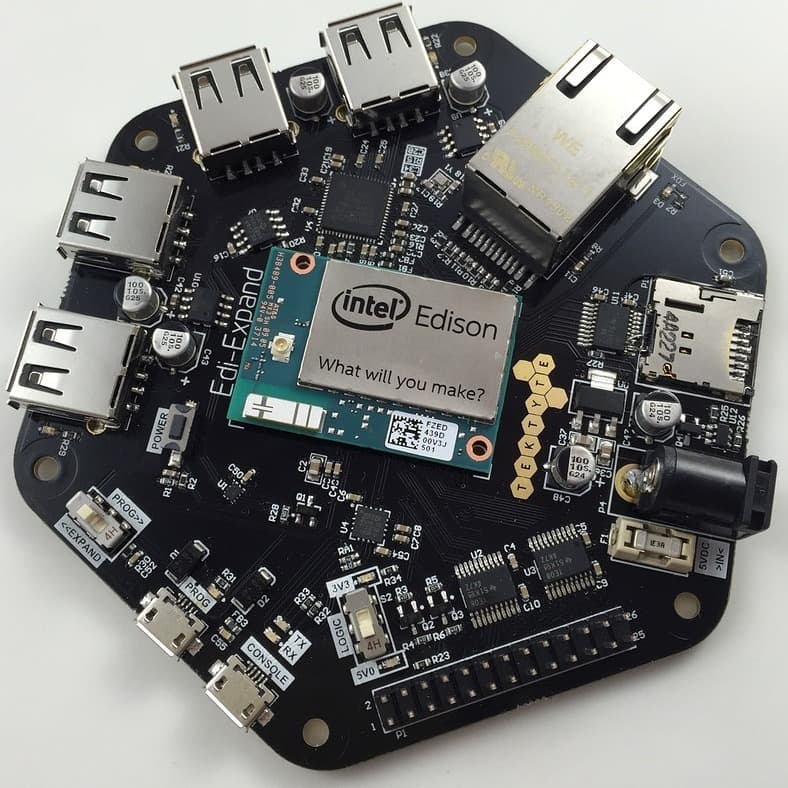
TEKTYTE's Edi-Expand. The module is Intel's; everything that makes it usable on this board is somebody else's. 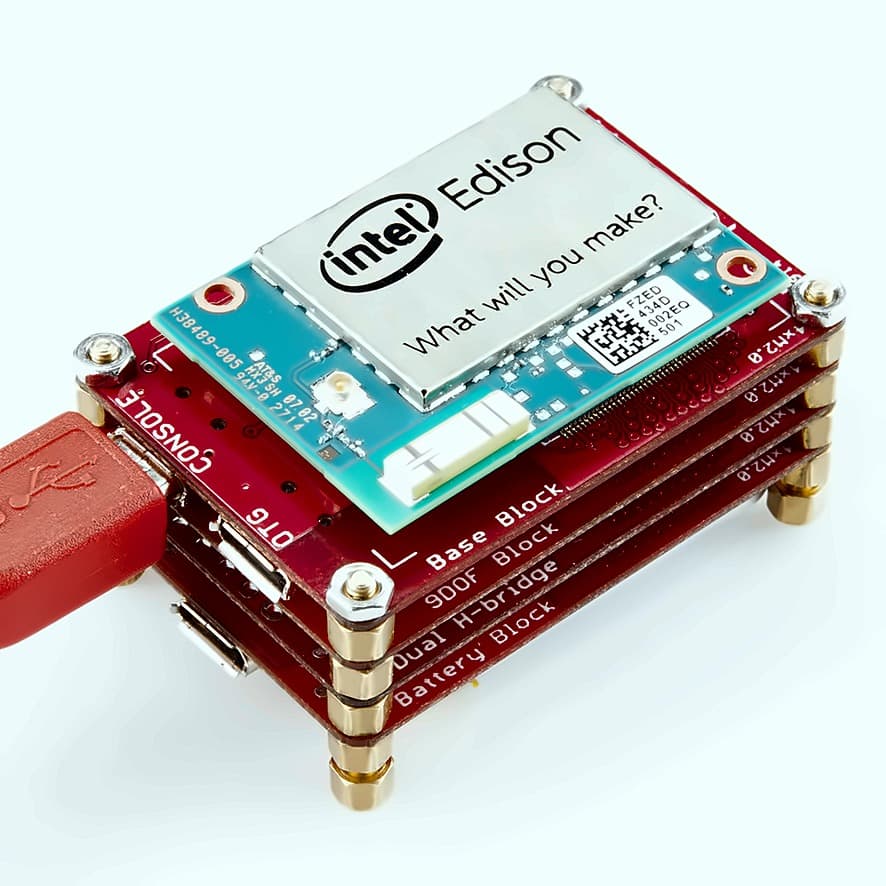
SparkFun went the other way — stack only the blocks your build needs. 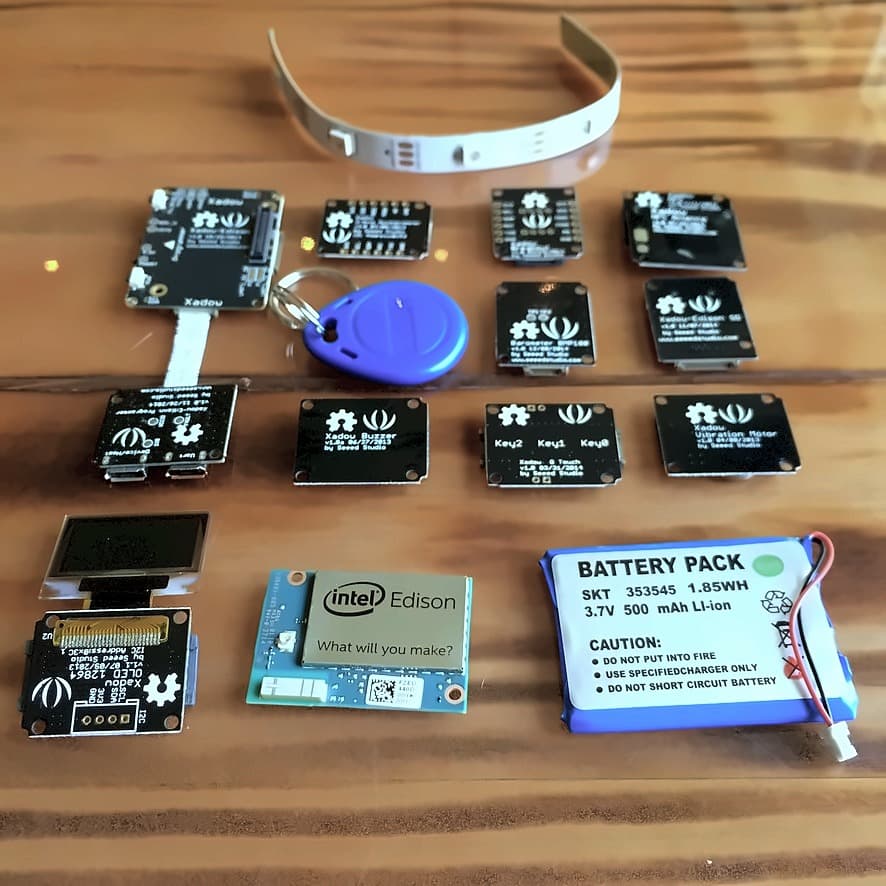
Seeed's Xadow set, aimed at wearables. Same module, a different idea about what it is for.