Intel Joule
Intel's highest-performance maker module, aimed at robotics, drones and machine vision. I built the global launch ecosystem around it — the partner network, the platform lineup it shipped with, and the carrier boards it needed and did not have.
Numbers
- 15
- Platforms at launchshipped alongside the module rather than after it
Problem
A compute module does not arrive with an ecosystem. It arrives with a pinout, a heatsink and a price, and whether anyone builds on it is decided by what already exists around it on the day it ships.
Joule had the harder version of that problem. It was aimed at robotics, drones and machine vision — people who need a board to seat it on, a way to wire sensors to it, and some evidence that somebody has already made it work — and Intel's own board roadmap was aimed at production volume, which is the right call for selling silicon and no help at all to someone deciding over a weekend whether to build on it.
Solution
Fifteen platforms ready on release day rather than trickling out over the following year: expansion shields, sensor kits, carrier boards and robotics platforms, each from a partner recruited, briefed and supported through their own hardware schedule to hit that date.
The prototyping carrier boards came from external hardware vendors, because the internal roadmap was never going to produce them. That is less tidy than shipping your own, and it is the reason the platform was evaluable at all.
Analysis
Partner hardware is the only part of a launch that cannot be done late. Articles, workshops and documentation can follow the silicon; a board to plug it into cannot, because the developer who reads the announcement and finds nothing to buy does not come back in six months to check again.
So the work was scheduling other companies' manufacturing against a date I did not control, which meant committing to partners early, on a module most of them had not seen working yet.
Result
What the partners built is the part worth pointing at. DFRobot's Gravity shield colour-codes its headers so the board documents itself — you can wire a sensor without opening a pinout. Their sensor kit puts fourteen modules in a case and removes the entire first afternoon of a project.
Neither was on anyone's roadmap. Both exist because the gap between a module and a working thing is where a platform is won or lost, and both were on sale when the module was.
Photos
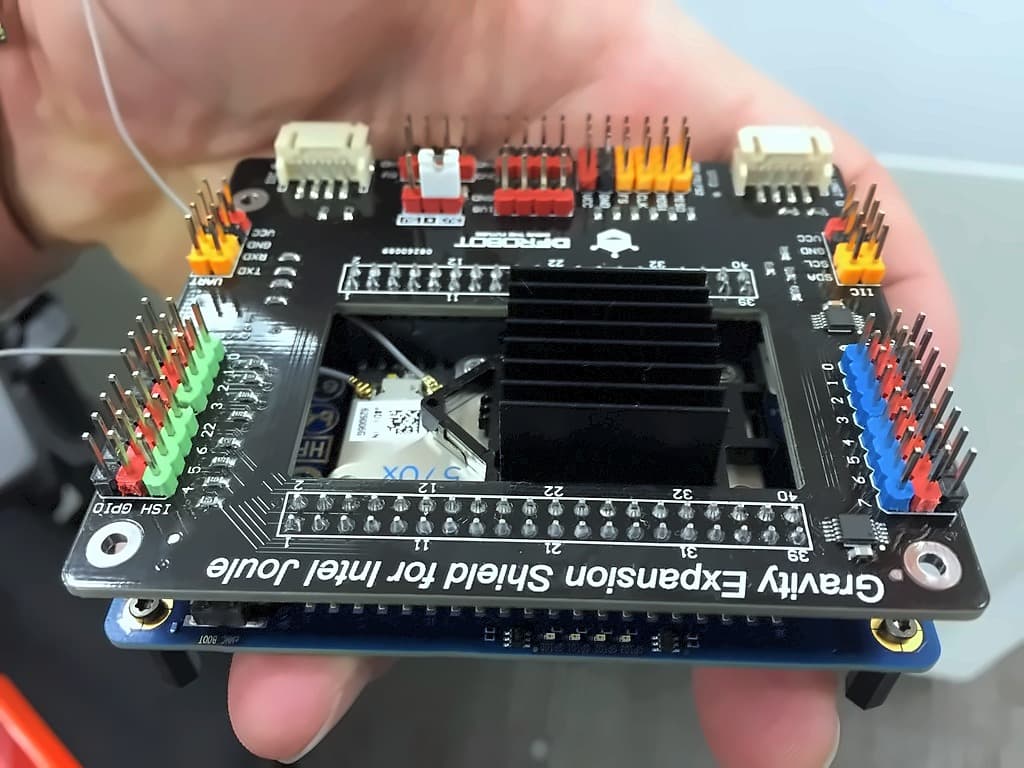
DFRobot's expansion shield. The coloured headers are the documentation — you can wire a sensor without opening a pinout. 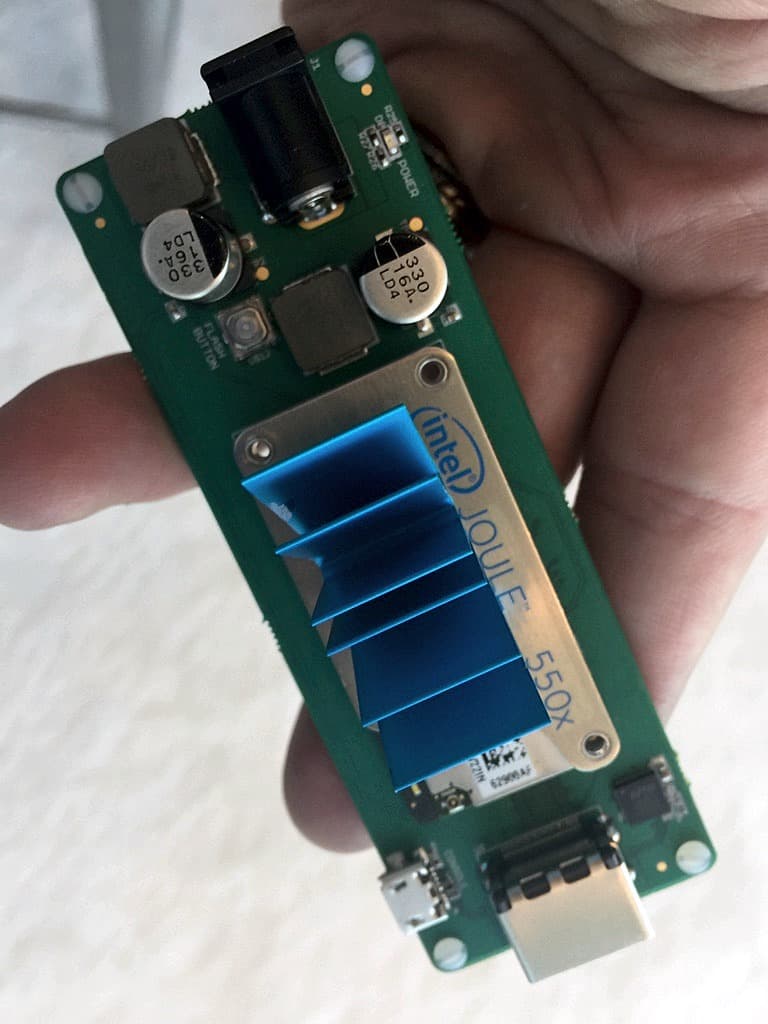
The Joule 550x. Most of what you can see is heatsink. 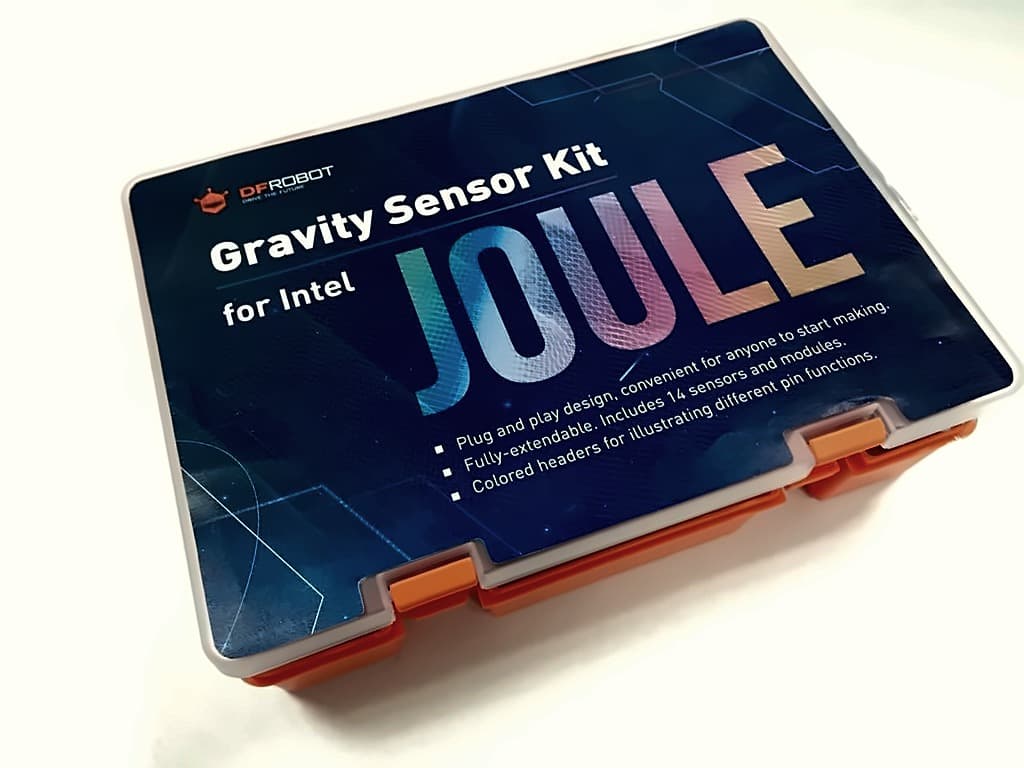
Fourteen sensors in a box. A partner productising the gap between a module and a project. 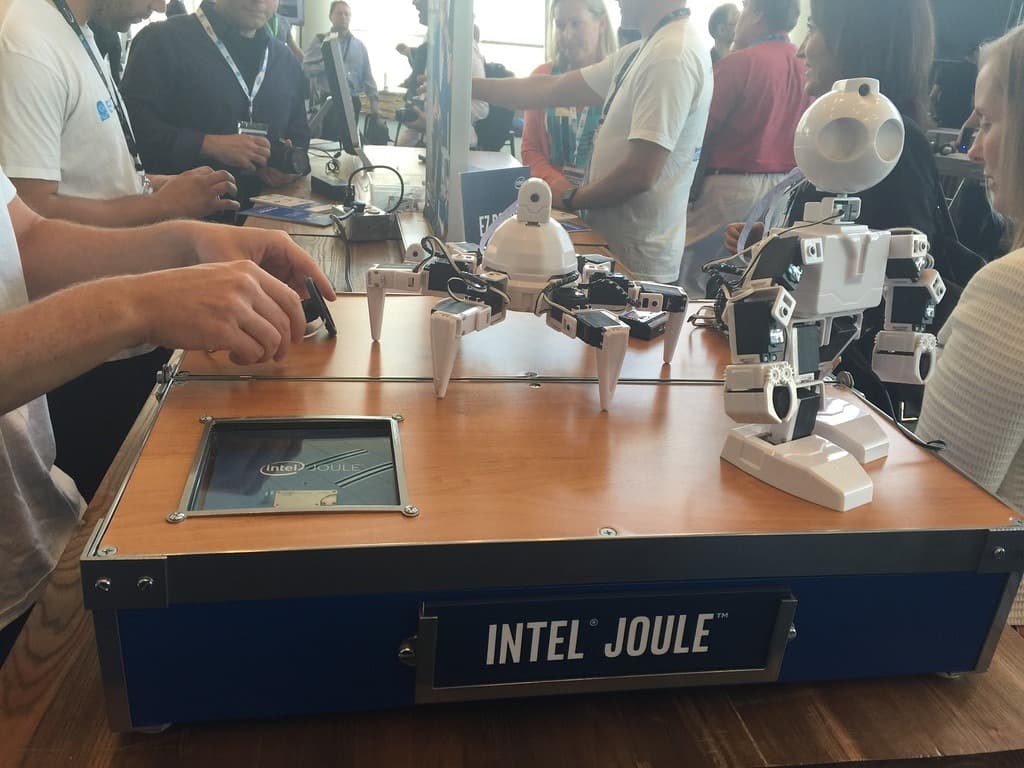
Launch day. The module under glass is what Intel sold; the robots are why anyone stopped walking.