OpenAPS on Intel Edison
The open-source artificial pancreas community built their closed-loop insulin system on Edison and the Explorer Board — the clearest case I have seen of a platform finding a use nobody at the company had planned for.
OpenAPS is a community of people with type 1 diabetes who built their own closed-loop insulin delivery system, years ahead of the commercial products, and published the whole thing openly. For a period they ran it on the Intel Edison and the Explorer Board.
Look at what they built. The green board is a 900MHz Explorer Block, dated 2016 — a radio the community designed and had made themselves, because communicating with an insulin pump required a frequency no commercial carrier board offered. A lithium cell is taped to the back. The OpenAPS sticker is on the battery.
That is a group of people with a chronic illness doing hardware design because the medical industry had not shipped what they needed.
My work was the platform, not the device. I never built a medical system and would not claim to — what I did was make sure the compute module these people had chosen was documented, supported and reachable, and that the company understood who was using it and why.
It is the case I come back to most often when arguing about developer ecosystems. Nobody at Intel put "artificial pancreas" on a roadmap slide. The module was built for makers and industrial prototyping. The most consequential thing anyone did with it came from outside the plan entirely, and the only reason it was possible was that the platform was open enough to be picked up by people the company was not talking to.
That is the actual argument for investing in an ecosystem. Not that you can predict what developers will build, but that you cannot, and the surprises are where the value is.
Photos
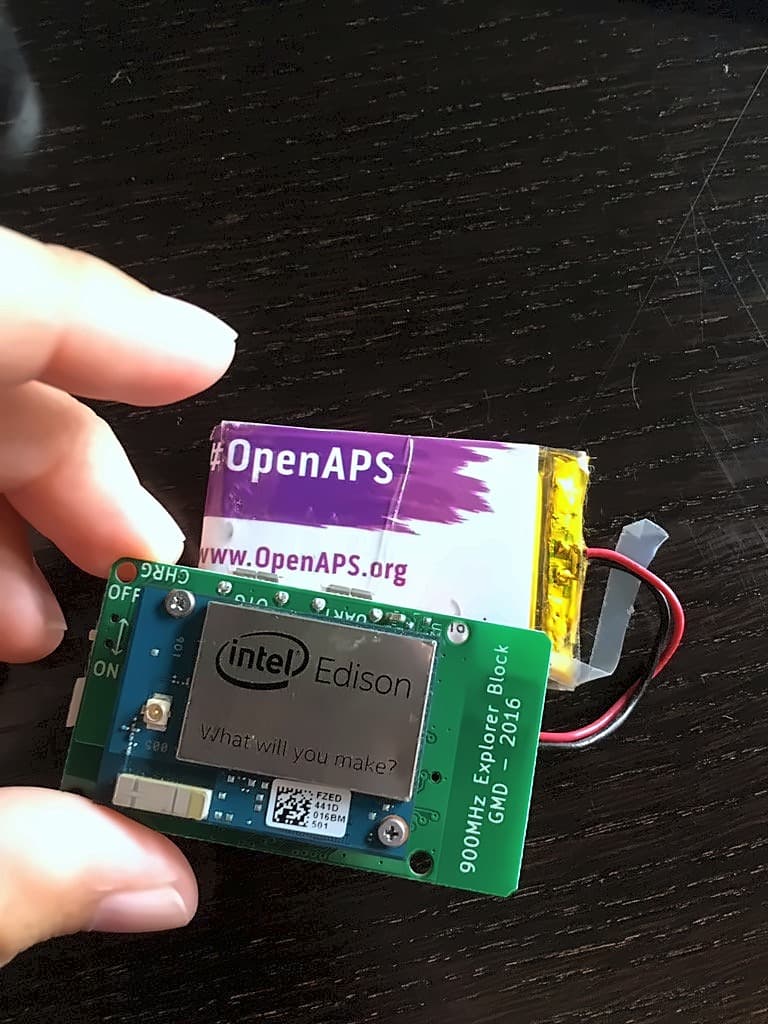
A 900MHz Explorer Block, 2016. The community designed the radio board themselves, because talking to an insulin pump needed a frequency nobody was shipping. 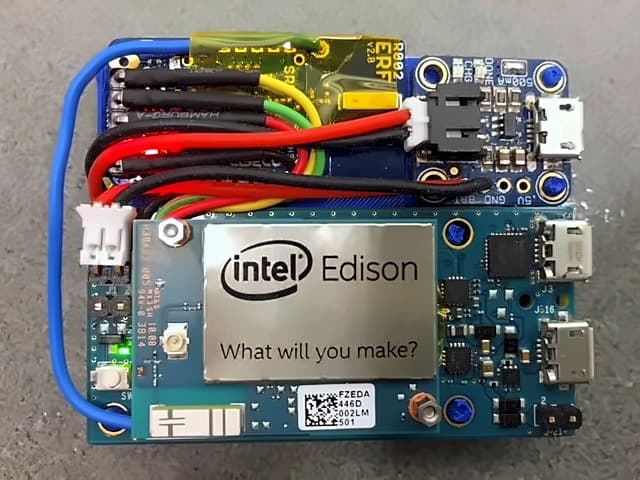
The rig as people actually carried it.