
Verafy Judiciary
Write a community's rules once. A jury of AI models from different companies applies them, and every ruling cites a clause. A quick mediation maps both sides of a dispute from one link.
Problem
A community can write bylaws and a code of conduct, but someone still has to apply them to each dispute. The dispute itself arrives as a pile of links and a long thread. Each side has its own facts, and nobody in it is placed to summarise the other side fairly.
Solution
Judiciary has two modes. A quick mediation takes one link: a forum thread, an X post, a GitHub issue or a Reddit thread. Five models map each side, check the facts and suggest options. It costs 200 credits, needs no organization and binds no one.
A community can also register its rules: bylaws, powers, guard rules and a code of conduct, each clause with its own id. It picks the jury in advance. Models, alternates and powers are fixed before any dispute exists. A member files a case, the case is pinned to the charter version in force, and the other side gets time to answer. Each juror votes blind in the first round and cites a clause. Code checks every citation, and dissent is published in full.
Analysis
It started as Mediation, which checks facts and does not rule on value questions. Judiciary adds rulings only where a community has written its values down first, so the jury applies the charter and not its own views. Fixing the jury before any dispute means neither side can pick models after the fact.
The trade-offs are privacy and authority. Quick mediations are public once you submit, so they suit public disputes. Judiciary is not a court and not legal advice, so a ruling carries the weight a community gives its own charter and no more.
Result
No community has published a public charter yet. The public cases so far are quick mediations, among them two Zcash community questions and a dispute over a $2,400 vet bill.
Screens
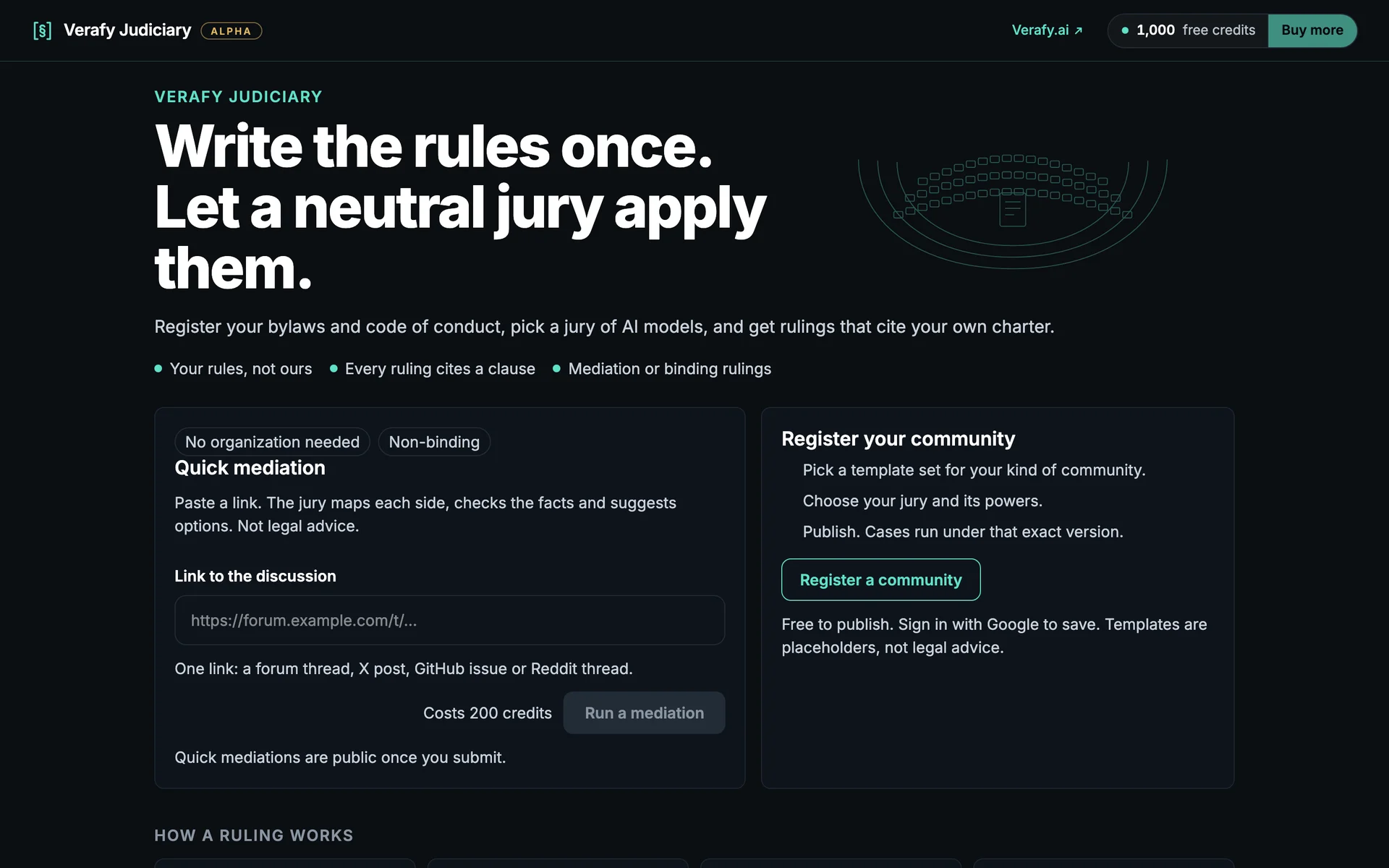
Two ways in. A quick mediation needs only a link and binds no one. A registered community gets rulings that cite its own charter. 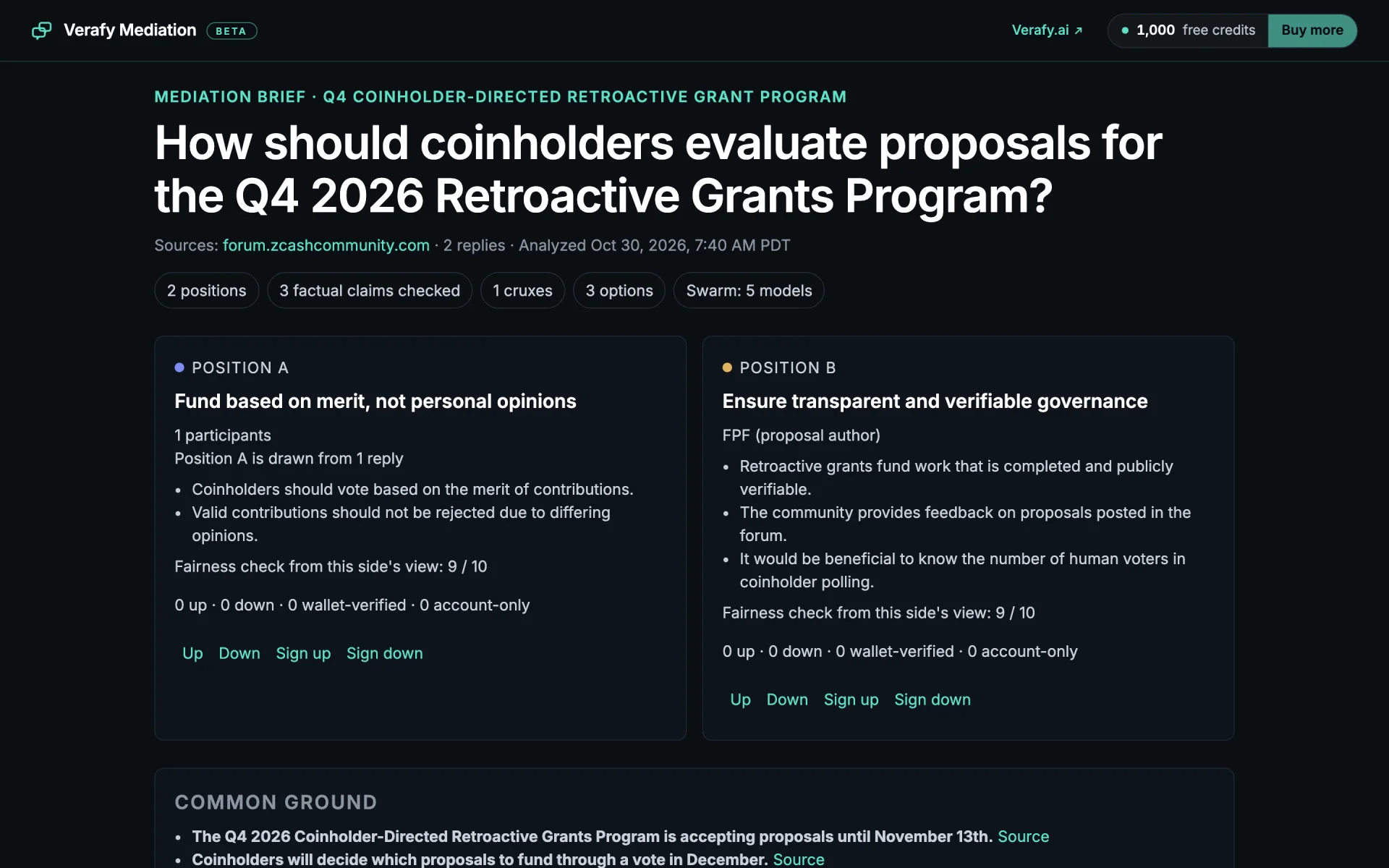
A finished mediation brief. Each side gets its own position and a fairness score from its own point of view, and readers can vote on whether each one is stated fairly.