Perspective Now Knows Who Its Thinkers Are
Every thinker in Perspective now links to a profile with a portrait, a Wikipedia summary and every take they have given. Plus saved question pages, shared Verafy credits and a header that works on a phone.
Perspective is for questions with no right answer. You ask something like "Is there free will?" and it convenes a council of AI models to lay out how different eras, traditions and regions answer it, side by side. It is part of Verafy.
This week I shipped the changes that turn it from a page of answers into something you can explore.
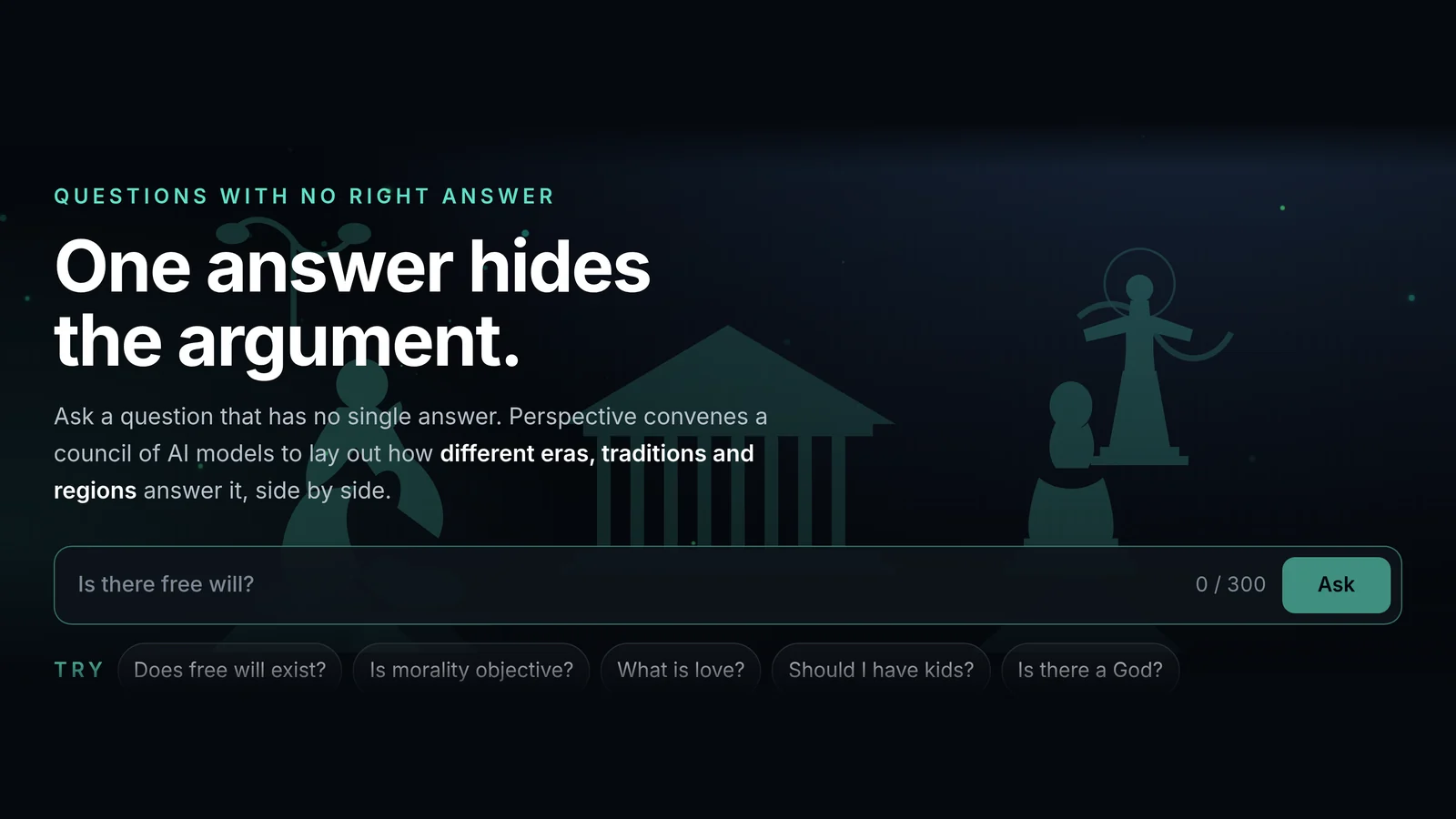
The front page. Ask a question, or start from one of the suggestions.
Every name is a link
Before, a thinker's name was just text on a card. Now every name is a teal link with a small bust icon, and it opens a profile at /thinker/ followed by their name. The links appear everywhere a thinker does: council cards, the picker, compare rows, featured teasers, agreements and fault lines.
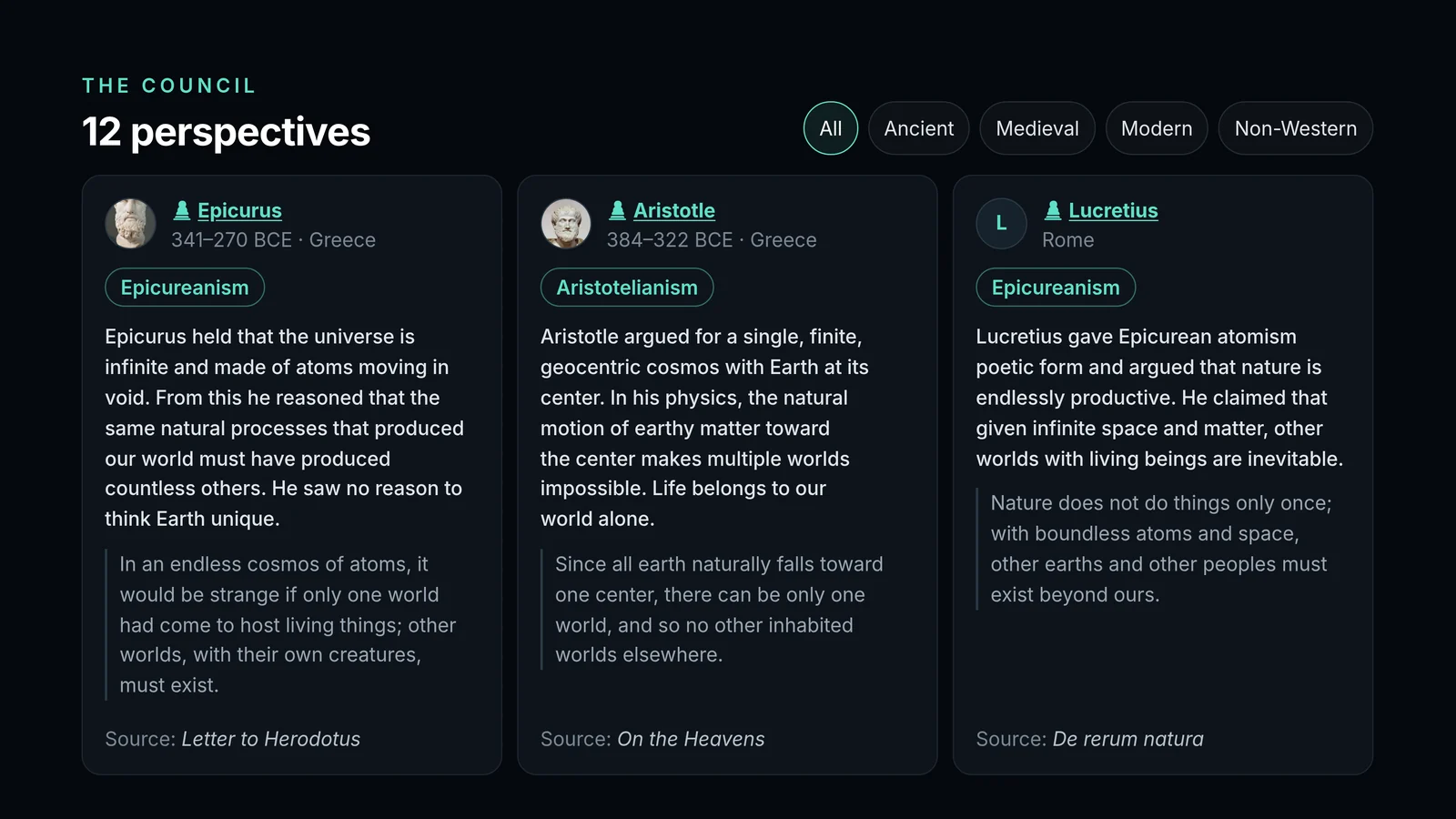
A council of 12 perspectives. Each name opens that thinker's profile.
A profile has a portrait, or a monogram when there is no portrait, a link to Wikipedia, a short summary marked as coming from Wikipedia, and the thinker's saved takes grouped by question. I cache the Wikipedia summaries so a profile does not depend on a live call. Common short names redirect to the right page, so /thinker/buddha lands on /thinker/the-buddha. Profiles are in the sitemap and each one has its own share card.
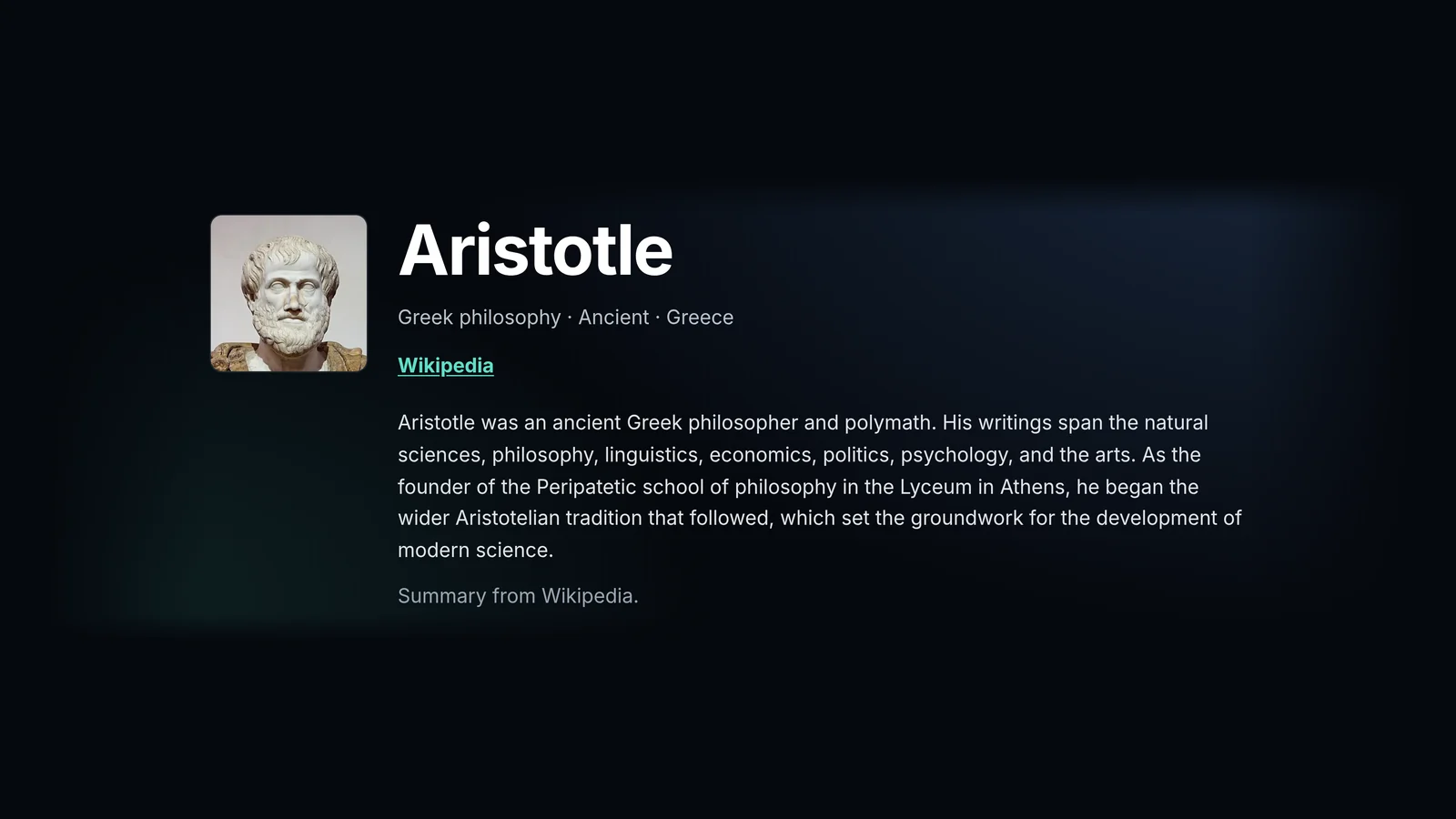
Aristotle's profile. On the live site it collects 37 saved takes.
The takes come only from councils that were actually run and saved. Nothing on a profile is written fresh for the profile.
Fault lines read like sentences
The fault lines section is where the council disagrees. It used to cut bullets off mid-thought. Now each bullet ends on a complete sentence, and the thinker names inside it are links too.
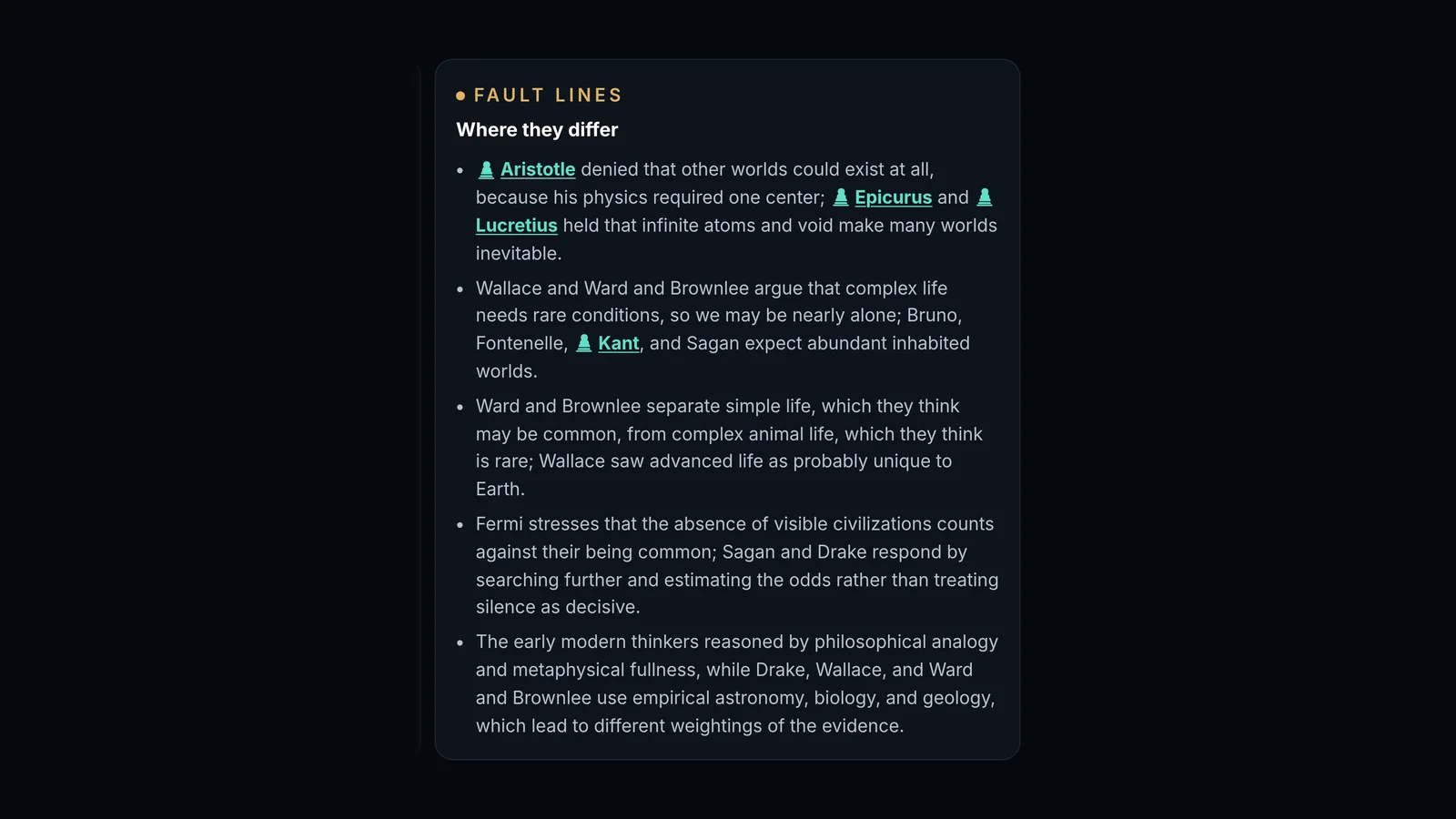
Where the council splits, with each name linked to its profile.
Pick your own council
The picker filters by era, tradition and region. You select the thinkers you want, then compare them, ask for more, or contrast one view against the rest. Each card shows the claim, a plain paraphrase, and the source it came from.
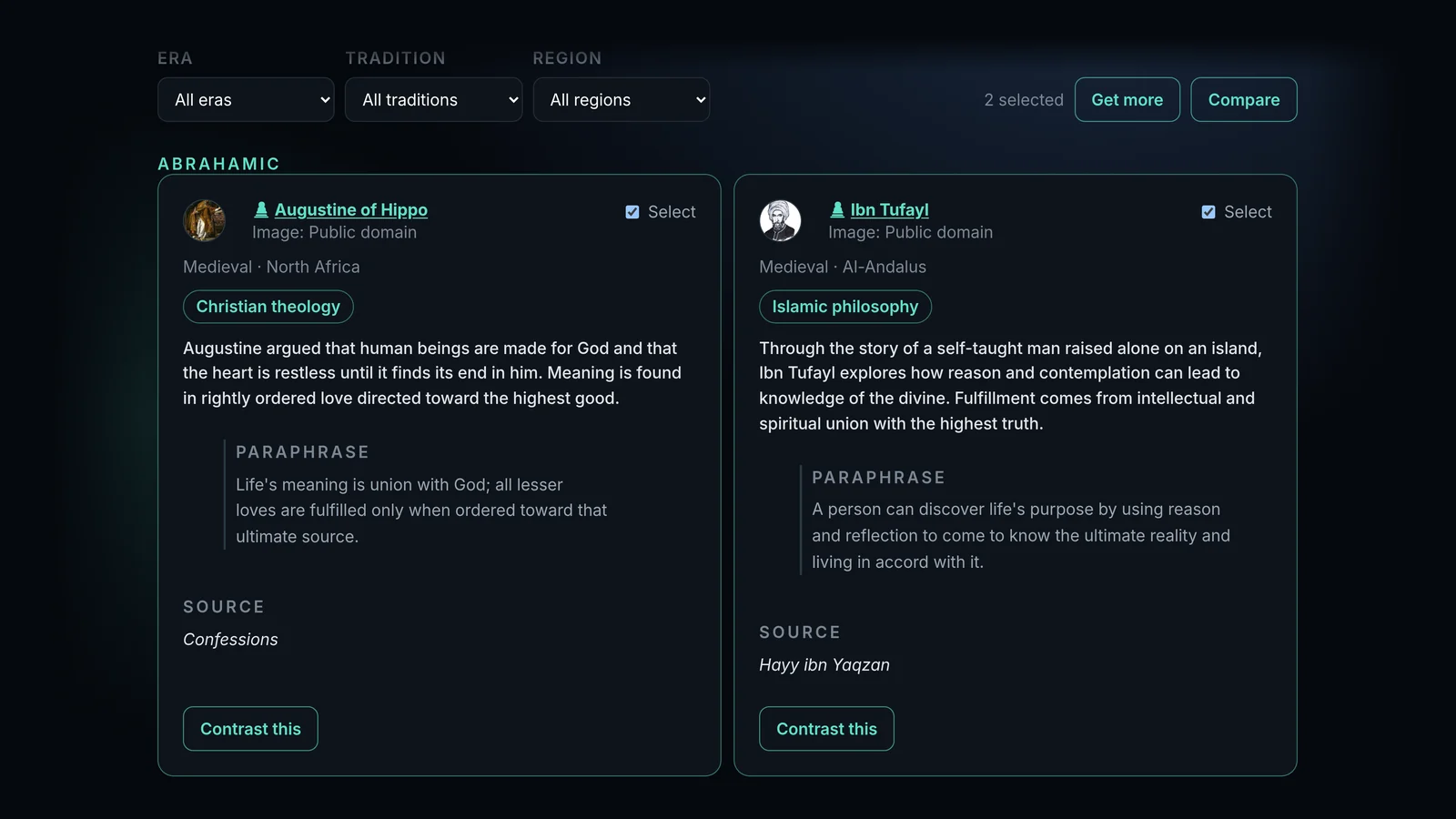
Two thinkers selected from the Abrahamic group, ready to compare.
The tag on each card now sits in normal flow, so a longer name like Augustine of Hippo no longer breaks in the middle of a word.
Questions are saved
Each question now has its own page at /q/ followed by the question. Asking the same question again reuses the saved council instead of running a new one. There is a /questions index with 52 starter questions, and all of it is in the sitemap, so a good answer can be found and shared.
One header, one balance
Perspective now uses the same header as the rest of Verafy: the mark, the name, a Beta tag, Perspectivepedia, a quiet link back to Verafy.ai and one credits pill. Credits are shared across verafy.ai, Bias Detector, Swarm Explorer, Fact Checker and Perspective, so one balance works everywhere. A fresh council costs 25 credits. Under 1100px the menu comes first and the header holds together down to 320px.
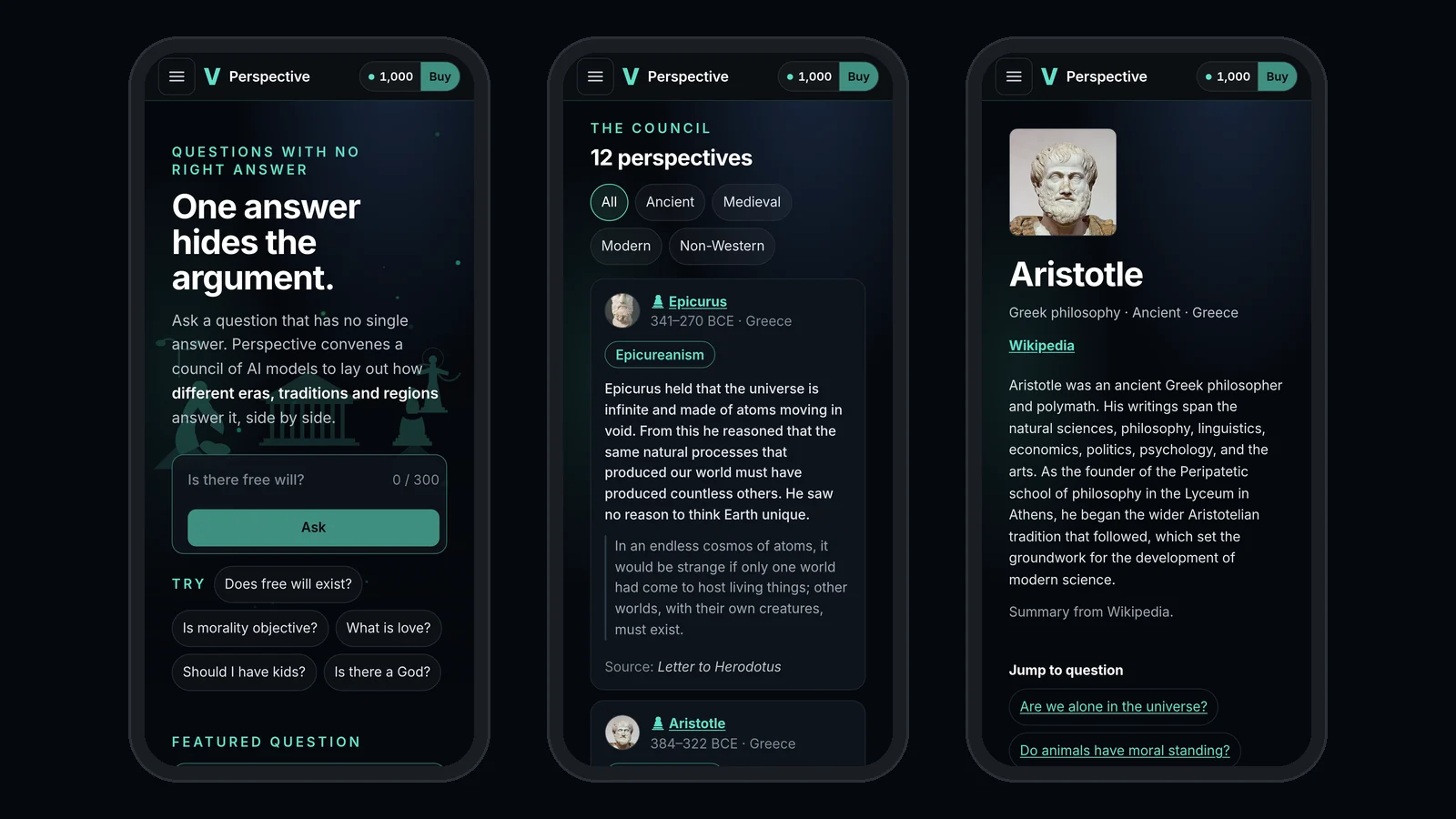
The front page, a council and a profile at phone width.
The test suite stands at 94 unit tests and 9 browser tests. Ask it something.