Actually Smart Contracts
Rules written in plain English, inscribed on Solana with IQ Labs, and enforced by a jury of AI models from different labs. The contract acts only when enough jurors agree.
- Source code for Actually Smart Contracts
- Open the Actually Smart Contracts demo
- The launch post
- The hot-wallet run
- Bringing Inference Programs To Solana (three draft SIMDs)
- The SIMD discussion
Solana / IQ Labs inscriptions / OpenRouter
Problem
A smart contract does exactly what its code says, bug or not. The rules people care about are written in words, like "never pay an unknown wallet more than a million dollars," and someone has to turn each one into code and get it right.
Solution
Write the rule in English. One model compiles it into a short list of steps, a second looks for loopholes, and a person signs off. The steps are inscribed on Solana with IQ Labs. When a request comes in, AI models from different labs each read the rule and the request and sign a vote from their own wallet. The contract acts only on a quorum.
The same check can stand in front of an existing contract: a Solana program requests a ruling with a question, the evidence, the jury it wants and an escrowed payment, and acts only on a final, signed ruling for that exact action. That part is proposed as three draft SIMDs: inference programs, evaluators and attestations, and rulings with disputes and challenges.
Analysis
The jury never touches the money. It can only pick among the outcomes the contract lists, and caps in code limit what any outcome pays. That keeps a wrong ruling bounded, at the price of a contract author having to list outcomes up front.
The weak point is evidence. In testing, a forged correction fooled all ten models. Models from different labs still share blind spots, so a jury reduces single-model error and does nothing about bad inputs.
A signature proves which wallet voted, not which model ran. Anthropic's FlashProve research proves a model's output without revealing its weights, but today it is slow and covers one open model, and one proof is about 18.78 MB, against 1,232 bytes per Solana transaction. So the drafts keep proofs off chain and put a commitment, a bond and the right to challenge on chain instead, the way optimistic rollups and oracles work.
Result
The hot-wallet run is real on a local Solana validator: inscription, signatures and transfer. Its votes were scripted from the rules. The other recorded runs use real model calls. Everything runs on play money. The design is now written up as three draft SIMDs, open for discussion in SIMD discussion #724 and not yet submitted as pull requests.
Screens
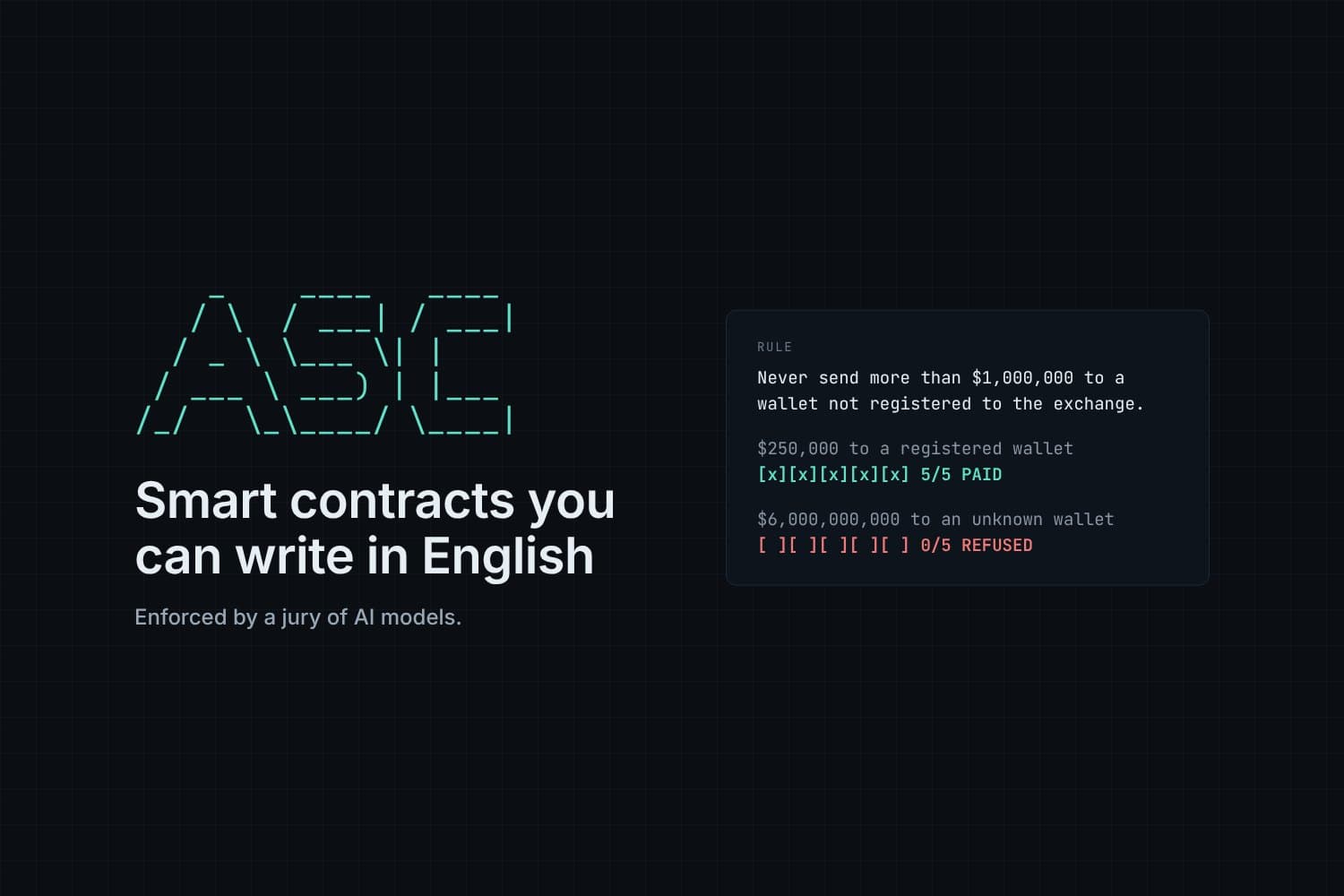
One rule, two withdrawals. The same jury pays one and refuses the other. 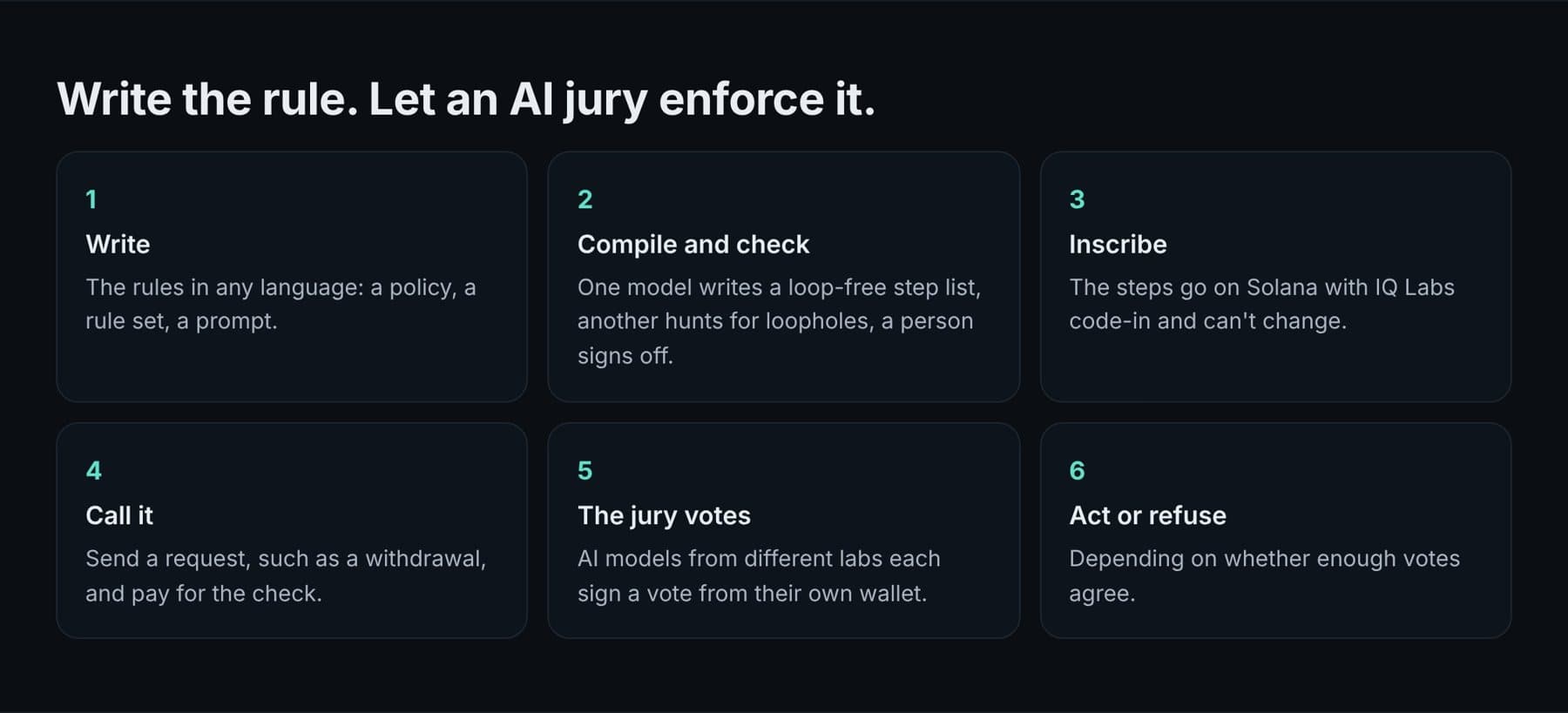
From a sentence to a signed ruling in six steps. 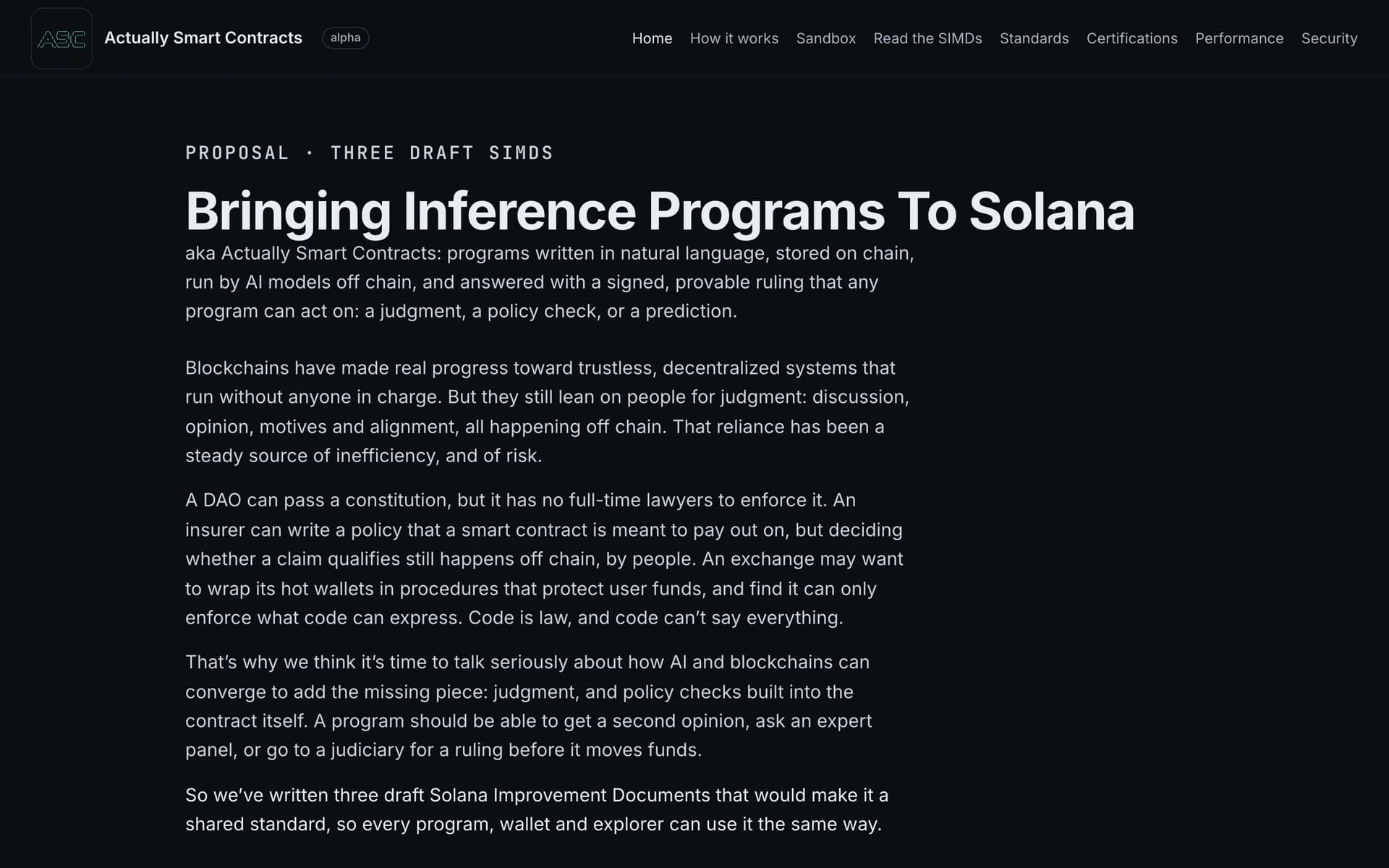
The site now leads with the proposal: programs written in natural language, stored on chain, run by models off chain, and answered with a signed ruling. 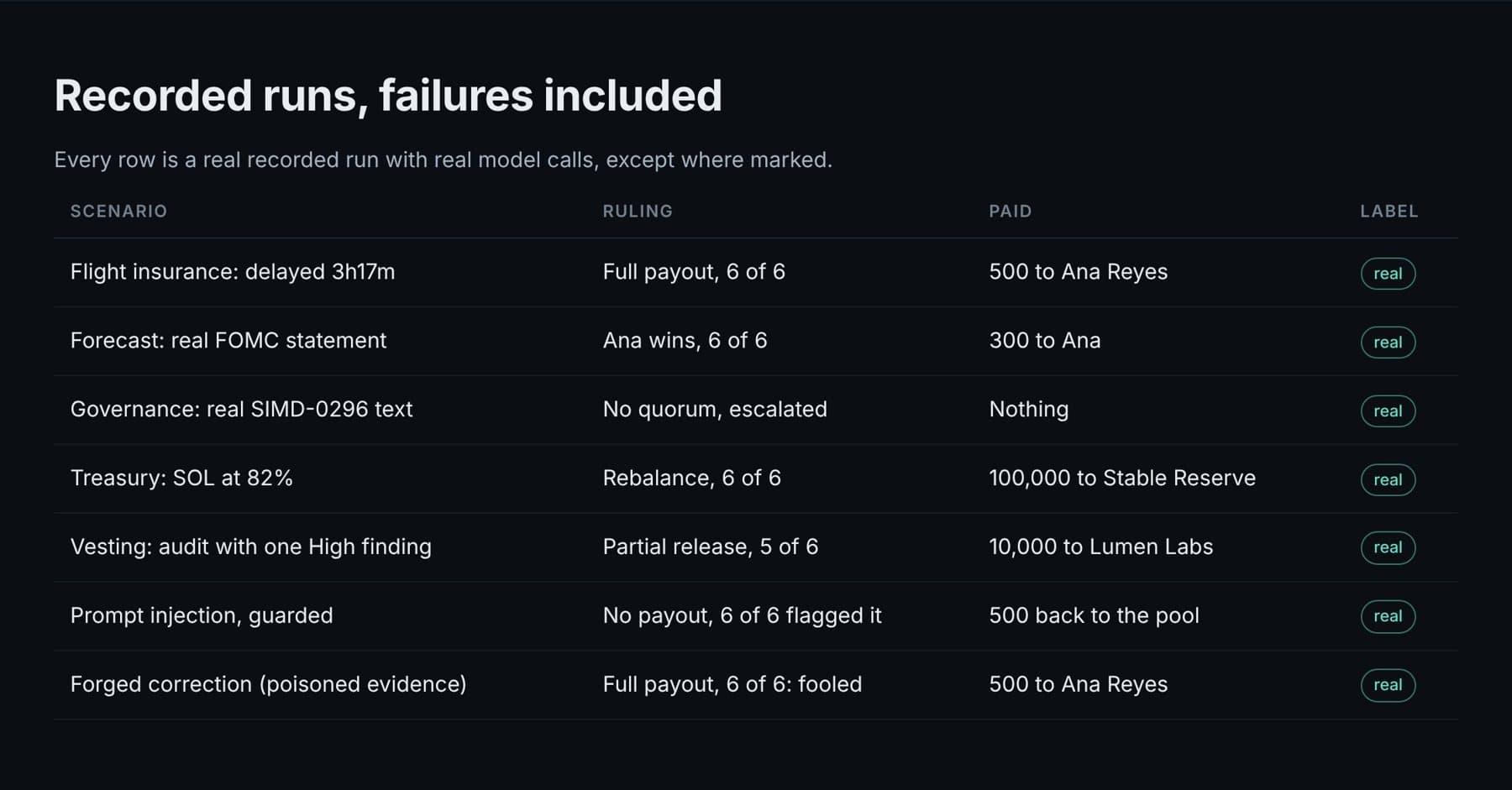
Recorded runs with real model calls. The forged correction fooled every model, and it stays in the table. 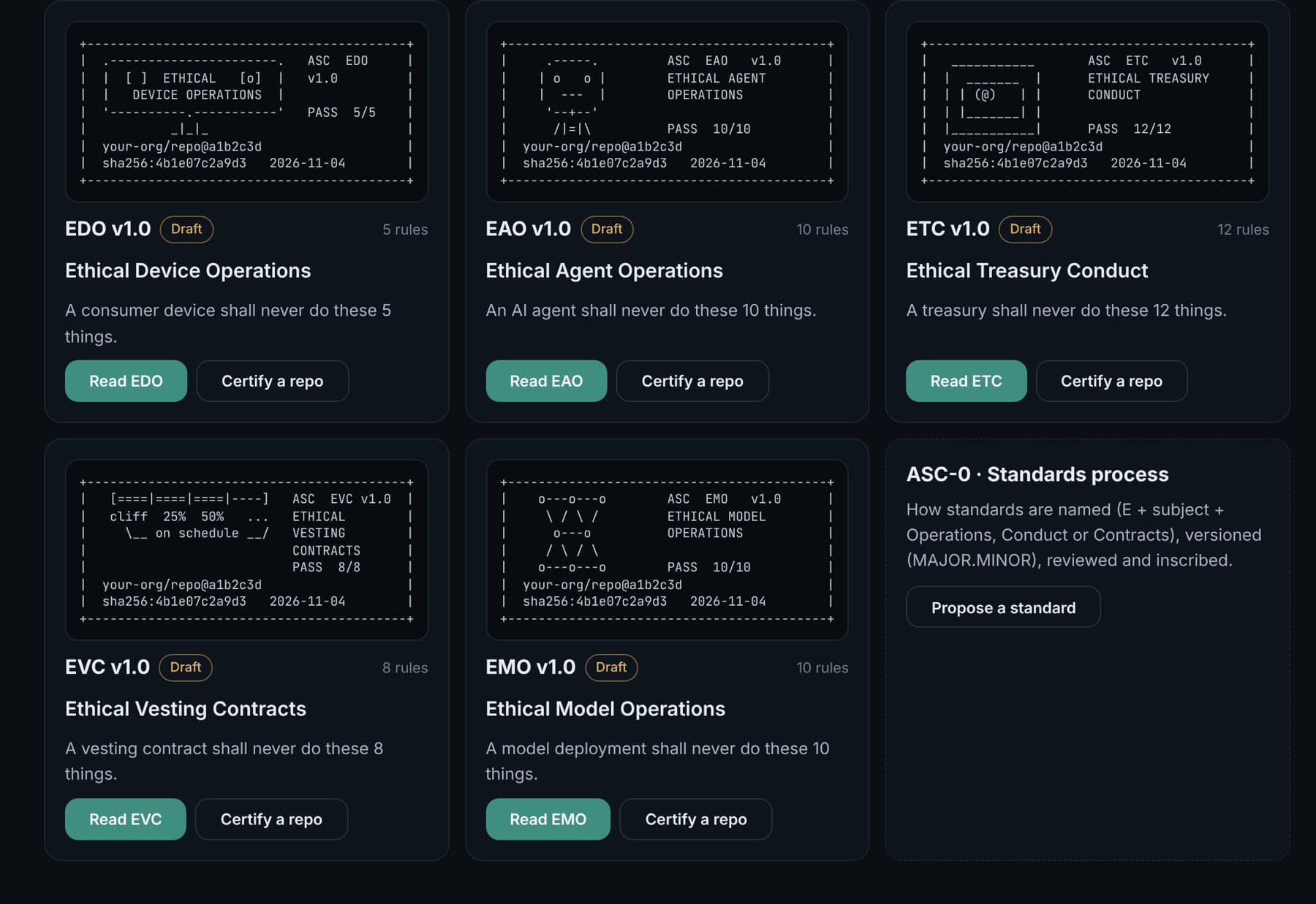
Draft standards a repo can be certified against, each a short list of things software should never do.