The Book of Daniel
A 170-page family history, built by pointing autonomous research agents at recorded interviews with my relatives and letting them chase every name, date and record the tape threw up.
Claude Code / Typst
My father told me stories. The stories contained names, dates, towns and occupations, delivered the way anyone delivers them from memory — out of order, approximate, and with the interesting parts assumed rather than explained.
The agents went after everything the tape mentioned. Pension records. Census returns. Local historical society holdings. Newspaper archives. A passage that began as a remark about a great-great-grandfather lowering himself into a frozen canal on a rope becomes, after the research, a dated account with the Bureau of Pensions order that governed his veteran's pension and the address he farmed tobacco at for the rest of his life.
That is the part worth paying attention to. The oral history is the index; the archive is where the book actually comes from. A human researcher could do all of this and some have spent retirements on less. What changed is that chasing two hundred loose threads from a recording is now a weekend rather than a decade.
It is typeset in Typst — two columns, period photography, running heads — and it runs to 170 pages. My father has a copy.
Screens

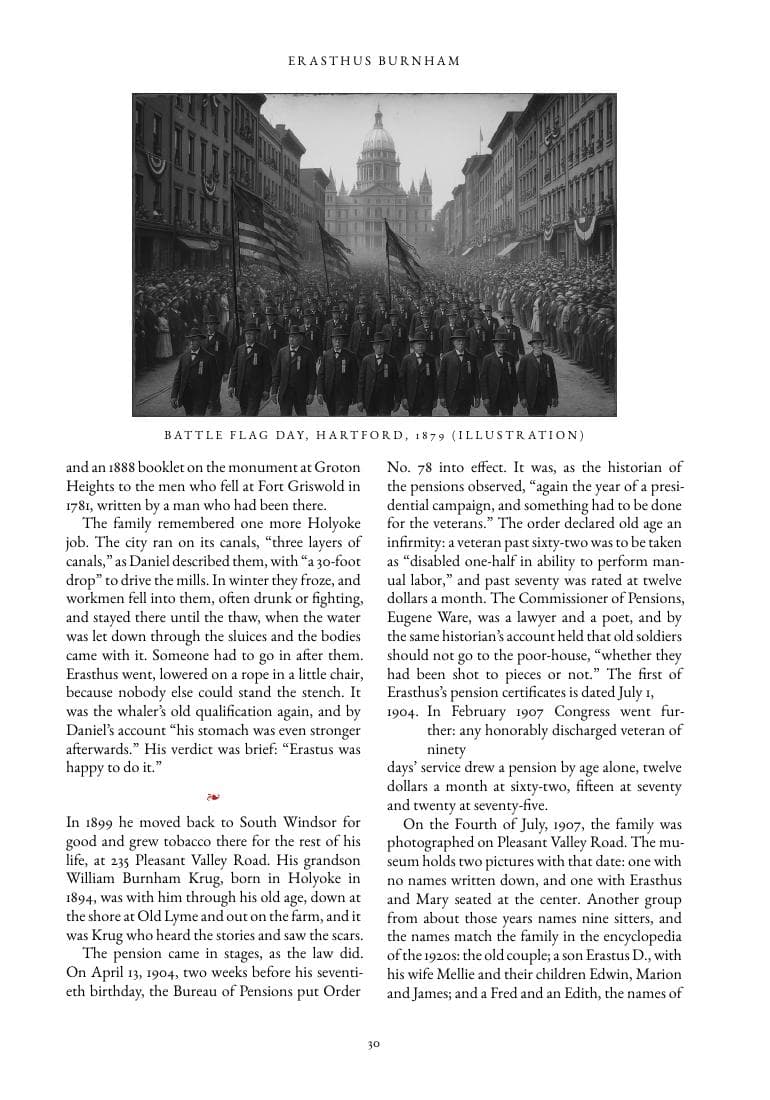
Page 30. The research under a passage like this is pension orders, census records and museum holdings — none of which was on the tape.