Lineage
Turns recorded interviews with a parent into a printed book — transcription, timeline, story separation, chapter assembly, photos, index, print-ready PDF.
Claude Code / Python / LaTeX
Demo
I have been recording interviews with my father. Lineage is the pipeline that turns those recordings into an actual book: it transcribes the sessions, builds a family timeline, splits the tape into self-contained stories, shapes each one in his voice, assembles chapters, places photographs and records, and compiles the whole thing to a print-ready PDF.
The hard part was never the transcription. It was that a life does not arrive in chapter order.
So the pipeline does not go straight from tape to prose. It first builds a structure out of the recordings and makes that structure inspectable. Every proper noun that gets said becomes an article; every claimed relationship carries the sentence it came from, with a source and a timestamp; anything asserted without a quotable passage is dropped rather than smoothed over. On the last rebuild that meant eleven relationships kept and six discarded.
That discipline is the whole design. An oral history is a pile of assertions from one person's memory, and a tool that quietly fills the gaps produces something that reads well and cannot be trusted. The stubs — over a thousand of them — are not a backlog. They are the list of questions for the next session.
The output is The Book of Daniel.
Screens
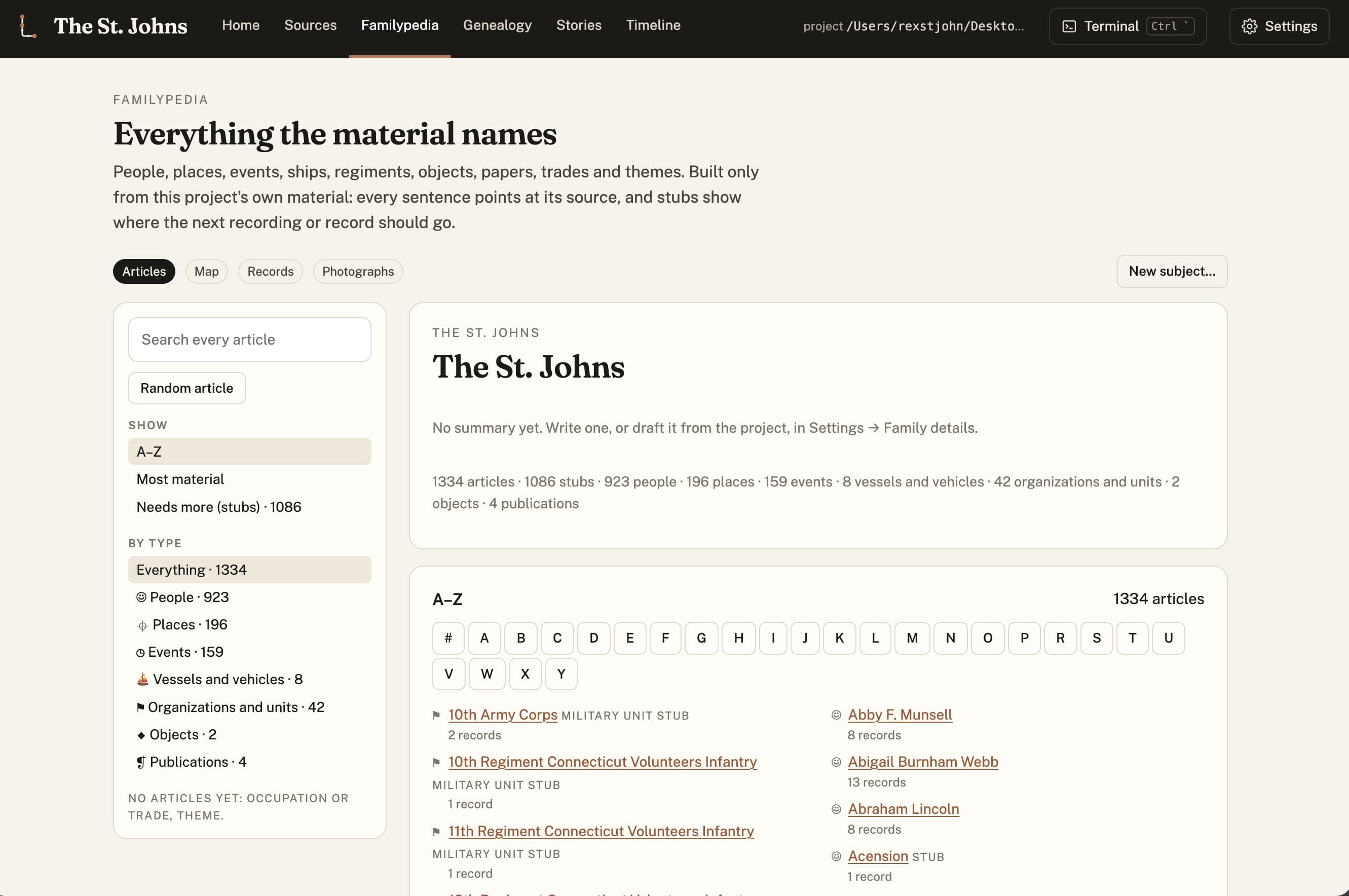
Every proper noun anyone said out loud becomes an article: 1,334 of them, 923 people. The 1,086 stubs are the useful half — they are the index of what to ask about in the next recording. 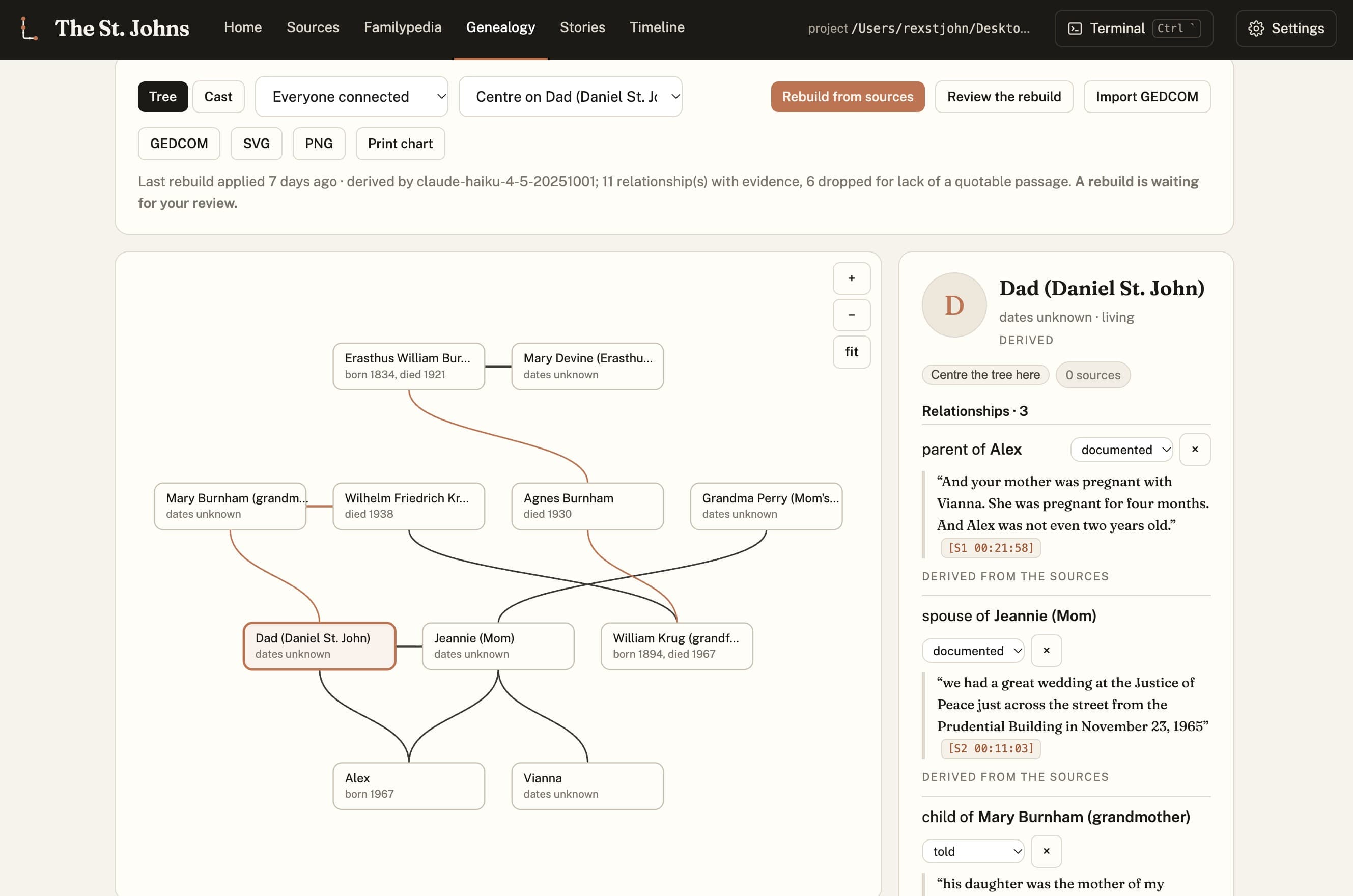
The tree is derived, and every edge carries the line of tape it came from with a source and timestamp. The rebuild banner is the part that matters: eleven relationships with evidence, six dropped for lack of a quotable passage. 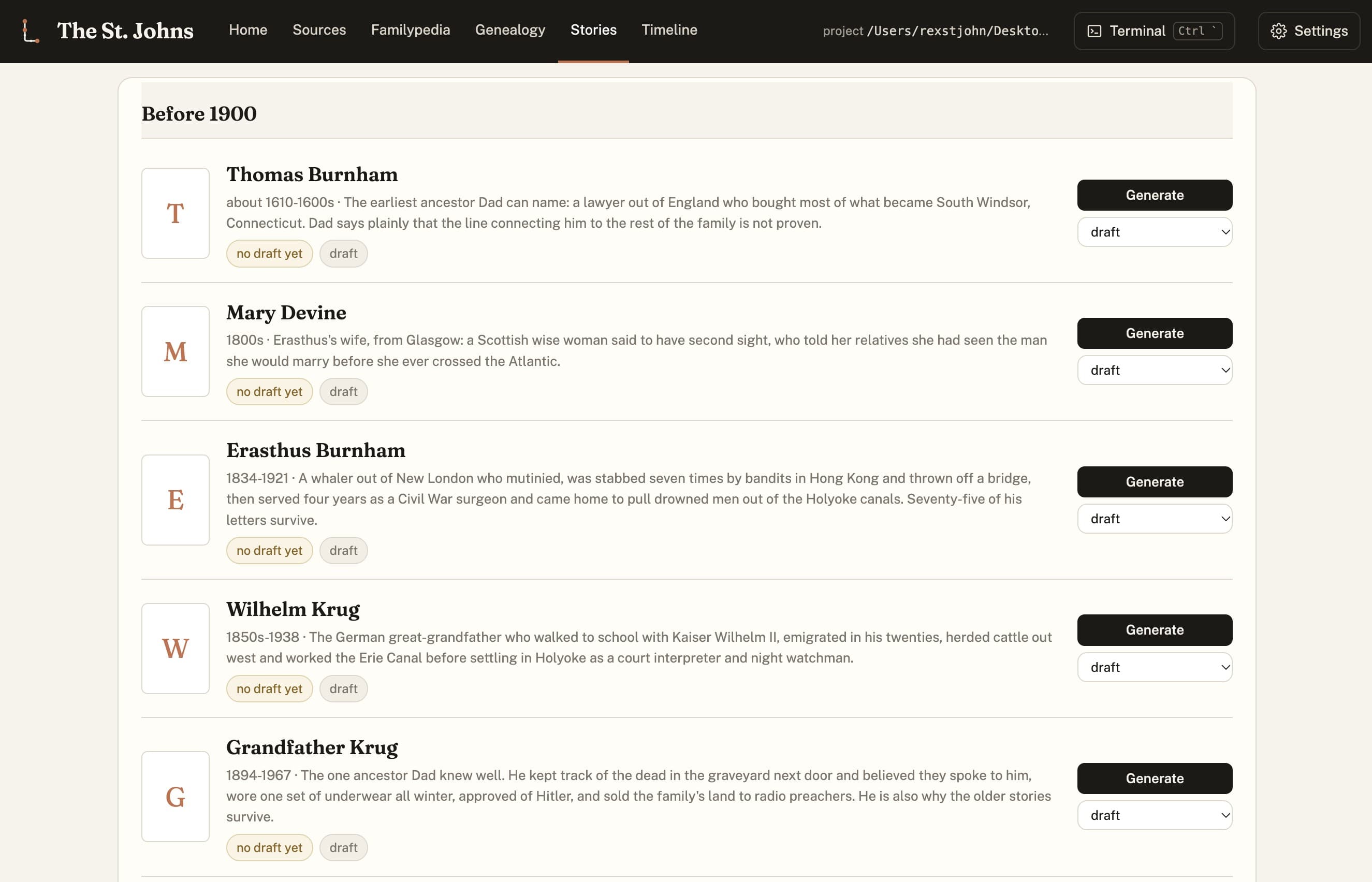
Chapter candidates in chronological order, each with a precis drawn from the tape. A life does not arrive in chapter order, so this is the step that puts it in one.