Why I Built Verafy.ai
From a viral holiday demo to an on-chain report card of LLM bias, and why I'm taking a second run at it.
Verafy.ai started as a hackathon project.
I was looking for the real reason anyone should use AI and blockchain together. To me, the core value blockchain offers AI is the ability to inscribe immutable data that can never be deleted and that anyone can verify. That's Satoshi's core insight: many nodes agree on a shared ledger because everyone's copy matches.
There were plenty of exciting-sounding ideas floating around about agents, AI, and blockchain. The one that excited me most was using inscriptions to let AI write permanent records on chain.
The problem: bias that shifts over time
With LLMs multiplying across Hugging Face and the major labs, one of the hottest topics was the bias their creators were building into them, for better or worse. Many models were sandboxed, steered away from certain lines of reasoning, or gave cagey answers. Some answered the same question differently over time.
A single snapshot of an AI model's opinion wasn't enough. I wanted a canonical tool to track and compare LLM outputs over time and show the trajectory. Is a model becoming more or less truthful? More or less biased? In which areas?
Truth Chain
That's how Truth Chain started. Over winter vacation, I opened up ChatGPT, and together we built the first Truth Chain demo (above).
To my surprise, it went extremely viral. Thousands of people watched it and asked me to keep going and turn it into a standalone product: a blockchain-native way to reveal bias across AI models. About 4,000 people showed up in the community, and I recruited a team of volunteers from it who were excited to take on the challenge.
How it works
The platform needed three pieces:
- A contentious questions database. Politically charged questions, graded and selected by human reviewers as likely to reveal bias, published as a public catalog. These became a consistent benchmark for scoring LLM responses over time across different dimensions of bias.
- Access to many LLMs. Hugging Face and OpenRouter thankfully gave us API access to a wide range of models, so this part was mostly solved.
- A way to inscribe the results on chain. This came from IQ, built by Zo, the very talented founder of IQ6900. Go look them up.
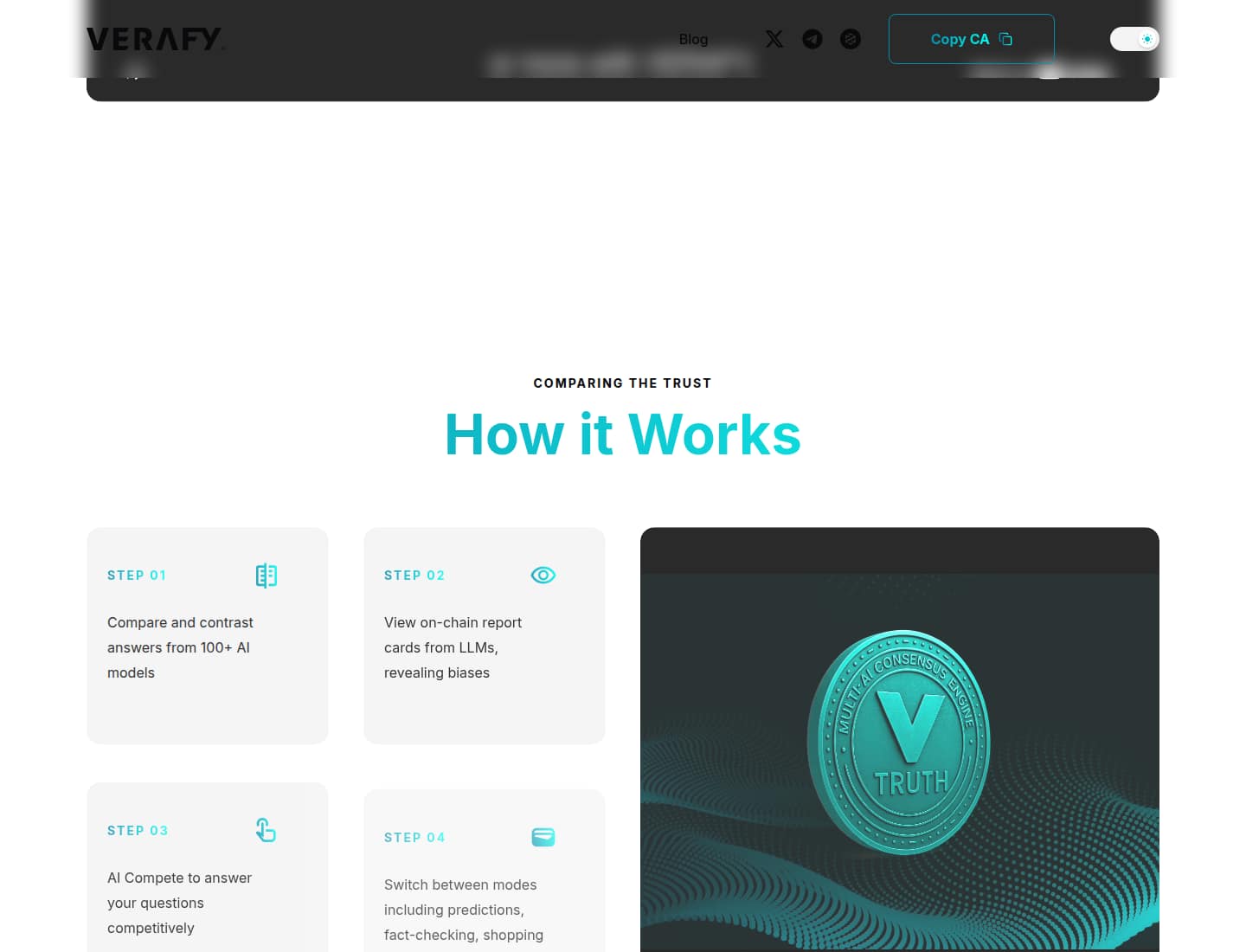
Together, these let us publish an on-chain report card of LLM bias over time, permanently inscribed as snapshots on the blockchain. It was immutable and checked every box I cared about.
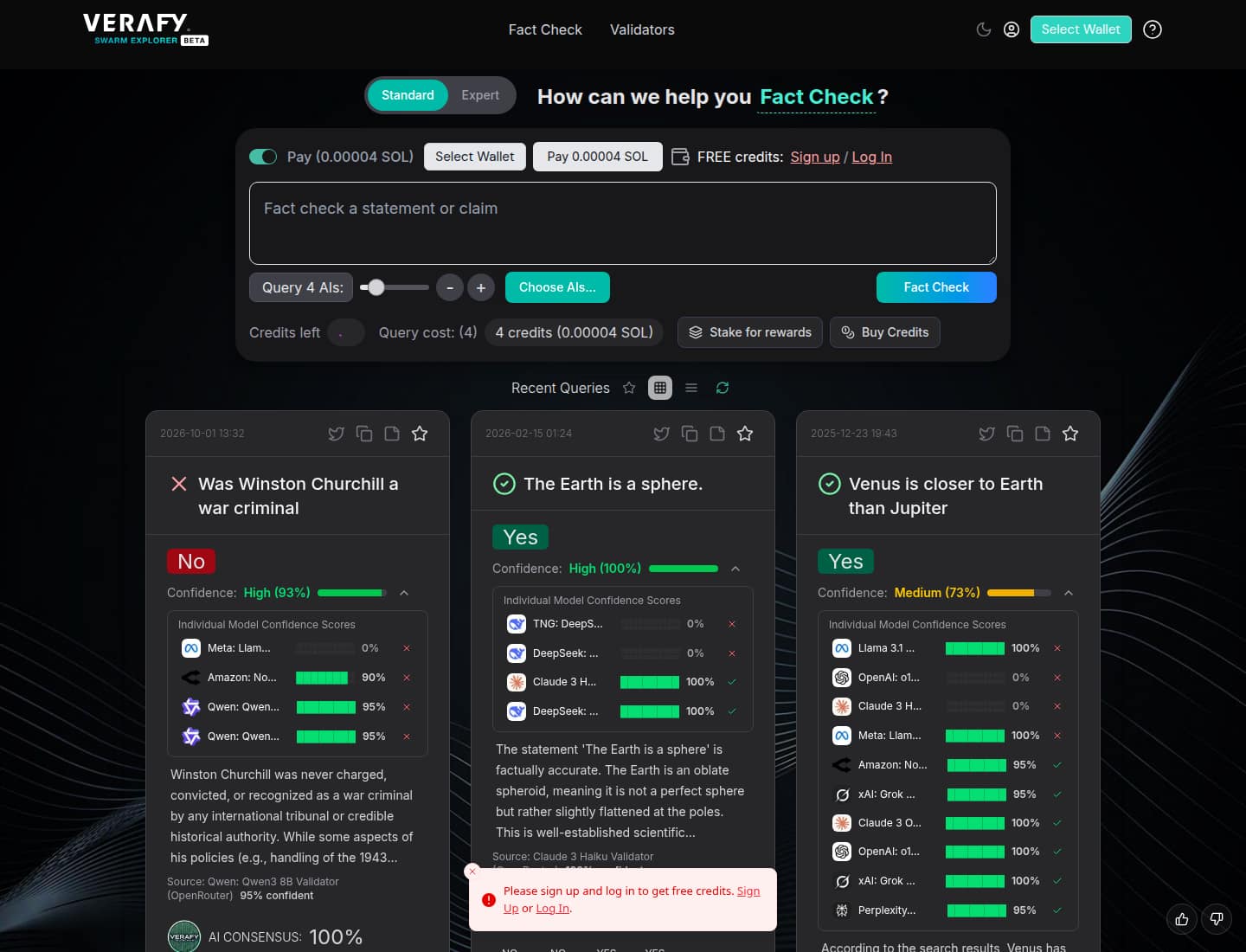
Working with designers, engineers, community managers, and builders from all over the world, we shipped multiple iterations of the platform to arrive at what we have today.
Beyond the product
We had a lot of fun along the way. My Solana Accelerate keynote got more than 600,000 views on X. We also launched a Solana validator, the Truth Node, which at one point peaked at 220,000 staked SOL, a huge accomplishment for the team.
Then came a turbulent stretch. The crypto crash of October 2025 wrecked the market and seriously set back our effort to bring truth to LLMs.
Taking a second run
I took a few months to regain my balance and learn a powerful new generation of tools: Claude Code, Cursor, Grok Bot, and more. Then I decided to take another run at it. I started this blog, rebooted my website, and came back to X.
With Grok Bot and Cursor together, I intend to reboot Verafy and finish the mission, which feels more achievable than ever.
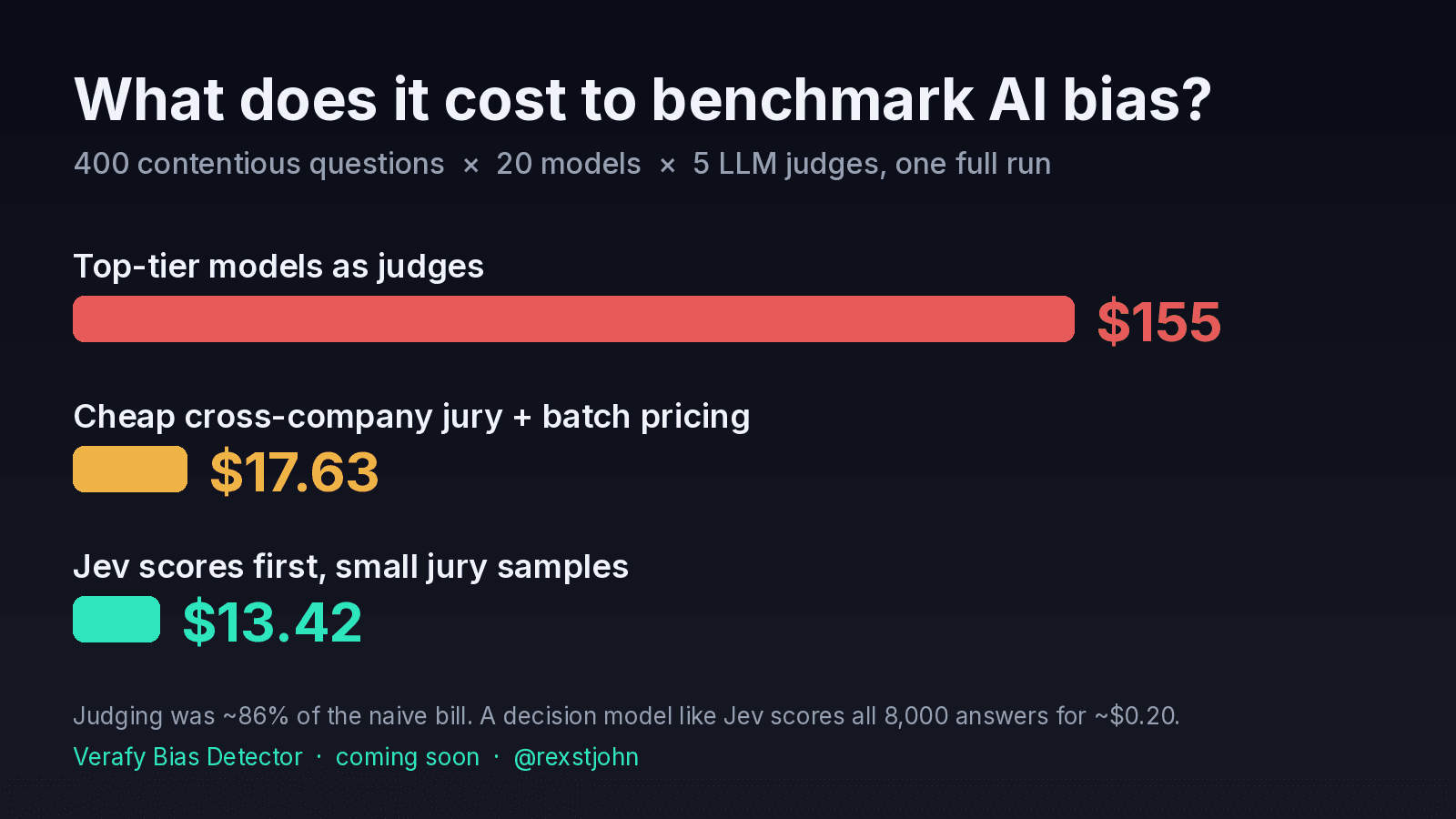
Part of what makes a reboot possible is cost. When we first built this, judging every model's answers meant paying frontier models to grade other frontier models. With today's cheap cross-company juries, batch pricing, and new decision models like Jev, a full benchmark run of 400 questions across 20 models now costs about $13 instead of $155. That's the core of what we're building next: the Verafy Bias Detector.
In this new era of AI, the only limits are your imagination and your willingness to stop. If you keep going, you can build anything, because the tools keep improving, and with recursive improvement you'll get there.
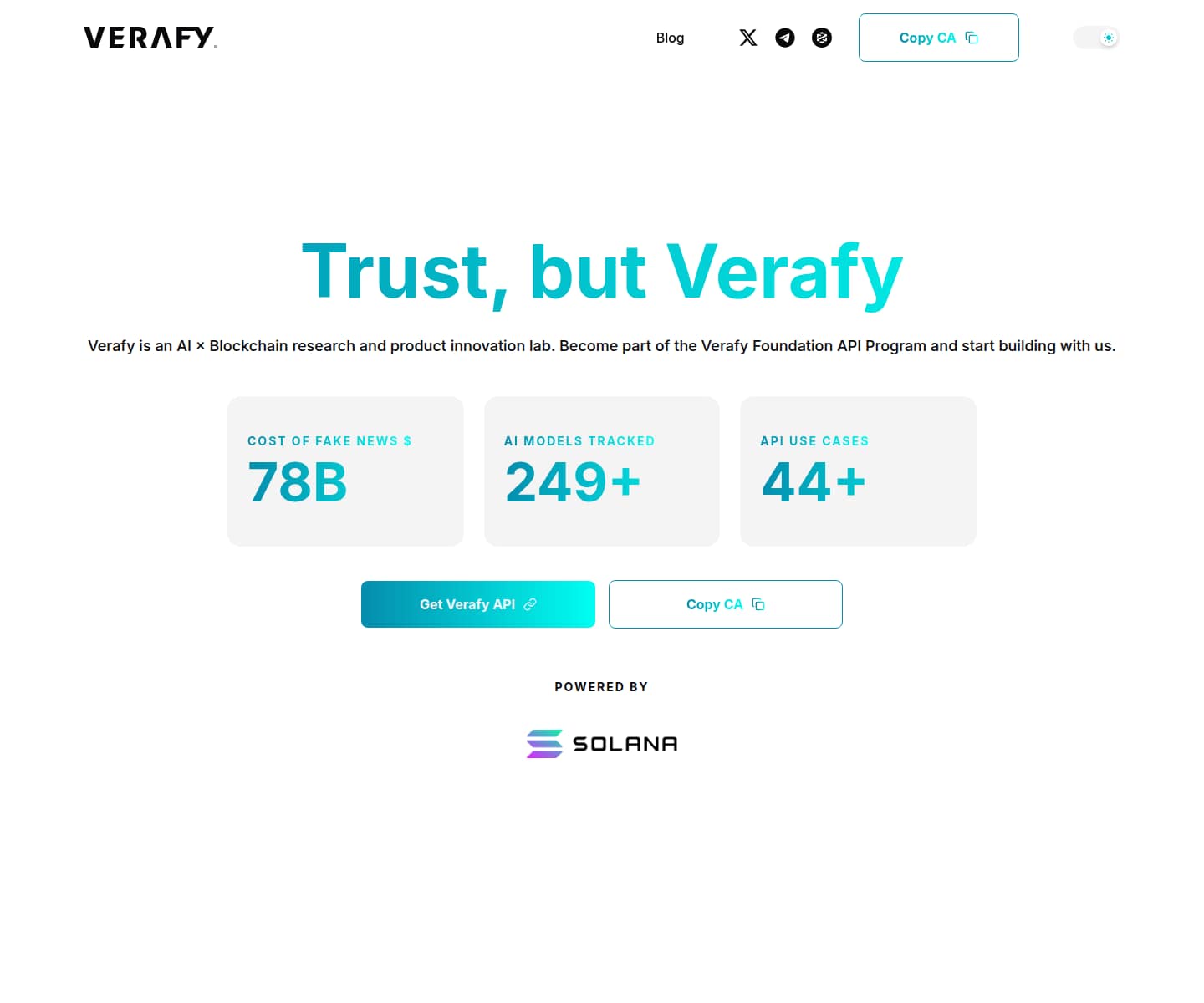
Try it at verafy.ai and the Swarm Explorer.