Introducing Lineage: A Family Wikipedia Built by AI Agents
How a 3.5-hour interview with my dad turned into a 200-page book, and then into an open-source platform for mapping your own family history.
Several years ago, while my third son was being born, our house was being restored after a flood. We were living in a rented apartment over Christmas with two toddlers, a newborn, and my parents staying with us while a construction crew put the house back in working order. I had no time to myself. I was holding a baby, unable to stand up, unable to sleep, unable to work.
I realized there was one thing I could do: record an interview with my dad. He carried a lifetime of family history and lore that existed only in his memory and was written down nowhere else.
Over three and a half hours, I recorded him talking about his time in Alaska, his parents, their parents, and their parents' parents, along with forgotten stories from several sides of the family that would otherwise have been lost to history. I probably didn't get everything, but I got a lot of the good stuff.
Then, frankly, I had nowhere great to put it. I dropped it in a Google Drive folder and shared it. I'm not sure anyone listened. I posted a few snippets on YouTube, and then I forgot about it. It didn't have a life after that.
Then AI happened
With the recent leaps in AI (Claude Code, Grok Bot, GitHub, Vercel, and more), I suddenly had tools beyond anything I'd imagined. I became consumed by one question: what if I could turn this recording into a book?
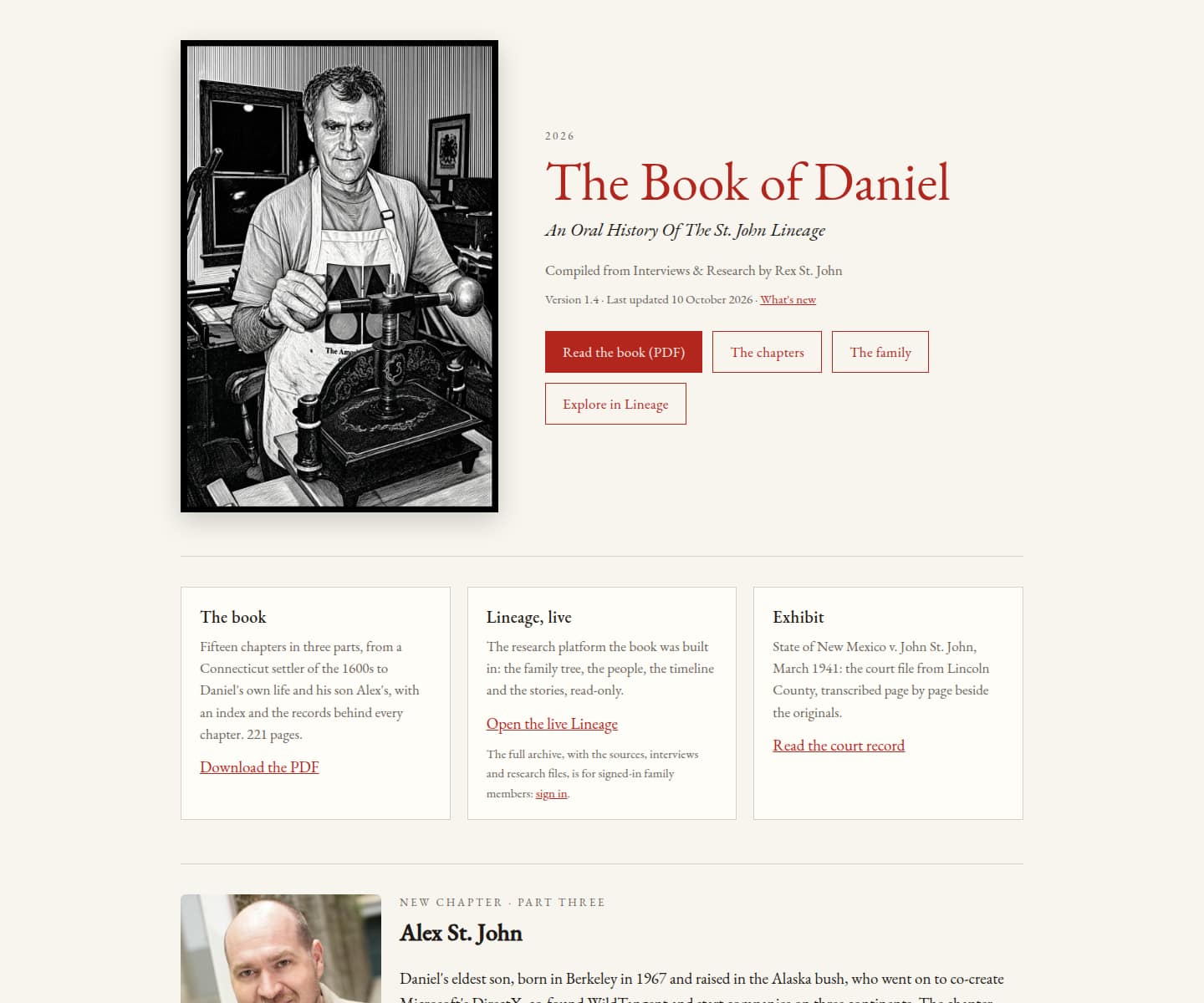
I fed the recording into Claude Code. It transcribed the audio, identified the speakers, and converted everything into a format that could be rendered as book chapters. After several days of back and forth, I had a book design I liked, plus repeatable Claude skills and a style guide it could apply to every chapter.
I generated two chapters, using OpenAI's image tools to clean up or fill in missing photos, and I was impressed. So I held my breath and asked Claude Code to generate the entire book.
What happened next blew my mind
Claude Code dispatched swarms of agents to track down every scrap of information it could find: Wikipedia, Google searches, obscure websites, small local museums that had digitized their collections, Canadian military service records, and much more.
It took my dad's verbal history, picked out the key names, researched each one independently, and came back with armloads of new material. I ended up with thirteen chapters spanning 170 pages, far beyond what my dad had given me.
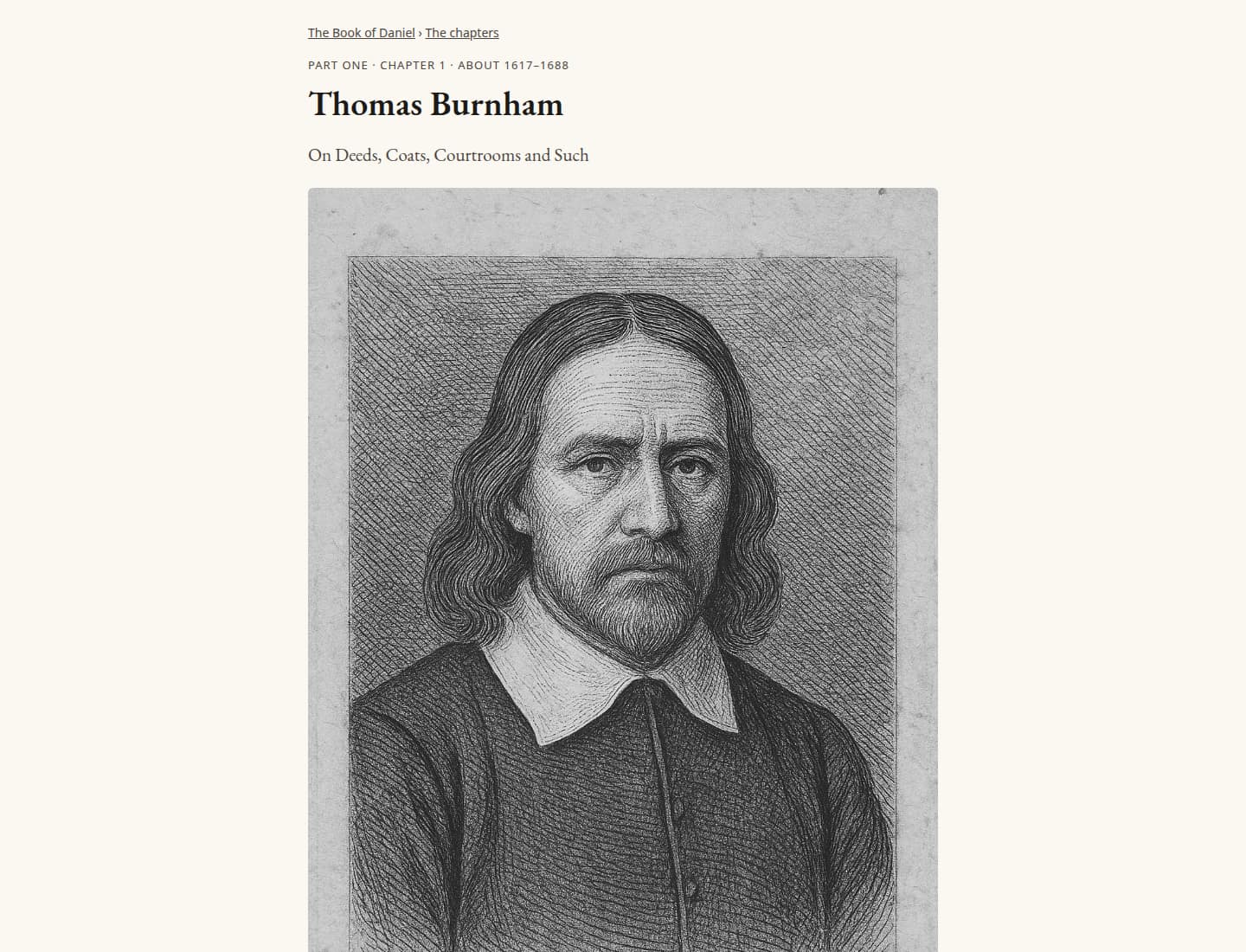
The agents found things nobody in my family had: photos of relatives like John St. John and Homer St. John that we thought were lost for good. They reached back into the 1800s and uncovered 70 pages of logs from the ship Hannibal, which my ancestor Burnham served on for several years. They scanned the logs, corroborated the details, and built out a full story around a man who had survived only as faint traces in my father's memory. They also dug up his Civil War records, down to specific battlefield scenarios.
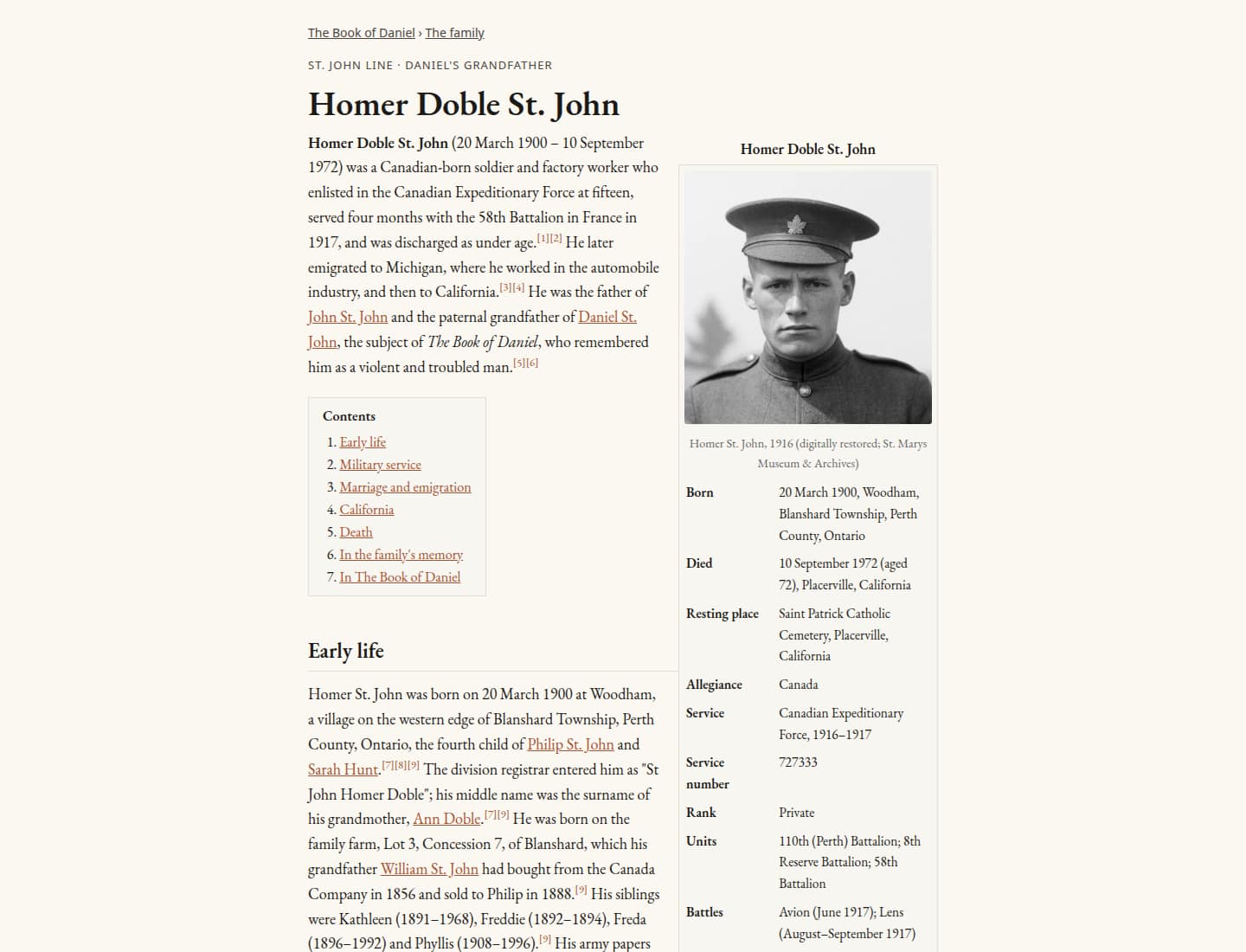
By the time I was done, the book had grown to well over 200 pages. The AI restored old photos, and in a few places I asked it to illustrate scenes from the stories, just to make the book more fun. It did all of it.
From a book to a platform
I kept extending the tool, and I realized many families might want to do the same thing. So I turned it from a book generator into Lineage: a platform for building your own family Wikipedia, and a private social network for your loved ones.
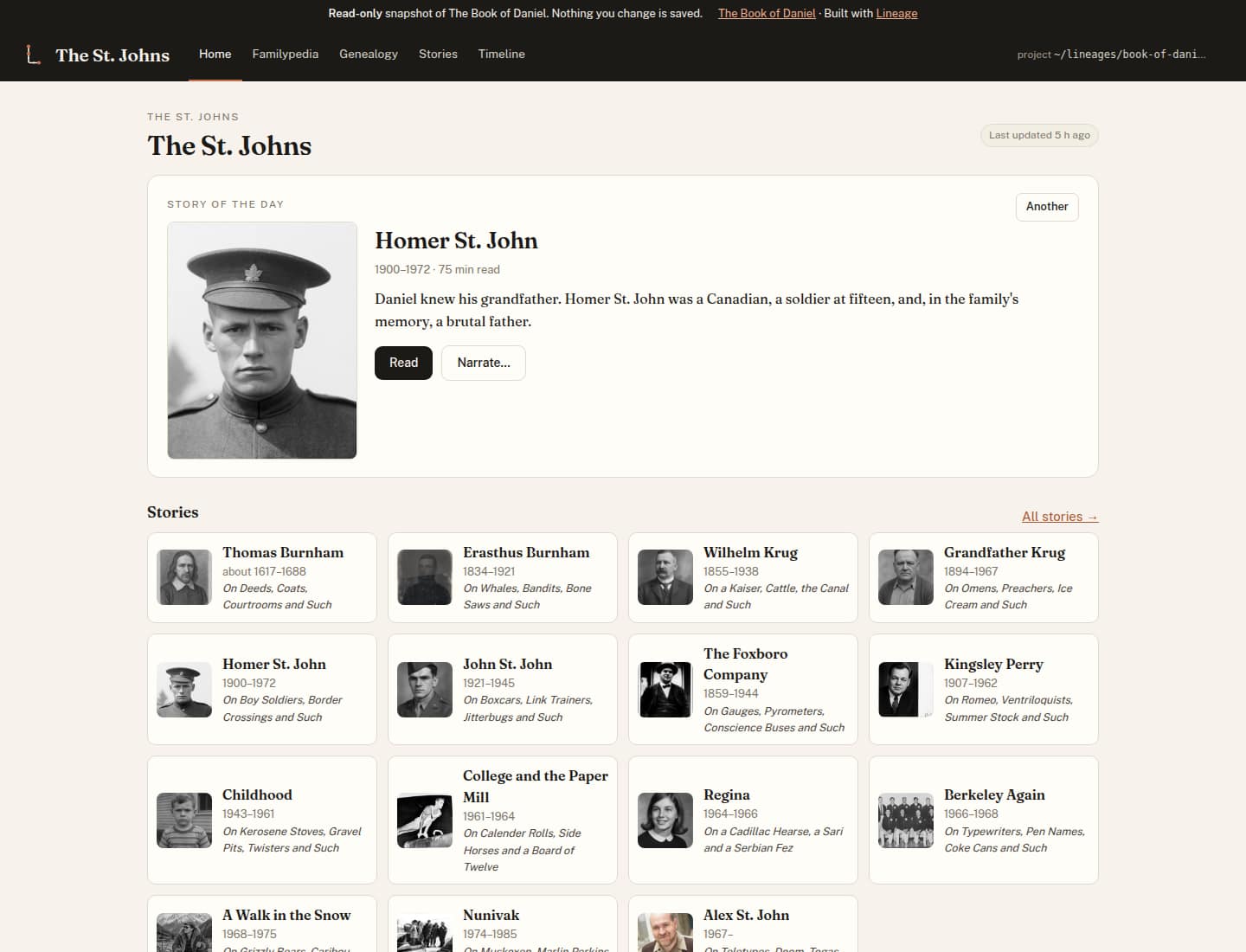
My Lineage site now covers 65 family members and hundreds of pages, and more arrives every day. The agents send emails and faxes to archives around the country, watch my inbox for the replies, scan in what comes back, add it to the archive, write stories from it, and fold those stories into the ever-growing book.
Everything is worth doing now
This project has blown me away. I'm astonished by what AI can do, and even more astonished that the breadcrumbs I left years ago have compounded like this. This isn't a slight improvement on a transcript of my dad's stories. It's massively better.
With AI, everything is worth doing now. Whatever half-baked project you're thinking about, start it and keep it, because the next generation of AI will take those shreds of ideas and build them into things you can't yet imagine.
I suspect a lot of people would like a platform like this, so I've open-sourced Lineage as a toolkit anyone can use. Over the coming months, I'll be talking about it on podcasts and maybe at a few hackathons. I'd love to see more people build their own family records with it, customize it, and add their own mods and skills.